
Parectopa
Clemens, 1860
Species Guides
5A of small in the Gracillariidae. are leaf miners, with larvae feeding internally on plant foliage. The genus includes approximately 40 described species distributed across multiple continents. Several species have become pests, notably Parectopa robiniella on black locust (Robinia pseudoacacia) in Europe.
Pronunciation
How to pronounce Parectopa: //pæˈrɛk.tə.pə//
These audio files are automatically generated. While they are not always 100% accurate, they are a good starting point.
Images
Habitat
Associated with woody plants; specific requirements vary by . Parectopa robiniella occurs in urban plantings, forest edges, and naturalized stands of black locust.
Distribution
Documented from North America, Europe, and Asia. GBIF records indicate presence in Denmark, Norway, Sweden, and the United States (Vermont). Multiple have established outside native ranges through human-mediated transport of plants.
Diet
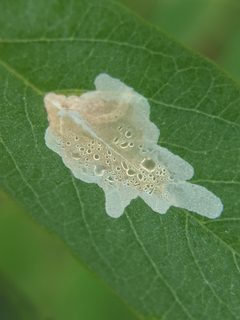
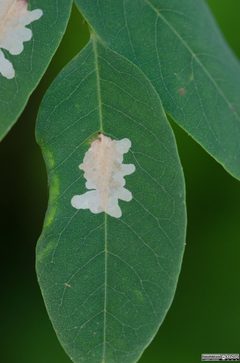
Larvae are leaf miners, feeding internally on mesophyll tissue of plant leaves. Parectopa robiniella specifically mines leaves of Robinia pseudoacacia.
Host Associations
- Robinia pseudoacacia - primary black locust; confirmed for P. robiniella
Life Cycle
Parectopa robiniella has two per year in temperate regions. Larvae develop through instars within leaf mines before pupating. emerge to mate and oviposit on new foliage.
Behavior
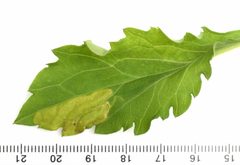
Larvae create blotch or mines within leaves, feeding between epidermal layers. Mining activity reduces photosynthetic capacity of plants and can cause premature leaf abscission under heavy .
Ecological Role
Herbivore that induces physiological stress responses in plants, including elevated peroxidase activity and altered chlorophyll fluorescence parameters. Contributes to leaf turnover and nutrient cycling in forest .
Human Relevance
Several are economically significant as pests. Parectopa robiniella has spread across Europe since 1970, causing damage to black locust in forestry, urban landscaping, and agroforestry systems. Climate warming appears to facilitate range expansion.
Similar Taxa
- Phyllonorycteralso Gracillariidae leaf miners on woody plants; distinguished by mine and genitalia characters
- Camerariasimilar blotch-mining Gracillariidae; differ in wing pattern and venation
Sources and further reading
- BugGuide
- Wikipedia
- GBIF taxonomy match
- iNaturalist taxon
- NCBI Taxonomy
- Catalogue of Life
- Monitoring the Attack by Parectopa Robiniella and Phyllonorycter Robiniella on Trees From the City of Tg. Secuiesc
- Peroxidase activity and isoenzyme composition in Robinia pseudoacacia L. leaves under the influence of Parectopa robiniella Clemens, 1863
- The Spread of the Invasive Locust Digitate Leafminer Parectopa robiniella Clemens, 1863 (Lepidoptera: Gracillariidae) in Europe, with Special Reference to Ukraine
- Impact of invasive species Parectopa robiniella (Gracillariidae) on fluorescence parameters of Robinia pseudoacacia in the conditions of the steppe zone of Ukraine