
Scopula junctaria
(Walker, 1861)
Simple Wave
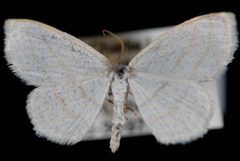
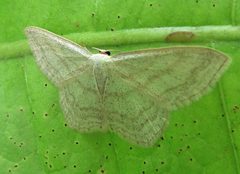
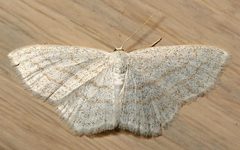
Scopula junctaria, commonly known as the simple wave, is a in the Geometridae. First described by Francis Walker in 1861, it is widely distributed across northern North America, occurring throughout Canada and extending southward into the northern United States. are active from late May through August, with a single per year. The species is characterized by its relatively small size and distinctive wing pattern.
Pronunciation
How to pronounce Scopula junctaria: /ˈskɒpjʊlə dʒʊŋkˈtɛəriə/
These audio files are automatically generated. While they are not always 100% accurate, they are a good starting point.
Identification
The simple wave can be distinguished from similar Scopula by its relatively plain wing pattern with fine, simple transverse lines rather than more complex markings. The small size (wingspan 20–26 mm) and the timing of activity (late May to August) help separate it from related species. The specific epithet 'junctaria' refers to the joined or connected appearance of the wing markings. include S. j. junctaria, S. j. quinquelinearia (Packard, 1871), and S. j. johnstonaria (McDunnough, 1941).
Images
Habitat
Occupies a variety of open and semi-open including meadows, fields, forest edges, and disturbed areas. The larval plants suggest adaptability to both natural and anthropogenically modified environments. Found from low elevations to moderate mountain elevations within its range.
Distribution
Widespread across northern North America. Occurs throughout Canada (including Alberta, Manitoba, and Saskatchewan) and the northern United States, extending south to Maryland in the east, and Arizona and California in the west. Distribution records confirm presence across this broad north temperate range.
Seasonality
are on wing from late May through August. The has one per year (), with adults emerging in late spring and early summer and persisting through mid-summer.
Diet
Larvae feed on various herbaceous plants including chickweed (Stellaria media), clover (Trifolium ), and elm (Ulmus species). The broad range indicates a feeding strategy typical of many geometrid species.
Host Associations
- Stellaria media - larval food plantchickweed
- Trifolium - larval food plantclover
- Ulmus - larval food plantelm
Life Cycle
Complete with four stages: , larva, pupa, and . with one per year. Adults emerge in late spring, mate, and females deposit eggs on plants. Larvae feed through summer, pupate in soil or leaf litter, and overwinter as pupae before adult the following spring.
Behavior
are and attracted to light. Larvae exhibit characteristic looping locomotion due to reduced number of , moving by arching the body to bring the prolegs forward to meet the thoracic legs. This movement pattern is the origin of the 'inchworm' or 'looper' for geometrid larvae.
Ecological Role
Larvae function as primary consumers, feeding on herbaceous vegetation and contributing to nutrient cycling. serve as prey for including bats, birds, and predatory insects. The participates in dynamics as both herbivore and prey item in northern temperate .
Human Relevance
Generally considered harmless to human interests. Occasionally larvae may feed on clover in agricultural or pasture settings, but not regarded as a significant pest. The is of interest to lepidopterists and naturalists for its wide distribution and characteristic appearance. Frequently recorded in citizen science platforms such as iNaturalist, contributing to biodiversity documentation.
Similar Taxa
- Scopula limboundataSimilar size and wing pattern, but S. limboundata (large lace-border) has more distinct dark marginal banding on wings and different geographic distribution with more eastern emphasis.
- Scopula inductataOverlapping range and similar plain wing appearance, but S. inductata (soft-lined wave) typically shows more curved rather than straight transverse lines.
- Scopula umbilicataSimilar preferences and appearance, but S. umbilicata (swallow-tailed wave) has more pointed wing tips and different pattern elements.
More Details
Taxonomic history
Originally described as Acidalia junctaria by Francis Walker in 1861, later transferred to the Scopula. The genus Scopula is one of the largest in the Geometridae, with over 700 worldwide, though the majority occur in the Old World tropics. Scopula junctaria represents one of the relatively few Scopula species native to North America.
Subspecies variation
Three are recognized: nominate S. j. junctaria throughout most of the range; S. j. quinquelinearia (Packard, 1871) with more pronounced wing lines; and S. j. johnstonaria (McDunnough, 1941) described from more western . The validity and distinctiveness of these subspecies merits further study.