Eupithecia cretaceata
(Packard, 1874)
Cretaceous Pug
Eupithecia cretaceata is a small geometrid commonly known as a 'pug' moth. It occurs across much of North America and parts of Europe. The is notable for its specialized larval diet on Veratrum species and has been documented as a of apple flowers. fly during summer months and are attracted to light.
Pronunciation
How to pronounce Eupithecia cretaceata: /juːˈpɪθiə ˌkrɛtəˈsiːətə/
These audio files are automatically generated. While they are not always 100% accurate, they are a good starting point.
Identification
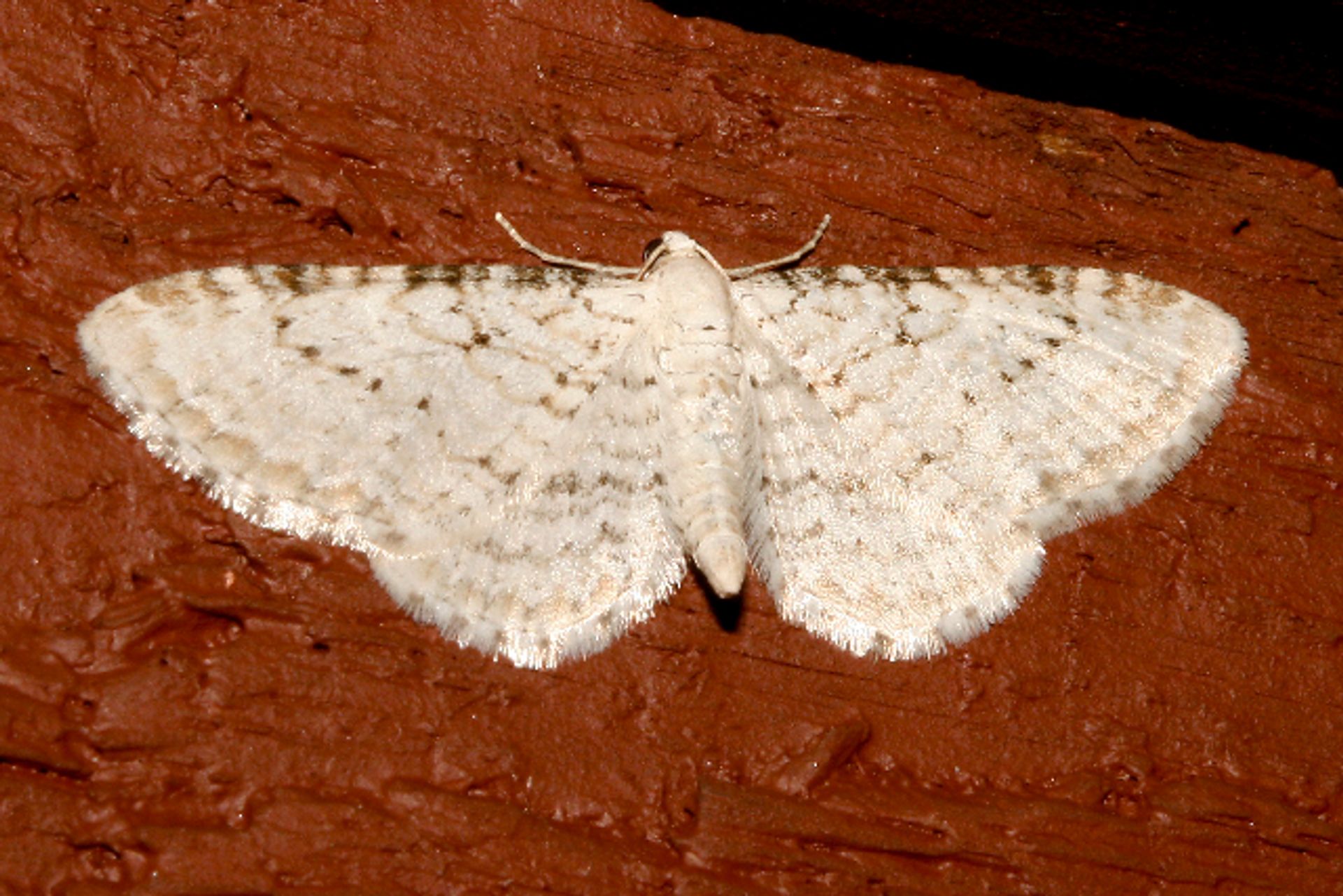
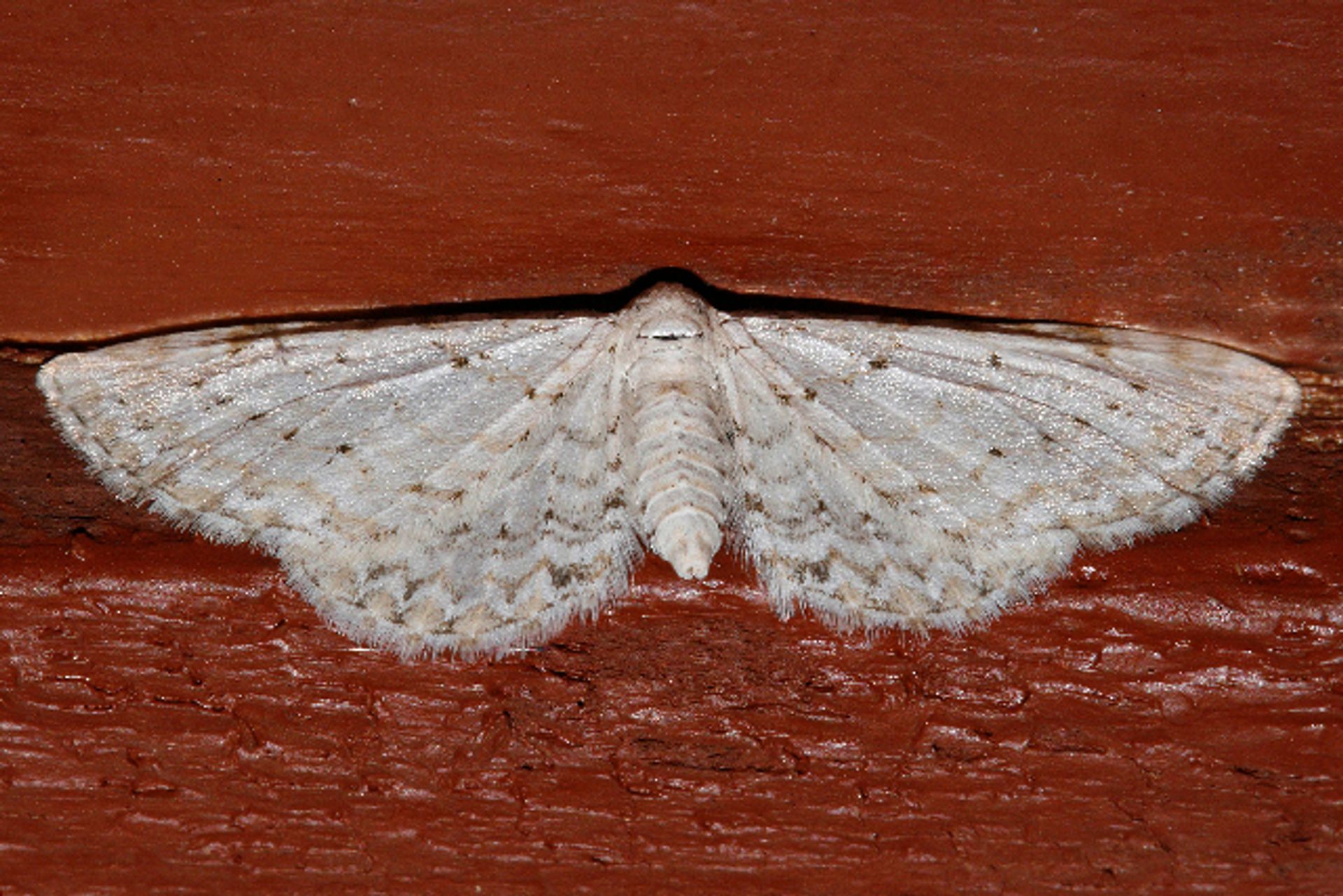
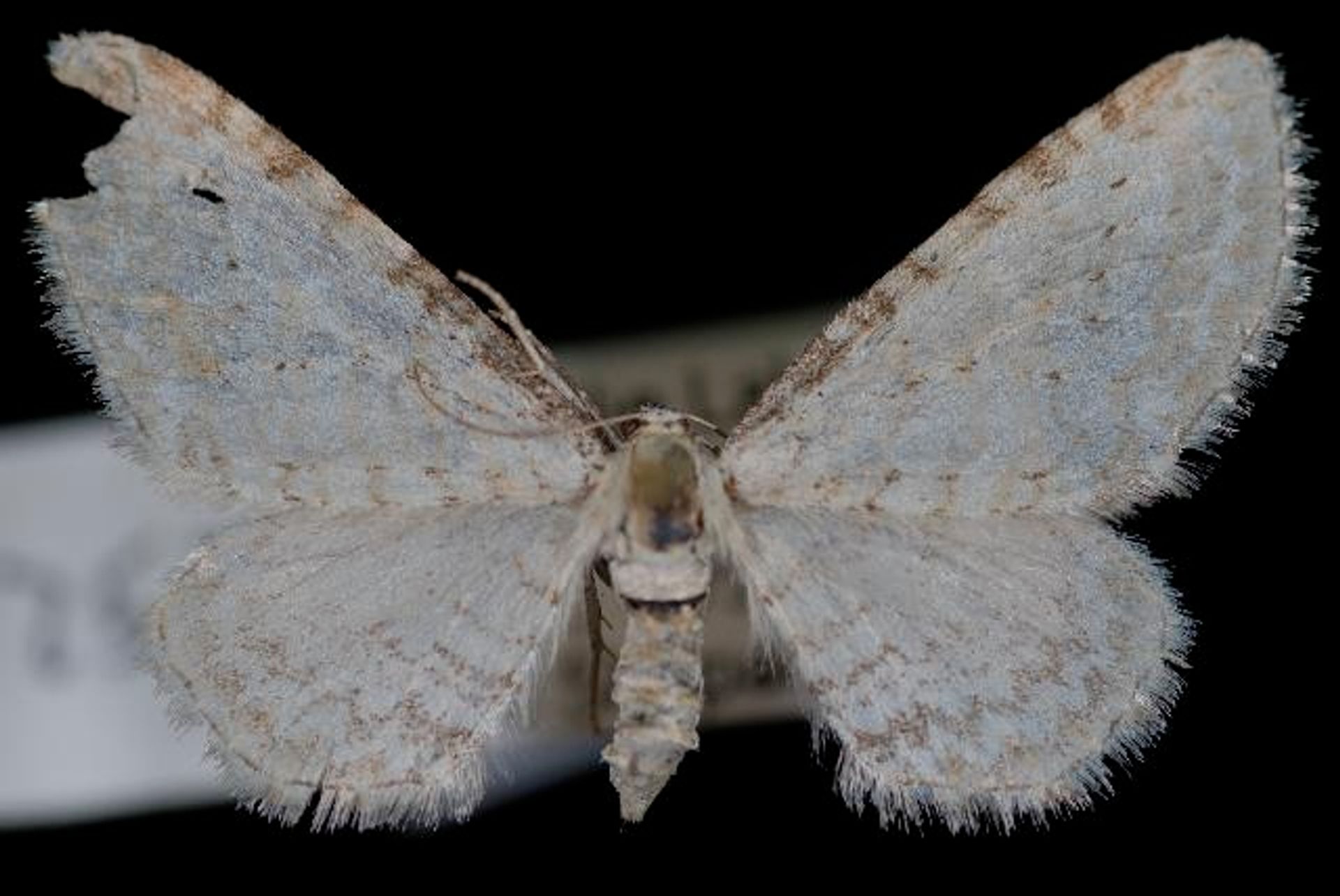
Distinguished from other Eupithecia by the combination of pale cretaceous (chalky white) ground color and specific pattern of fine dark speckling. Genitalia examination is typically required for definitive species identification within this . In North America, the nominate E. c. cretaceata occurs; in Europe, E. c. fenestrata is recognized. Similar species include other 'pug' in the genus, which differ in wing pattern details and geographic distribution.
Images
Appearance
Small with wingspan approximately 26 mm. Forewings are narrow and elongated, characteristic of the Eupithecia. Wing coloration is typically pale grayish-white to cream with fine, darker speckling and transverse lines. Hindwings are similarly narrow and pale. Body is slender. are . At rest, wings are held flat or slightly overlapping, often with a distinctive 'pug-like' posture with wings partially folded along the body.
Habitat
Found in mixed conifer forests, montane meadows, and areas where plants occur. In North America, associated with supporting Veratrum viride, typically moist meadows and subalpine zones. Elevation records include sites around 7,000 feet in southwestern North America. Also occurs in orchards and agricultural settings where documented visiting apple flowers.
Distribution
Widely distributed in Canada (Alberta, Manitoba, Saskatchewan, and additional provinces) and much of the United States. In Europe, present in France, Switzerland, Austria, and parts of the Balkan Peninsula. GBIF records confirm presence in Europe and Northern Asia (excluding China) and North America.
Seasonality
are on wing from June to September in North America. Larval stage occurs prior to adult , timing dependent on plant .
Diet
Larvae feed on flowers and seeds of Veratrum viride in North America and Veratrum album in Europe. have been observed visiting apple flowers and likely feed on nectar.
Host Associations
- Veratrum viride - larval flowers and seeds
- Veratrum album - larval Europe only; flowers and seeds
- Malus domestica - visitor pollination of apple flowers documented
Life Cycle
Complete with , larva, pupa, and stages. Larvae feed on plant reproductive structures (flowers and seeds). occurs in soil or leaf litter. Adults emerge in summer and are , attracted to light sources.
Behavior
are and attracted to artificial light sources. Larvae are specialized feeders on Veratrum flowers and seeds. Adults have been documented as active , carrying pollen while visiting flowers at night. Resting posture is characteristic: wings held narrow and close to body, giving a 'pug-like' silhouette.
Ecological Role
Larva functions as a herbivore on Veratrum . serves as a , contributing to pollination of apple crops and likely other flowering plants. The species demonstrates the dual role of as both herbivores (in larval stage) and pollinators (as adults).
Human Relevance
Documented as a significant in apple orchards, contributing to fruit set and seed development. Larval feeding on Veratrum may have limited agricultural impact. Attracted to blacklights and porch lights, making it observable by citizen scientists and enthusiasts.
Similar Taxa
- Eupithecia miserulataSimilar size and pale coloration, but differs in wing pattern details and plant associations
- Other Eupithecia speciesMany share narrow wing shape and small size; genitalia dissection often required for definitive identification
- Hydropionea fenestralisSimilar reticulated wing pattern and habits, but belongs to Crambidae with different body shape and resting posture
More Details
Subspecies
Two are recognized: Eupithecia cretaceata cretaceata (Packard, 1874) in North America, and Eupithecia cretaceata fenestrata Millière, 1874 in Europe.
Pollination Research
A 2021 study in the Journal of Economic Entomology documented Eupithecia as among the visitors to apple flowers, contributing to nighttime pollination services comparable to daytime in seed set quality.