
Eupithecia miserulata
Grote, 1863
Common Eupithecia, Common Eupithecia Moth
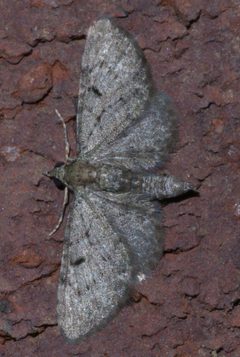
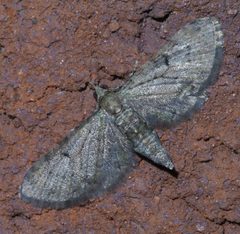
Eupithecia miserulata, the Common Eupithecia, is a small North American in the Geometridae. have a wingspan of 12–20 mm and are active from March to November depending on location. The exhibits considerable geographic variation across its range, with three recognized . It has been documented visiting apple flowers and may contribute to pollination services.
Pronunciation
How to pronounce Eupithecia miserulata: /ˌjuːpɪˈθiːsiə mɪˌzɛrjuːˈleɪtə/
These audio files are automatically generated. While they are not always 100% accurate, they are a good starting point.
Identification
Recognized as a 'pug' by narrow wings and distinctive resting posture typical of Eupithecia. identification requires examination of geographic origin: E. m. miserulata occurs across most of eastern North America, E. m. vitans is found in unspecified regions (described by Schaus, 1913), and E. m. zela is restricted to California.
Images
Appearance
Small with wingspan 12–20 mm. Narrow wings characteristic of the Eupithecia. Typical resting posture with wings held flat or slightly folded, giving a slender profile. Coloration and pattern details not specified in available sources.
Distribution
North America: Ontario and Maine southward to Florida, Mississippi, Louisiana, and Texas. Also occurs in Arizona and California.
Seasonality
fly from March to November; exact timing varies by location.
Diet
Larvae feed on coneflower, asters, willows, cherry, juniper, and clover. feeding habits not documented.
Host Associations
- coneflower - larval food plant
- asters - larval food plant
- willows - larval food plant
- cherry - larval food plant
- juniper - larval food plant
- clover - larval food plant
Behavior
attracted to lights. Has been observed visiting apple flowers, suggesting potential pollination activity.
Ecological Role
Larval herbivore on diverse flowering plants and woody . may contribute to pollination of crops including apple.
Human Relevance
Larvae feed on various plants including some of potential ornamental or agricultural interest (clover, cherry). have been documented as visitors to apple flowers in pollination studies.
Similar Taxa
- Other Eupithecia speciesMany 'pug' share narrow wings and similar size; identification to level often requires dissection or geographic reference
More Details
Subspecies
Three recognized: E. m. miserulata (most of eastern North America), E. m. vitans Schaus 1913, and E. m. zela Swett & Cassino 1919 (California).