
Hesperumia
Packard, 1873
sulphur moth
Species Guides
3Hesperumia is a of geometrid moths established by Packard in 1873. The genus contains four recognized distributed across western North America, with typically active during summer months. Larval stages are poorly documented, but the genus is associated with various plants including buckwheat and other herbaceous vegetation. Adults of at least one species, H. sulphuraria, are attracted to light sources.
Pronunciation
How to pronounce Hesperumia: /hɛsˈpɛruːmiə/
These audio files are automatically generated. While they are not always 100% accurate, they are a good starting point.
Identification
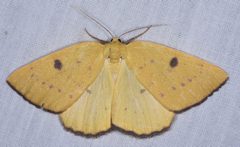
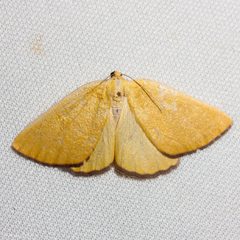
Distinguished from similar geometrid by combination of broad, relatively unpatterned wings and specific coloration. H. sulphuraria uniquely identified by pale sulphur-yellow color with fine speckling; separation from other yellow geometrids requires examination of genitalia or wing venation. H. fumosaria and H. fumida distinguished by subtle differences in forewing pattern and shade of gray-brown. H. latipennis recognized by proportionally broader wings. All require dissection for definitive identification; superficially similar to some Cabera, Lomographa, or other Ennominae genera with yellow or gray coloration.
Images
Appearance
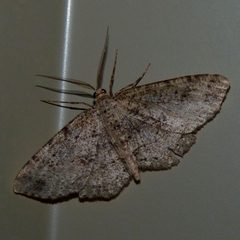
Medium-sized geometrid moths with wingspans typically ranging 25–35 mm. Forewings broad and somewhat triangular, hindwings rounded. Coloration variable among : H. sulphuraria exhibits pale yellow to sulphur-yellow ground color with fine, scattered dark speckling; H. fumosaria is darker gray-brown with more pronounced transverse lines; H. latipennis has broader wings with reduced pattern elements; H. fumida shows muted brown-gray tones. All species possess and relatively slender bodies typical of Ennominae. Wing margins often slightly scalloped. Underwings generally paler than upper surfaces with reduced patterning.
Habitat
Diverse open including pinyon-juniper woodland, sagebrush steppe, shortgrass prairie, sand dune systems, and riparian corridors. Associated with areas supporting larval plants, particularly Eriogonum (buckwheat) and related herbaceous vegetation. Elevational range spans from lowland desert margins to montane zones above 2000 m.
Distribution
Western North America, primarily in the United States. Records from Vermont appear erroneous or represent vagrant specimens. Core distribution includes: southwestern Utah (Kane, Washington, Grand counties), northern Arizona (Coconino, Mojave counties), Colorado (Montrose, Mesa, Otero counties), New Mexico (San Juan, Harding counties), Oklahoma (Woodward, Major, Beaver, Cimarron counties), and Texas (Hardeman County).
Seasonality
active primarily June through August, with peak activity in late June to mid-July. varies with elevation and latitude; lower elevation emerge earlier. H. sulphuraria recorded at light in late June in Colorado-Utah border region.
Host Associations
- Eriogonum - larval E. alatum, E. inflatum, and other buckwheat documented or inferred as larval food plants
Behavior
, attracted to ultraviolet and mercury vapor light sources. At least H. sulphuraria readily comes to lights in pinyon-juniper and mixed woodland . activity begins after dusk; individuals may remain at lights through early morning hours. Larval undocumented but presumed to be external feeders on plant foliage.
Ecological Role
Larvae function as primary consumers of herbaceous vegetation, particularly buckwheat . serve as prey for including bats and predatory arthropods. Role in pollination minimal; adults do not appear to visit flowers regularly.
Human Relevance
No significant economic importance. Occasionally encountered by entomologists during light-trapping surveys in western North America. H. sulphuraria noted in biodiversity documentation for protected areas including John Brown Canyon and Black Mesa State Park.
Similar Taxa
- CaberaSimilar pale yellow coloration in some ; distinguished by wing shape and pattern details, requires genitalia examination for definitive separation
- LomographaShared Ennominae affiliation and similar size; Lomographa typically show more distinct transverse lines and different wing proportions
- SperanzaOverlapping distribution and use; Speranza generally darker with more complex forewing patterns
More Details
Species composition
Four currently recognized: H. sulphuraria Packard, 1873 (type species); H. fumosaria Comstock, 1937; H. latipennis (Hulst, 1896); H. fumida (Warren, 1904). Taxonomic stability relatively high since 20th century revisions.
Light attraction
H. sulphuraria specifically recorded at light in juniper/pinyon chaparral in Mesa County, Colorado, on June 20, 2023, during comprehensive insect survey work.
Conservation status
No currently listed as threatened or endangered; appears to maintain stable across broad geographic range with adequate connectivity.