
Plagodis
Hübner, 1825
Species Guides
6- Plagodis alcoolaria(Hollow-spotted Plagodis Moth)
- Plagodis fervidaria(Fervid Plagodis Moth)
- Plagodis kuetzingi(Purple Plagodis Moth)
- Plagodis phlogosaria(scorched wing)
- Plagodis pulveraria(Barred Umber)
- Plagodis serinaria(Lemon Plagodis Moth)
Plagodis is a of geometrid moths established by Jacob Hübner in 1825. The genus includes approximately 30 described distributed across the Holarctic region, with notable diversity in both Europe and North America. Several species are recognized for their distinctive wing patterns and resting postures. The genus name derives from Greek, referring to the oblique or slanted wing posture characteristic of many species at rest.
Pronunciation
How to pronounce Plagodis: //ˈplæɡəˌdɪs//
These audio files are automatically generated. While they are not always 100% accurate, they are a good starting point.
Identification
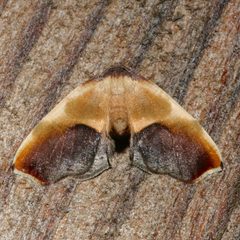
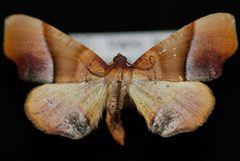
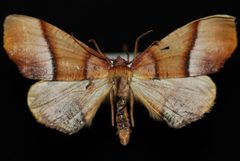
Members of Plagodis typically exhibit broad, somewhat triangular forewings with rounded outer margins. At rest, many hold their wings flat or slightly tented, with the characteristically pointing upward—a trait particularly evident in Plagodis dolabraria. Wing patterns often include fine vermiculate or reticulate brown markings on a lighter ground color, with some species showing darkened or trailing wing areas. The lacks the pronounced angular wing tips seen in related geometrid genera such as Ourapteryx.
Images
Habitat
occur primarily in deciduous woodland and mixed forest . Larval stages are associated with broad-leaved trees.
Distribution
Holarctic distribution spanning Europe, Asia (extending to Japan), and North America. European records include Denmark, Norway, and Sweden. North American distribution includes the northeastern United States (Vermont) and adjacent regions.
Human Relevance
Males of at least one (Plagodis dolabraria) are readily attracted to light, making them accessible to amateur entomologists and contributing to citizen science records. The has been subject to genomic study, with Plagodis dolabraria selected for -level sequencing as part of the Darwin Tree of Life project.
Similar Taxa
- OurapteryxOurapteryx possess distinctly tailed or angled hindwings, whereas Plagodis species have rounded wing margins without tail-like projections.
- BistonBiston typically show more cryptic bark-matching coloration and rest with wings held tightly against the substrate, unlike the elevated posture seen in Plagodis.