
Biston
Leach, [1815]
Species Guides
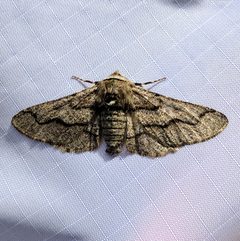
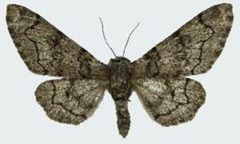
5Biston is a of large, long-winged in the Geometridae, Ennominae. The genus is most widely known for containing Biston betularia, the peppered moth, a classic textbook example of industrial melanism. in this genus are distributed across parts of Europe, North America, and Asia. The genus was established by William Elford Leach in 1815.

Pronunciation
How to pronounce Biston: /ˈbɪstɒn/
These audio files are automatically generated. While they are not always 100% accurate, they are a good starting point.
Identification
Members of Biston are characterized by their large size and elongated wings relative to body proportions, distinguishing them from many other geometrid moths. The is distinguished from similar geometrid genera by a combination of robust body build and wing shape, though specific diagnostic features require examination of genitalia for definitive identification.
Images
Distribution
Records indicate presence in Denmark, Norway, Sweden, the northeastern United States (Vermont), and other regions. The has a broad distribution across the Palearctic and Nearctic regions.
Human Relevance
The is of significant scientific importance due to Biston betularia, which provided one of the most thoroughly documented cases of in action through the study of industrial melanism. Laboratory rearing protocols have been developed for research purposes.
Similar Taxa
- Other Geometridae generaBiston can be distinguished from superficially similar geometrid moths by their larger size and more elongated wing proportions, though precise identification often requires examination of male genitalia.
More Details
Etymology
The name Biston derives from Greek mythology, where Biston was a Thracian hero and ancestor of the Bistonians. This mythological origin is unrelated to the genus beyond the shared name.
Research Significance
The peppered moth (Biston betularia) has been maintained in laboratory stocks for continued research, with published protocols available for husbandry and field trapping methods using assembly traps with laboratory-reared females.