
Agonopterix pulvipennella
(Clemens, 1864)
Goldenrod Leaffolder Moth
Agonopterix pulvipennella is a small in the Depressariidae, commonly known as the Goldenrod Leaffolder Moth. It is widely distributed across North America, with active throughout most of the year. The species is associated with goldenrod and nettle plants during its larval stage.
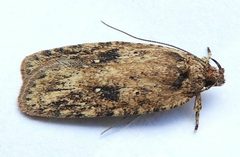
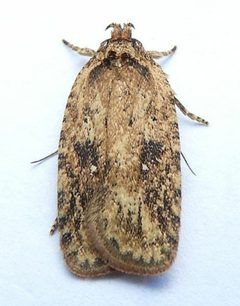
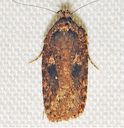
Pronunciation
How to pronounce Agonopterix pulvipennella: /ˌæɡəˈnɒptərɪks ˌpʊlvɪpɛnˈnɛlə/
These audio files are automatically generated. While they are not always 100% accurate, they are a good starting point.
Identification
Distinguished from similar Agonopterix by geographic range and association with Solidago and Urtica . Genitalia examination is typically required for definitive species-level identification within the . The extended period (February through October) is unusual and may aid in recognition.
Images
Appearance
Small with wingspan of 16–21 mm. Forewings are narrow and elongated, typically with mottled brown or grayish coloration. Hindwings are paler and more uniform in color. The exhibits the characteristic resting posture of Depressariidae, with wings held flat or slightly tented over the body.
Habitat
Associated with open supporting plants, including fields, meadows, roadsides, and disturbed areas where goldenrod (Solidago) and nettle (Urtica) occur. Specific microhabitat preferences for larvae are tied to leaf availability of host .
Distribution
North America: Quebec and New Brunswick south to North Carolina, west to Colorado and Saskatchewan. Records also include Manitoba and Vermont.
Seasonality
active from February through October. Single per year. Overwinters as adult.
Diet
Larvae feed on leaves of Solidago (goldenrod) and Urtica (nettle) . feeding habits are not documented.
Host Associations
- Solidago - larval goldenrod
- Urtica - larval nettle
Life Cycle
Single per year. Larval stage feeds on plant leaves. details are not documented. emerge and are active over an extended period from early spring through autumn. overwinters in the adult stage.
Behavior
Larvae are leaf folders or miners on plants, though specific behavioral details are not well documented. are and attracted to light. Extended period suggests adults may enter periods of dormancy or reduced activity during winter months.
Ecological Role
Larval herbivore on native plants. Role in as prey for birds, spiders, and other is presumed but not quantified.
Human Relevance
No significant economic impact. Occasionally encountered by naturalists and enthusiasts. references association with goldenrod, a widely recognized native plant.
Similar Taxa
- Other Agonopterix speciesMany in are morphologically similar; require genitalia dissection or association data for separation
- Depressaria speciesFormerly classified in same ; similar size and general appearance, though associations differ
More Details
Taxonomic history
Originally described as Depressaria pulvipennella by Clemens in 1864; later transferred to Agonopterix.
Flight period note
The exceptionally long activity period (February–October) for a single-brooded suggests adults may be long-lived or enter extended dormancy, though this has not been experimentally confirmed.