
Euclemensia
Grote, 1878
Species Guides
3- Euclemensia barksdalensis
- Euclemensia bassettella(Kermes Scale Moth)
- Euclemensia schwarziella
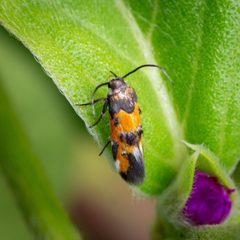
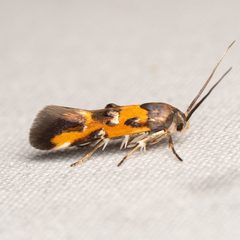
Euclemensia is a of small in the Cosmopterigidae, Antequerinae. The genus contains at least five described distributed in North America, including the Kermes Moth (Euclemensia bassettella), which has been documented feeding on scale insects. These are minute moths, with typically measuring only a few millimeters in wingspan. The genus was established by Grote in 1878.
Pronunciation
How to pronounce Euclemensia: //juːˈklɛm.nsi.ə//
These audio files are automatically generated. While they are not always 100% accurate, they are a good starting point.
Identification
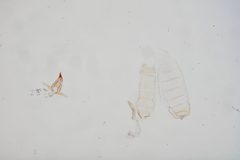
Separation from other cosmopterigid relies on genitalic characters and subtle wing venation patterns visible only under magnification. Euclemensia bassettella can be recognized by its association with kermes scale insects on oak. The genus is most readily identified to level through examination of male genitalia and by association with specific organisms.
Images
Appearance
Minute with narrow, wings. are typically 5-6 mm or less in wingspan. Wing patterns vary by but generally include muted colors—browns, grays, and whites—with subtle markings. The body is slender and delicate, consistent with other members of the Cosmopterigidae. Specific morphological characters distinguishing Euclemensia from related require microscopic examination.
Habitat
Associated with oak woodlands and forests where scale insects occur. are attracted to ultraviolet light and have been documented in suburban and rural settings with native tree cover.
Distribution
North America, with records from the United States including Vermont and Kansas. The appears to have a broad distribution across eastern and central North America, though specific range boundaries for individual remain poorly documented.
Seasonality
have been observed from late spring through summer, with peak activity during July in the central United States. Euclemensia bassettella has been documented during National Week events in late July.
Diet
Larval feeding has been documented in Euclemensia bassettella on kermes scale insects ( Kermesidae) on oak trees. The specific diet of other in the is not clearly established.
Host Associations
- Kermesidae - preyLarvae of E. bassettella feed on kermes scale insects on oak
- Quercus - tree for scale insects preyed upon by larvae
Life Cycle
Complete with , larval, pupal, and stages. Larvae are presumably concealed feeders within insect colonies. Specific details of site and stage are not documented.
Behavior
are and attracted to ultraviolet light sources. They are active fliers despite their small size. Larval involves feeding within colonies of scale insects.
Ecological Role
of scale insects; may contribute to of kermes on oak trees. The ecological roles of other in the are unknown.
Human Relevance
Euclemensia bassettella has been documented by citizen scientists during National Week events, contributing to public engagement with micromoth diversity. No economic importance has been established.
Similar Taxa
- Other Cosmopterigidae generaMany small cosmopterigid are superficially similar; Euclemensia requires genitalic examination for definitive identification
- StigmellaSimilar size and appearance, but Stigmella are leaf-mining in Nepticulidae with different larval habits
More Details
Taxonomic Note
The was established by Augustus Radcliffe Grote in 1878. It is currently classified in the Antequerinae within Cosmopterigidae, though higher-level relationships within the remain under study.
Species Diversity
Five are currently recognized: E. bassettella, E. barksdalensis, E. caminopa, E. schwarziella, and E. woodiella. E. barksdalensis was described as recently as 2011, indicating ongoing taxonomic work on this poorly known .