
Euclemensia bassettella
(Clemens, 1864)
Kermes Scale Moth
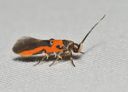
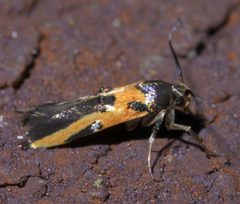
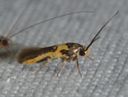
Euclemensia bassettella, commonly known as the Kermes , is a small moth in the Cosmopterigidae. The was described by James Brackenridge Clemens in 1864. It has a wingspan of 9–14 mm and is found in eastern North America. The moth is notable for its specialized ecological relationship with scale insects on oak trees, with larvae acting as of kermes scales.
Pronunciation
How to pronounce Euclemensia bassettella: /juːˈklɛmɛnsiə ˌbæsɪˈtɛlə/
These audio files are automatically generated. While they are not always 100% accurate, they are a good starting point.
Identification
A tiny (9–14 mm wingspan) in the Cosmopterigidae. Distinguished from similar small moths by its confirmed association with oak trees infested with scale insects in the Allokermes. The honors the describer's association with Bassett, though precise diagnostic morphological features distinguishing it from are not detailed in available literature.
Images
Appearance
Small with wingspan of 9–14 mm. Specific coloration and pattern details are not well documented in available sources.
Habitat
Associated with oak trees (Quercus spp.) that are infected with scale insects. The lives on or near these trees.
Distribution
Eastern North America: recorded from New Hampshire, southern Ontario, Illinois, Florida, and eastern Texas. Additional records include Vermont.
Seasonality
have been recorded on wing in February and from April to October. Observations during National Week (late July) in Kansas confirm summer activity.
Diet
Larvae are of scale insects, specifically known to parasitize Allokermes . Possible associations with Eriokermes, Nanokermes, and Kermes have been suggested but are less certain.
Host Associations
- Allokermes - larval Primary ; larvae parasitize these scale insects
- Eriokermes - possible larval Tentative association, less well documented
- Nanokermes - possible larval Tentative association, less well documented
- Kermes - possible larval Tentative association, less well documented
- Quercus - and larvae found on or near oak trees infested with scale insects
Life Cycle
Complete with , larval, pupal, and stages. Larval stage is parasitic on scale insects. Specific details of oviposition, larval development duration, site, and number of per year are not documented.
Behavior
are attracted to ultraviolet light sources and can be captured using blacklighting methods. The is .
Ecological Role
Acts as a of kermes scale insects, potentially providing of these oak pests. The relationship represents a specialized trophic interaction within oak .
Human Relevance
Of potential interest in of kermes on oaks. Documented in citizen science efforts such as National Week. No known negative impacts on human activities.
Similar Taxa
- Other CosmopterigidaeMany small in this are similar in size and general appearance; E. bassettella is distinguished by its specific association with oak-kermes systems and geographic range in eastern North America.
More Details
Taxonomic History
Originally described as Hamadryas bassettella by Clemens in 1864, later transferred to the Euclemensia.
Citizen Science Documentation
The has been documented through National Week observations in Kansas (2021, 2022), demonstrating its detectability via standard moth survey methods despite its small size.