
Homadaula
Lower, 1907
Species Guides
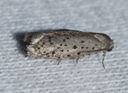
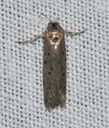
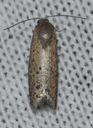
1- Homadaula anisocentra(mimosa webworm)
Homadaula is a of small in the Galacticidae, established by Lower in 1907. The genus contains approximately 15 described distributed across Africa, Asia, and Australia. Several species are known as webworms, with larvae that construct silk webs on foliage. Homadaula anisocentra, the mimosa webworm, is the most economically significant species and has been introduced to North America as a pest of ornamental honeylocust and mimosa trees.
Pronunciation
How to pronounce Homadaula: //ˌhoʊməˈdaʊlə//
These audio files are automatically generated. While they are not always 100% accurate, they are a good starting point.
Images
Habitat
Associated with woody plants; larvae construct silk webs on foliage. Specific preferences vary by . Homadaula anisocentra occurs in urban landscapes and forests where host trees (Albizia julibrissin, Gleditsia triacanthos) are present.
Distribution
occur in Africa (including southwestern Africa and Kenya), Asia (China, India), and Australia. Homadaula anisocentra has been introduced to North America.
Diet
Larvae feed on foliage of woody plants. Homadaula anisocentra feeds primarily on Albizia julibrissin (silktree/mimosa) and Gleditsia triacanthos (honeylocust), skeletonizing leaves within protective webs. Homadaula albizziae has been recorded feeding on Albizia julibrissin.
Host Associations
- Albizia julibrissin - primary silktree or mimosa; fed upon by multiple Homadaula
- Gleditsia triacanthos - honeylocust; primary for introduced H. anisocentra in North America
Life Cycle
Complete with , larva, pupa, and stages. Homadaula anisocentra has multiple per year (two in Maryland, three in southern states). Overwinters as pupae in leaf litter, soil, or protected urban sites.
Behavior
Larvae are gregarious and construct silk webs on foliage for protection while feeding. Pupae of H. anisocentra exhibit cold hardiness with supercooling capacity; some individuals overwinter in thermally protected microhabitats that reduce exposure to lethal temperatures.
Ecological Role
Herbivore; defoliator of trees. In introduced range, H. anisocentra functions as urban forest pest. Subject to by including Elasmus albizziae and Parania geniculata.
Human Relevance
Homadaula anisocentra is an introduced pest in North America, causing defoliation of ornamental honeylocust and mimosa trees. Some honeylocust cultivars (Moraine, Shademaster, Imperial) show partial resistance. Managed through physical removal of webs, agents (Bacillus thuringiensis), or reduced-risk .
Similar Taxa
- Hyphantria cuneaBoth are webworm with larvae that construct silk nests on foliage; distinguished by preferences, nest placement, and . Fall webworm nests occur at branch terminals and appear earlier in season; mimosa webworm nests are smaller and more dispersed.
- Malacosoma americanumEastern tent caterpillar also constructs silk tents, but builds nests in tree crotches near trunks in early spring (March-April) rather than late spring/summer, and specializes on Rosaceae .
More Details
Taxonomic placement
assignment has varied; sources list both Galacticidae and Plutellidae. Current consensus places Homadaula in Galacticidae. The was originally described from Australia.
Notable species
H. anisocentra (mimosa webworm) was introduced from China to North America in the 1940s. H. albizziae is another Asian associated with Albizia. African species include H. maritima, H. montana, H. submontana, and H. watamomaritima from Kenya, described by Mey in 2007.
Sources and further reading
- BugGuide
- Wikipedia
- GBIF taxonomy match
- iNaturalist taxon
- NCBI Taxonomy
- Catalogue of Life
- Webworms of the fall - Fall webworm, Hyphantria cunea and mimosa webworm, Homadaula anisocentra — Bug of the Week
- Life History and Control of the Webworm, Homadaula albizziae1
- Oviposition behavior of the mimosa webworm Homadaula anisocentra Meyrick (Lepidoptera: Plutellidae)
- Overwintering survivorship of pupae of the mimosa web worm, Homadaula anisocentra (Lepidoptera: Plutellidae), in an urban landscape
- Seasonal Abundance ofHomadaula anisocentra(Lepidoptera: Plutellidae) and Two Parasitoids,Elasmus albizziae(Hymenoptera: Elasmidae) andParania geniculata(Hymenoptera: Ichneumonidae), in an Urban Forest