
Pseudothyatira cymatophoroides
(Guenée, 1852)
Tufted Thyatirine Moth, tufted thyatirid moth
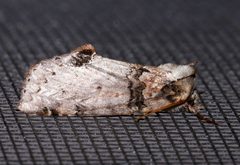
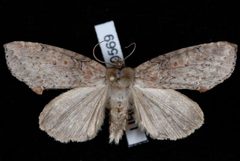
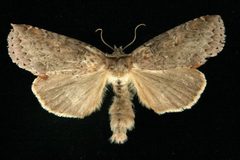
The tufted thyatirine is the sole in the Pseudothyatira, placed in Drepanidae (hooktip and false owlet moths). It is recognized for its complex bark-mimicking coloration that provides camouflage against tree trunks. The species exhibits a distinctive tufted and intricate wing patterns that have drawn attention from naturalists. It represents a North American with a transcontinental distribution across forested regions.
Pronunciation
How to pronounce Pseudothyatira cymatophoroides: //ˌsjuː.doʊˌθaɪəˈtaɪrə ˌsɪmətoʊ.oʊˈfɔːraɪdiːz//
These audio files are automatically generated. While they are not always 100% accurate, they are a good starting point.
Identification
Distinguished from other Drepanidae by the combination of a densely tufted and forewings with complex mottled patterns of gray, brown, and black that resemble bark texture. The status means no congeneric exist for confusion; however, it may be mistaken for other bark-mimicking such as certain Noctuidae or other Thyatirinae. The overall 'furry' appearance and specific pattern complexity separate it from superficially similar geometrid moths like Nacophora quernaria, which has a cleaner salt-and-pepper pattern.
Images
Habitat
Forested environments where bark-mimicking camouflage is effective; associated with deciduous and mixed woodlands.
Distribution
Transcontinental in North America: recorded from Newfoundland and British Columbia across Canada, and southward through the United States to Northern California, Maryland, West Virginia, Kansas, and North Carolina. Additional Canadian records include Alberta, Manitoba, and Saskatchewan.
Similar Taxa
- Nacophora quernariaBoth are bark-mimicking with complex patterns, but N. quernaria (Geometridae) displays a cleaner salt-and-pepper pattern without the thoracic tufting characteristic of P. cymatophoroides.
- Symmerista speciesBoth are bark-mimicking in forested , but Symmerista (Notodontidae) has a prominent white and different wing shape, lacking the thoracic tufting of Pseudothyatira.