
Thyatirinae
Smith, 1893
False Owlet Moths
Tribe Guides
3Thyatirinae, commonly known as , comprises approximately 200 described within the Drepanidae. Historically treated as a separate family , this has undergone significant taxonomic revision. The group exhibits notable morphological diversity, with some species displaying complex bark-mimicking patterns for camouflage. Afrotropical representatives have been subject to recent taxonomic review, including the establishment of new and elevation of subspecific .
Pronunciation
How to pronounce Thyatirinae: /θaɪˈætɪrɪniː/
These audio files are automatically generated. While they are not always 100% accurate, they are a good starting point.
Identification
Thyatirinae can be distinguished from the related hooktip moths (Drepaninae, the other of Drepanidae) by genital and wing venation characteristics. Within Drepanidae, Thyatirinae lack the falcate or hooked forewing apices typical of Drepaninae. The subfamily is further characterized by specific arrangements of spines and processes on the male genital valve and distinctive female genital plate structures. -level identification requires examination of genitalia and reference to regional taxonomic revisions.
Images
Appearance
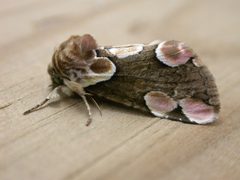
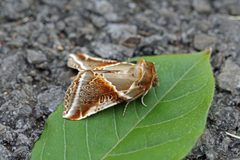
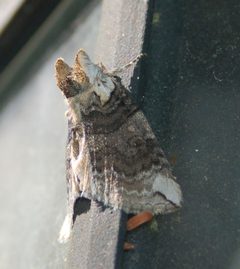
Members of Thyatirinae typically exhibit cryptic coloration with intricate patterns that provide camouflage against tree bark. Some possess tufted thoracic scaling. Wing patterns often incorporate salt-and-pepper mottling, wavy transverse lines, and contrasting dark and light patches that disrupt the 's outline. The includes species with relatively broad, rounded forewings. Genital , particularly of male clasping structures and female genital plates, serves as critical diagnostic features for species-level identification.
Distribution
distribution with representatives in the Palearctic, Oriental, Afrotropical, Nearctic, and Neotropical regions. Afrotropical documented from Tanzania, Zambia, Zimbabwe, and South Africa, with additional records from East Africa. The exhibits highest diversity in temperate and subtropical forested regions of the Northern Hemisphere.
Similar Taxa
- Drepaninae (hooktip moths)Also placed in Drepanidae; distinguished by falcate or hooked forewing apices, which Thyatirinae lack. Drepaninae also differ in genital and wing venation.
- Noctuidae (owlet moths) '' reflects superficial resemblance; Thyatirinae historically confused with this large but now placed in Drepanidae based on phylogenetic and morphological evidence.
More Details
Taxonomic History
Thyatirinae was historically treated as the separate in most classifications. Recent phylogenetic studies have supported its placement as a within Drepanidae alongside the hooktip moths (Drepaninae). This reclassification reflects improved understanding of lepidopteran relationships based on molecular and morphological data.
Research Activity
The Afrotropical fauna has been subject to intensive taxonomic study, with a 2022 review establishing new Watsonopsestis, elevating Aethiopsestis austrina nebulosa to rank, and providing the first description of female genitalia for Aethiopsestis mufindiae.