
Habrosynini
Genus Guides
2- Habrosyne
- Pseudothyatira(tufted thyatirid moth)
Habrosynini is a tribe of within the Drepanidae, commonly known as hook-tip moths. Members of this tribe are characterized by their distinctive wing shapes and are primarily distributed across the Palearctic and Oriental regions. The tribe includes several , most notably Habrosyne, which are medium-sized moths often encountered in forested .
Pronunciation
How to pronounce Habrosynini: //həˌbrɒsɪˈnaɪnaɪ//
These audio files are automatically generated. While they are not always 100% accurate, they are a good starting point.
Identification
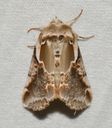
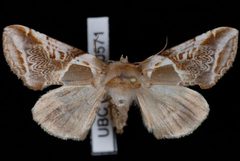
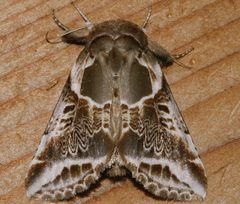
Habrosynini can be distinguished from other Drepanidae tribes by forewing venation patterns and genitalia structure. in this tribe generally lack the strongly falcate (sickle-shaped) wing tips seen in some other drepanid groups. The Habrosyne, the primary representative, features relatively broad, rounded wings with intricate patterns of brown, gray, and orange tones.
Images
Habitat
Forest , particularly deciduous and mixed woodlands. Many are associated with areas where larval plants (primarily Rubus and related in Rosaceae) occur.
Distribution
Primarily Palearctic and Oriental regions. The tribe extends from Europe through temperate Asia to Japan, with greatest diversity in East Asia.
Seasonality
are active primarily from late spring through summer, with peak activity varying by latitude. Most are with a single per year.
Diet
Larvae feed on Rosaceae, particularly Rubus (brambles, raspberries, blackberries). Specific associations have been documented for several .
Host Associations
- Rubus - larval food plantprimary
- Rosaceae - larval food plant-level association
Life Cycle
Complete with , larva, pupa, and stages. Larvae are external feeders on leaves. occurs in a cocoon, often on the ground or in leaf litter.
Behavior
are and attracted to light. Larvae feed openly on foliage and may display thrashing movements when disturbed.
Ecological Role
Larvae function as folivores in forest and woodland . They contribute to nutrient cycling through herbivory on Rosaceae shrubs and are prey for various .
Human Relevance
Minimal direct economic impact. Some may occasionally feed on cultivated Rubus, but damage is generally minor. are frequently recorded in surveys and biodiversity monitoring.
Similar Taxa
- DrepaniniAnother tribe in Drepanidae; distinguished by more strongly hooked forewing tips and different genitalia structure
- Cyclidiinae of Drepanidae with different wing shape (often more triangular) and different larval associations
More Details
Taxonomic History
Habrosynini was established to accommodate previously placed in broader concepts of Drepanidae. The tribe is well-supported by morphological and molecular data, with Habrosyne as the type genus.
Research Needs
details remain poorly documented for many East Asian . Larval records are incomplete outside of European and Japanese faunas.