Pennisetia
Dehne, 1850
raspberry clearwing moths
Species Guides
1- Pennisetia marginatum(Raspberry Crown Borer)
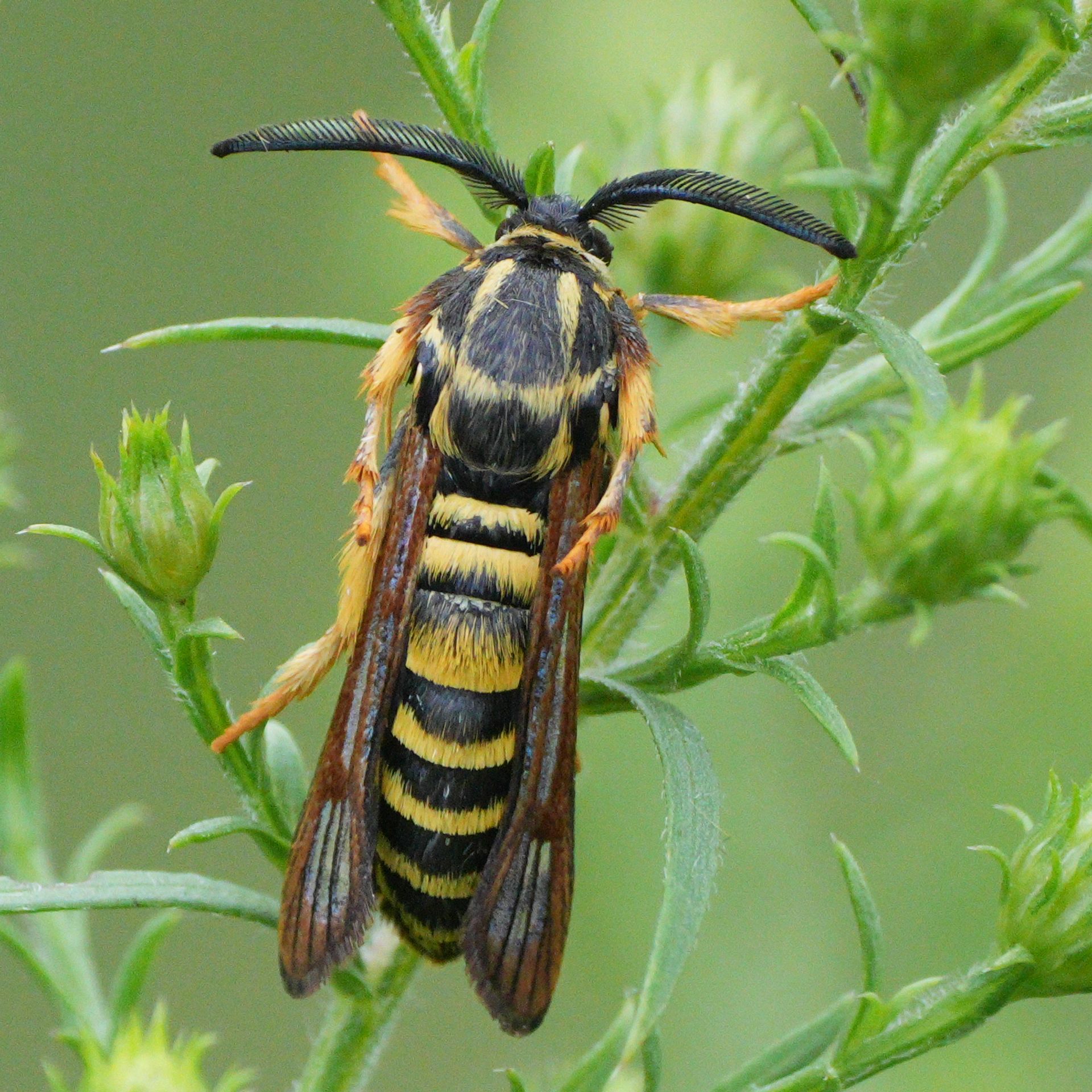
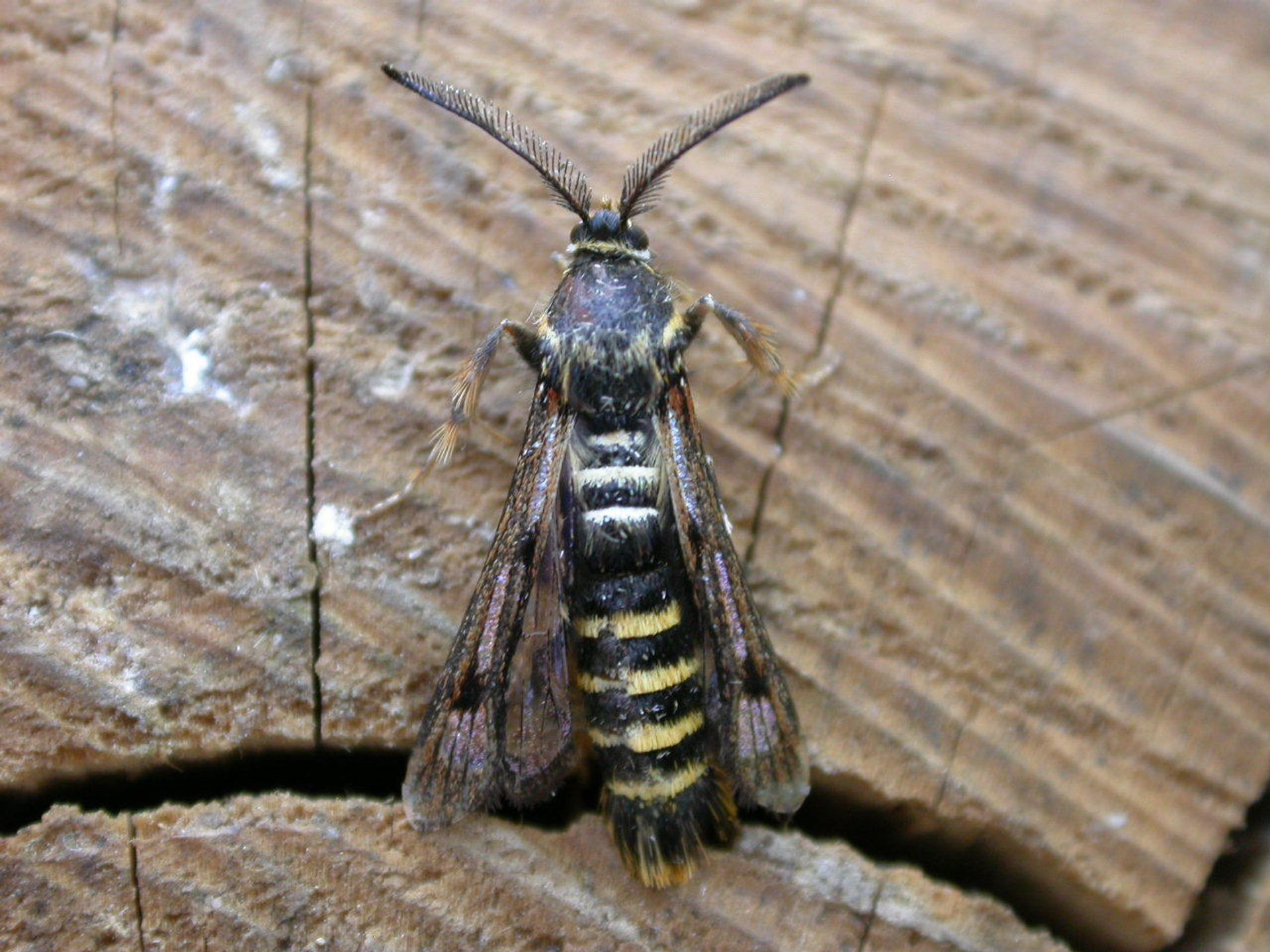
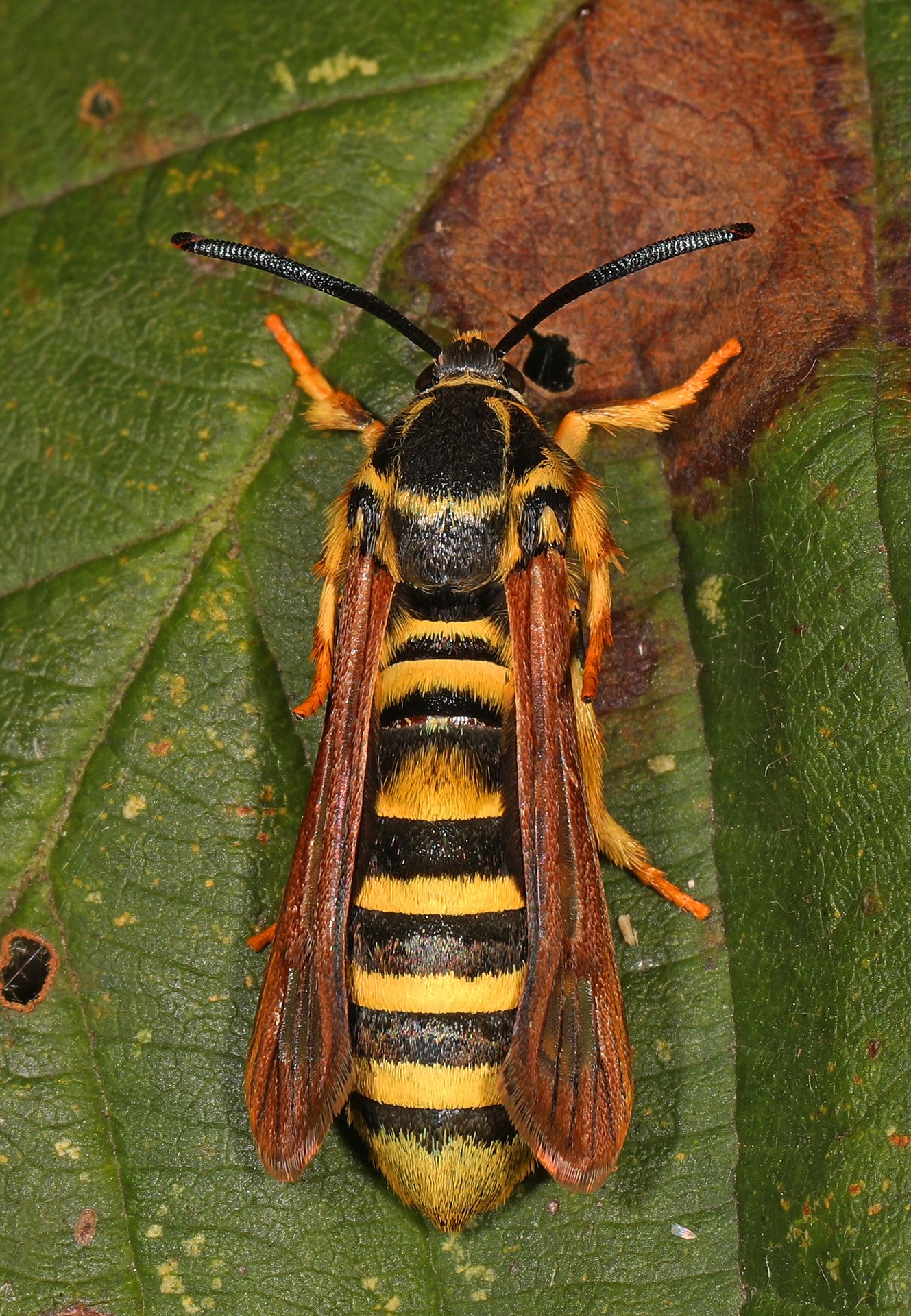
Pennisetia is a of clearwing moths in the Sesiidae, commonly known as raspberry clearwing moths. The genus contains approximately 14 described distributed across the Palearctic region and North America. Species in this genus are characterized by their -mimicking appearance, with transparent wings and narrow dark borders. Pennisetia hylaeiformis, the type species, has been extensively studied for its and serves as a model for understanding sesiid chemical .
Pronunciation
How to pronounce Pennisetia: //ˌpɛnɪˈsiːʃə//
These audio files are automatically generated. While they are not always 100% accurate, they are a good starting point.
Identification
Identification of Pennisetia relies on examination of external morphological characters and male genitalia. Species can be distinguished by wing venation patterns, the shape and coloration of abdominal bands, and the structure of the uncus and gnathos in male genitalia. On Sakhalin Island, P. hylaeiformis and P. fixseni can be separated by differences in their external characters and male genital .
Images
Distribution
The Pennisetia has a wide distribution spanning the Palearctic region and North America. Records include Denmark, Norway, Sweden, Germany, Russia (including Sakhalin Island), China, Japan, and the eastern United States (Vermont). Specific distributions vary: P. hylaeiformis occurs across Europe and Asia, while P. fixseni is found in East Asia including Sakhalin.
Seasonality
activity occurs during daylight hours. Field studies of P. hylaeiformis in Germany showed pronounced male response to lures in the later afternoon.
Host Associations
- Rubus idaeus - larval Association inferred from 'raspberry clearwing moth' for P. hylaeiformis; specific records for other Pennisetia are not documented in available sources.
Behavior
Males of P. hylaeiformis have been observed to fly straight toward sources over distances up to 1000 meters, even across open terrain lacking visual landmarks. Visual cues such as tree silhouettes do not appear essential for pheromone orientation. Males respond to synthetic pheromone blends during daylight only, with activity peaking in late afternoon.
Human Relevance
Pennisetia hylaeiformis is of economic concern as a pest of raspberry (Rubus idaeus). The has been used as a model organism for studying sesiid , with field attraction studies conducted to identify candidate pheromone components for potential monitoring or control applications.
Similar Taxa
- SynanthedonBoth are of clearwing moths in Sesiidae with transparent wings and -mimicking appearance; distinguished by differences in wing venation, abdominal banding patterns, and male genitalia structure.
- SesiaAnother sesiid with clearwing ; Pennisetia typically have more slender and different wing border patterns.
More Details
Pheromone biology
P. hylaeiformis males are attracted to blends of (E,Z)-3,13-octadecadienyl acetate and its corresponding alcohol. The 100:100 blend ratio is most attractive over long range, while ratios skewed toward either component have reduced drawing range. Synergistic effects occur even when the two compounds are released from separate dispensers up to 1 meter apart.
Taxonomic history
The was established by Dehne in 1850. Subspecific classification has been proposed for some , including P. hylaeiformis hylaeiformis and P. hylaeiformis assimilis, as well as P. fixseni fixseni and P. fixseni admirabilis, though the taxonomic status of these forms varies by region.
Sources and further reading
- BugGuide
- Wikipedia
- GBIF taxonomy match
- iNaturalist taxon
- NCBI Taxonomy
- Catalogue of Life
- New data on the distribution of the genus Pennisetia Dehne, 1850 (Lepidoptera: Sesiidae) on Sakhalin Island, Russia
- Field attraction response of raspberry clearwing moths, Pennisetia hylaeiformis Lasp. (Lepidoptera: Sesiidae), to candidate pheromone chemicals