
Sesia
Fabricius, 1775
clearwing moths
Species Guides
3- Sesia apiformis(Hornet Moth)
- Sesia spartani(Spartans' clearwing)
- Sesia tibiale(American Hornet Moth)
Sesia is a of clearwing moths in the Sesiidae, characterized by their -like appearance due to transparent wings and narrow bodies. These are active during daylight hours and are often mistaken for hymenopterans. The genus includes that develop as wood-boring larvae in various tree .
Pronunciation
How to pronounce Sesia: //ˈsɛ.si.a//
These audio files are automatically generated. While they are not always 100% accurate, they are a good starting point.
Identification
Distinguished from other Sesiidae by specific wing venation patterns and genitalia ; from actual by the presence of on wing margins and body, and by structure. -level identification requires examination of genitalia or detailed wing pattern analysis.
Images
Appearance
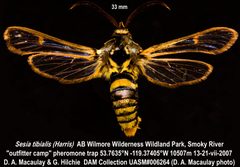
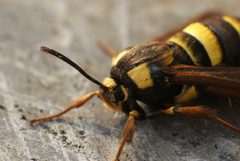
have narrow, elongated bodies with predominantly transparent wings due to reduced scaling, giving a -mimicking appearance. Wings often have dark borders and . Body coloration typically includes yellow, orange, or reddish bands against a dark background. are often thickened or clubbed at the tips.
Habitat
Associated with woodland and forest edge where larval trees occur; often found in sunny clearings, meadows, and along forest margins near host plants.
Distribution
Holarctic distribution, with occurring across Europe, Asia, and North America. Specific range varies by species within the .
Seasonality
active during summer months, typically June to August in temperate regions; exact timing varies by and latitude.
Host Associations
- Various deciduous trees and shrubs - larval Larvae bore into wood of living or dead trees; specific vary by
Life Cycle
Complete with wood-boring larval stage. Larvae tunnel in stems, trunks, or roots of plants, taking one to several years to develop depending on . occurs in the larval gallery or in soil.
Behavior
activity pattern; fly during daylight hours. Rapid, direct that mimics movement. Adults visit flowers for nectar.
Ecological Role
Larvae contribute to wood decomposition in forest ; serve as of flowering plants.
Human Relevance
Some are considered minor forestry pests when larvae damage ornamental or timber trees; otherwise of limited economic significance.
Similar Taxa
- SynanthedonAnother large sesiid with similar clearwing appearance; distinguished by differences in wing venation, genitalia, and often more extensive dark wing markings
- BembeciaSimilar -mimicking clearwings; separated by structural differences in and wing scaling patterns
More Details
Etymology
The name Sesia was established by Fabricius in 1775; the name predates and is unrelated to the Sesia river in Italy, which is of Celtic origin meaning 'swampy'.