
Ithomiini
Godman & Salvin, 1879
clearwings, glasswings, tigerwings
Genus Guides
3- Greta(Glasswing Butterflies)
- Melinaea(clearwing butterflies)
- Pteronymia(Clearwing butterflies)
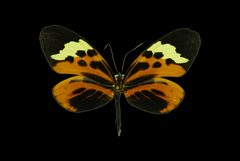
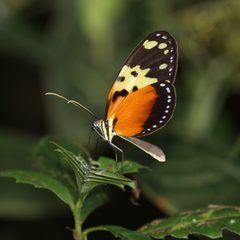
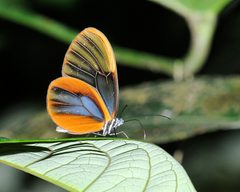
Ithomiini is a diverse tribe of approximately 370 in 40–45 , to the Neotropics from Mexico to Argentina. These butterflies are renowned for their Müllerian mimicry rings, slow , and unpalatability derived from sequestered . actively seek out and sequester these defensive compounds from plants rather than synthesizing them de novo. The tribe represents the largest known radiation of Müllerian mimetic butterflies and dominates Neotropical mimetic by number.
Pronunciation
How to pronounce Ithomiini: //ɪˌθoʊmiˈaɪnaɪ//
These audio files are automatically generated. While they are not always 100% accurate, they are a good starting point.
Identification
identification relies on hindwing venation patterns and examination of male androconial (sex brushes) located on the hindwing . The combination of slow , transparent or semi-transparent wings, and Neotropical distribution distinguishes ithomiines from superficially similar pierids and other clearwing butterflies. Subtribe-level classification based on is subject to ongoing revision.
Images
Habitat
Humid tropical and subtropical forests from sea level to 3000 m elevation. Found in primary and secondary forests, forest edges, and occasionally in agroecosystems such as shade coffee plantations. Microhabitat preferences vary by , with some associated with forest understory and others with gaps.
Distribution
Exclusively Neotropical: Mexico through Central America and South America to Argentina. Absent from Caribbean islands except Trinidad. Greatest diversity in Amazon basin and Andean foothills.
Seasonality
active year-round in equatorial regions; activity peaks vary with local rainy seasons at higher latitudes and elevations. Specific varies by and locality.
Diet
Larvae feed primarily on Solanaceae; exceptions include basal Tithorea, Aeria, and Elzunia feeding on Echiteae vines (Apocynaceae), and Megoleria and Hyposcada feeding on Gesneriaceae. feed on nectar and sequester from flowers of Asteraceae (tribe Eupatorieae), Boraginaceae (Tournefortia, Heliotropium), Apocynaceae (Prestonia), and Orchidaceae (Epidendrum), as well as from withered or damaged plant tissues.
Host Associations
- Solanaceae - primary larval plant Most ithomiine larvae feed on Solanaceae; specific include Solanum, Brunfelsia, and Sessea
- Apocynaceae (Echiteae) - larval for basal Tithorea, Aeria, and Elzunia feed on Echiteae vines (Apocynoideae)
- Gesneriaceae - larval for derived Megoleria and Hyposcada feed on Gesneriaceae
- Asteraceae (Eupatorieae) - alkaloid source visit for
- Boraginaceae - alkaloid sourceTournefortia and Heliotropium visited by , especially males
- Apocynaceae (Prestonia) - alkaloid sourceVisited by for
- Orchidaceae (Epidendrum paniculatum) - alkaloid sourceVisited by for
Life Cycle
Complete with , larval, pupal, and stages. Eggs laid individually on plant leaves and stems, often on young growth. Larval development approximately 30 days under favorable conditions; pupal stage approximately 14 days. Total development from egg to adult approximately 44 days, though timing varies by , temperature, and altitude. Some species (e.g., Mechanitis menapis) have gregarious larvae that use silk trails for and group cohesion.
Behavior
fly slowly and deliberately, often in forest understory. Males actively seek sources, including flowers and withered plant tissues, which they scratch with legs to extract oozing sap. Adults of both sexes aggregate at mineral sources. Gregarious larval in some involves following silk trails produced by conspecifics to maintain group cohesion while feeding. Adults participate in Müllerian mimicry rings with other ithomiines and with species from Danainae, Pieridae, and various .
Ecological Role
Major components of Müllerian mimicry complexes in Neotropical forests, serving as both models and mimics. Unpalatability to (birds, spiders, monkeys) has been experimentally demonstrated. Proposed as biological indicators of forest ecological conditions and biodiversity, though high beta diversity limits their utility at local . Larvae subject to by ichneumonid wasps (e.g., Hyposoter sp.).
Human Relevance
Important research organisms for studies of mimicry, chemical , and evolutionary . Captive breeding has been demonstrated for some (e.g., Pteronymia zerlina, P. medellina) with potential for ecotourism and environmental education applications. Some species have been proposed as indicators for conservation monitoring in neotropical forests.
Similar Taxa
- DanainiAlso unpalatable Danainae with Müllerian mimicry; distinguished by different wing venation, lack of androconial on male hindwing , and different larval plant associations
- TellerviniSister tribe containing single Australasian ; geographically separated and morphologically distinct
- Heliconius (Heliconiinae)Co-occurs in mimicry rings and shares orange/black warning coloration; distinguished by different wing shape, faster , and different alkaloid
- Dismorphia (Pieridae)Mimic of ithomiine transparency group; distinguished by different wing venation, structure, and larval plants (Fabaceae)
- Ctenuchidae and Arctiidae (moths) that enter ithomiine mimicry rings; distinguished by moth , different body shape, and often different periods
More Details
Chemical defense
The source of defensive chemicals was historically misattributed to larval plants; research by Thomas Belt (1889) and subsequent demonstrated that sequester from visited plants. This was among the first experimental demonstrations of chemical defense in insects.
Genomic resources
First - became available in 2023 for Melinaea marsaeus, M. menophilus, and draft genome of Ithomia salapia, enabling comparative studies of mimicry genetics and chemosensory gene evolution.
Sources and further reading
- BugGuide
- Wikipedia
- iNaturalist taxon
- NCBI Taxonomy
- Catalogue of Life
- Population Biology of Mcclungia cymo salonina (Nymphalidae: Ithomiini)
- Breeding Feasibility of Pteronymia Zerlina and P. Medellina (Lepidoptera: Danainae: Ithomiini)
- Ciclo de vida y enemigos naturales de Mechanitis menapis mantineus (Lepidoptera: Ithomiini)
- Multiple axes of visual system diversity in Ithomiini, an ecologically diverse tribe of mimetic butterflies
- First chromosome scale genomes of ithomiine butterflies (Nymphalidae: Ithomiini): Comparative models for mimicry genetic studies
- First chromosome scale genomes of ithomiine butterflies (Nymphalidae: Ithomiini): comparative models for mimicry genetic studies
- Multiple axes of visual system diversity in Ithomiini, an ecologically diverse tribe of mimetic butterflies
- Analysis of some morphological characters of Elzunia Bryk, 1937 (Nymphalidae: Danainae: Ithomiini) results in a revised classification
- História natural e dinâmica populacional dos imaturos de "Pseudoscada erruca" (Nymphalidae: Ithomiini) e seus parasitoides em sua planta hospedeira "Sessea brasiliensis" (Solanaceae)
- Ecology, life history, and genetic differentiation in NeotropicalMelinaea(Nymphalidae: Ithomiini) butterflies from north-eastern Peru
- Silk drives aggregation and following in the neotropical caterpillar Mechanitis menapis (Nymphalidae: Ithomiini)
- Life Cycle and Host Plants ofMechanitis menapis doryssus1(Danainae: Ithomiini) in Mexico
- Nuevos registros de plantas hospederas y disponibilidad de recursos para mariposas Ithomiini (Lepidoptera: Nymphalidae: Danainae), en agroecosistemas de café colombianos
- Description of the biology and immature stages ofPagyris ulla(Hewitson) (Lepidoptera: Nymphalidae: Ithomiini) in the Colombian Andes
- Notes on the geographic distribution and subspecific taxonomy of Sais rosalia (Cramer) (Lepidoptera, Nymphalidae, Ithomiini), including the first records in Paraguay