
Danainae
Milkweed Butterflies, Danaids
Tribe Guides
2Danainae is a of brush-footed butterflies (Nymphalidae) comprising approximately 300 worldwide. Members are commonly known as due to their obligate larval association with milkweed plants (Apocynaceae). The group includes three tribes: Danaini (tropical Asia, Africa, and four North American species including the monarch), Ithomiini (clearwing butterflies of the Neotropics), and Tellervini (restricted to Australia and the Oriental region). are aposematically colored, advertising their of toxic cardiac glycosides from plants.
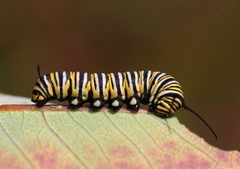
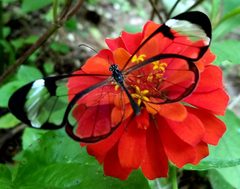
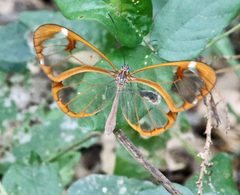
Pronunciation
How to pronounce Danainae: /ˈdænəˌnaɪ/
These audio files are automatically generated. While they are not always 100% accurate, they are a good starting point.
Identification
Distinguished from other Nymphalidae by combination of: (1) aposematic coloration with specific orange-black-white patterning in Danaini; (2) reduced or absent wing scaling producing clear wings in Ithomiini; (3) larval thoracic ; (4) obligate association with Apocynaceae plants. Forelegs are reduced and brush-like as in all Nymphalidae, not unique to Danainae. Separated from similarly colored heliconiines by larval host plant and male genitalic structures.
Images
Appearance
exhibit bright, contrasting coloration—often orange, black, and white patterns—that serves as aposematic (warning) signals. Ithomiini (clearwing butterflies) represent an exception with transparent or semi-transparent wings due to reduced wing . Larvae possess distinctive thoracic . Wing shape varies: Danaini typically have rounded, broad wings; Ithomiini have elongated, narrow wings with reduced scaling.
Habitat
Primarily tropical and subtropical regions. Danaini occupy diverse including savannas, forest edges, and agricultural areas where milkweeds grow. Ithomiini are restricted to Neotropical forests, particularly mid-elevation cloud forests. Tellervini occur in Australian and Oriental region forests. North American Danaini (monarch, , soldier, tropical milkweed butterfly) range from southern Canada through tropical Mexico.
Distribution
Global distribution with strong tropical concentration. Danaini: tropical Asia, Africa, and limited representation in North America (four ). Ithomiini: exclusively Neotropical, with highest diversity in Andean regions. Tellervini: Australia and Oriental region. The monarch butterfly (Danaus plexippus) has the widest distribution, with migratory reaching southern Canada and sites in central Mexico.
Seasonality
Activity patterns vary by tribe and latitude. Tropical are active year-round. North American Danaini show distinct seasonal patterns: monarchs undergo multi-generational with spring northward movement and autumn southward return; queens and soldiers are active spring through fall in southern ranges, with reduced winter activity. of monarchs occur from November to March in Mexican oyamel forests.
Diet
Larvae feed exclusively on plants in Apocynaceae, particularly milkweeds (Asclepias, Calotropis, Gomphocarpus) and related containing cardiac glycosides. feed on nectar from diverse flowering plants; also recorded taking fluids from rotting fruit, , and carrion. Adult feeding does not involve plant specialization.
Host Associations
- Asclepias - larval Primary for North American Danaini
- Calotropis - larval Important in Old World tropics
- Gomphocarpus - larval African and Asian
Life Cycle
Holometabolous with complete . laid singly or in small clusters on plant leaves, stems, or flowers. Larvae pass through five instars, sequestering cardiac glycosides from host plant latex. occurs on host plant or nearby vegetation, with chrysalis often suspended by . lifespan varies: non-migratory tropical live weeks to months; migratory monarchs may live 8-9 months for the .
Behavior
are and strong fliers. Many engage in mud-puddling , aggregating at damp soil to extract sodium and other minerals. Males of some species possess hair pencils (androconial organs) that disseminate during courtship. undertake the longest-known insect , with individuals traveling up to 4,800 km between breeding and sites. Aggregative roosting occurs during migration and at overwintering sites.
Ecological Role
Larvae function as herbivores on Apocynaceae, with of cardiac glycosides making them unpalatable to most . This chemical defense extends to , which are avoided by birds, lizards, and other . The aposematic has driven Müllerian mimicry complexes with other toxic butterflies (heliconiines, pierids) and even . Adults serve as of diverse flowering plants. Larvae and adults are prey for specialized (tachinid flies, ) that have overcome chemical defenses.
Human Relevance
Monarch butterfly is among the most recognized insects globally, serving as flagship for insect conservation and awareness. Declining monarch have prompted extensive conservation efforts including milkweed planting initiatives, protection, and regulation. are used in chemical research studying , mimicry, and -prey interactions. Some tropical species are collected for the trade. All North American Danaini are of conservation concern due to habitat loss and pesticide use.
Similar Taxa
- HeliconiinaeSimilarly aposematic orange-black coloration and Müllerian co-mimics; distinguished by larval plants (Passifloraceae vs. Apocynaceae) and different wing venation patterns.
- Pieridae (certain species)Some orange-patterned pierids (e.g., Delias) share coloration but lack cardiac glycoside ; distinguished by larval (Loranthaceae, Santalaceae) and wing structure.
- Sesiidae (clearwing moths)Ithomiini clearwings resemble sesiid in transparent wings; distinguished by activity, clubbed , and different patterns.
More Details
Chemical Ecology
Danainae are the primary textbook example of of plant secondary metabolites for defense. Cardiac glycosides (cardenolides) from Asclepias and related are sequestered in larval tissues and retained through , rendering toxic. Specific cardenolide profiles vary with plant and affect deterrence.
Fossil Record
The oldest known , Archaeolycorea, is preserved in the Tremembé Formation (Oligocene-Miocene boundary, ~23-30 million years ago) of Brazil, indicating the originated by at least the late Paleogene.