
Lycorea
Doubleday, 1847
tropical milkweed butterfly, mimic queen
Species Guides
1- Lycorea halia(Tropical Milkweed Butterfly)
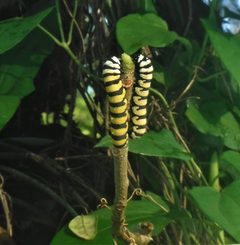
Lycorea is a of brush-footed butterflies in the Danainae, known as milkweed butterflies. The three described occur from Mexico through Central America into South America. Members are noted for their participation in Müllerian mimicry complexes, with some species resembling clearwing ithomiine butterflies. The genus was established by Doubleday in 1847.
Pronunciation
How to pronounce Lycorea: //laɪˈkɔːriə//
These audio files are automatically generated. While they are not always 100% accurate, they are a good starting point.
Identification
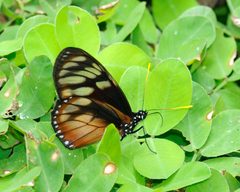
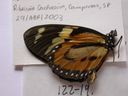
Lycorea can be distinguished from other danaine by their relatively large size and distinctive wing patterns. Lycorea halia has orange-brown wings with black borders and white spots. Lycorea ilione and L. pasinuntia exhibit reduced wing scaling creating partially transparent wings, resembling ithomiine clearwings. These two species differ in the extent and pattern of clear areas on the wings. All species have the reduced forelegs characteristic of Nymphalidae.
Images
Distribution
Mexico, Central America, and South America.
Similar Taxa
- IthomiiniLycorea ilione and L. pasinuntia are Müllerian mimics of clearwing ithomiine butterflies, sharing transparent wing areas and similar patterns.
- DanausBoth belong to Danainae and share orange-brown coloration in some , though Lycorea is generally larger with different wing venation.
More Details
Species list
Three are currently recognized: Lycorea halia (tropical milkweed butterfly), Lycorea ilione (clearwing mimic ), and Lycorea pasinuntia (pasinuntia mimic queen).
Mimicry relationships
The transparent-winged L. ilione and L. pasinuntia participate in Müllerian mimicry rings with ithomiine butterflies, where unpalatable species converge on similar warning signals.