
Pteronymia
Butler & Druce, 1872
Clearwing butterflies
Species Guides
1A of clearwing butterflies in the tribe Ithomiini, characterized by reduced wing scaling that creates transparent or semi-transparent wing areas. The genus contains approximately 40 described distributed in the Neotropics. Members exhibit Müllerian mimicry with other ithomiine genera and are active during daylight hours.
Pronunciation
How to pronounce Pteronymia: /tɛɹɔˈnɪmiə/
These audio files are automatically generated. While they are not always 100% accurate, they are a good starting point.
Identification
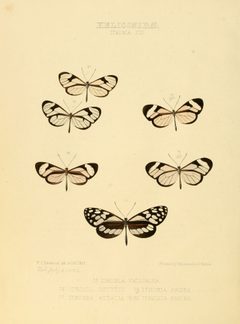
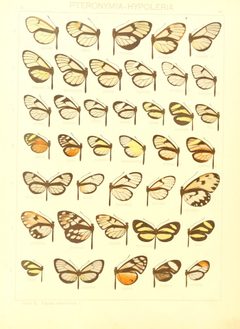
Clear or partially transparent wings due to reduced on wing , a defining trait of the Ithomiini tribe. Forewings and hindwings typically dark-bordered with hyaline central areas. clubbed with rounded tips. Front legs reduced and brush-like, not used for . Specific identification requires examination of wing pattern details, body size, and geographic origin.
Images
Distribution
Neotropical region. Specific range varies by ; individual species distributions documented from Central America through northern South America including Colombia, Ecuador, Peru, and Brazil.
Diet
feed on nectar and have been observed feeding on decomposing organic matter. Larval plants are in the Solanaceae, though specific host associations vary by and remain incompletely documented for many .
Host Associations
- Solanaceae - larval plant-level association; specific and vary by Pteronymia species
Life Cycle
Complete with four stages: , larva, pupa, . For P. zerlina and P. medellina: eggs hatch in 5–6 days; larval stage includes 5 instars over approximately 30 days; pupal stage lasts 12–15 days; total development from egg to adult approximately 47–51 days. Larvae feed gregariously in early instars, becoming solitary in later instars.
Behavior
are . Larvae exhibit gregarious feeding in early instars, transitioning to solitary in later developmental stages. Adults participate in Müllerian mimicry complexes with other ithomiine butterflies.
Ecological Role
. contribute to pollination through nectar feeding. Larvae function as herbivores on Solanaceae plants. Participation in Müllerian mimicry rings may influence learning and dynamics.
Human Relevance
Subject of ecological and conservation research, particularly regarding breeding feasibility for sustainable development and environmental education programs. Some studied for captive breeding potential.
Similar Taxa
- IthomiaAlso ithomiine clearwings with transparent wing areas; distinguished by wing venation details and specific pattern elements
- MechanitisIthomiine with similar transparent wing ; differs in wing shape and pattern arrangement
- NapeogenesShares reduced wing scaling and mimicry associations; separated by body proportions and wing pattern specifics