
Comadia redtenbacheri
Hammerschmidt, 1848
agave red worm, chinicuil, gusano rojo del maguey
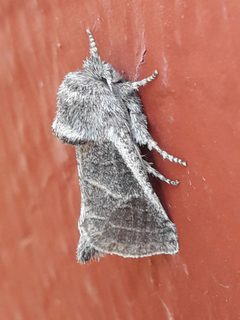
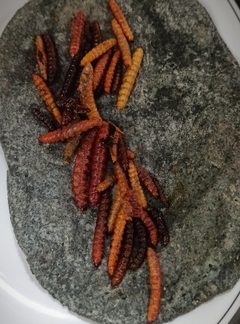
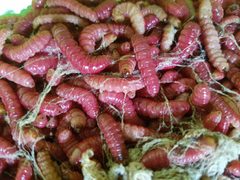
Comadia redtenbacheri is a in the Cossidae, commonly known as the agave red worm or chinicuil. It is a phytophagous whose larvae bore into Agave plants, particularly the rhizomes. The species has significant cultural and economic importance in Mexico as a traditional food source. are small moths with forewings 12–14 mm in males and 13–16 mm in females. The species has a long, non-uniform that can exceed one year.
Pronunciation
How to pronounce Comadia redtenbacheri: /koʊˈmɑːdiə rɛdˈtɛnˌbækəri/
These audio files are automatically generated. While they are not always 100% accurate, they are a good starting point.
Identification
are small cossid with relatively narrow wings compared to some relatives; forewing length under 16 mm distinguishes them from larger cossid . Larvae are found exclusively in Agave plants and can be distinguished from the sympatric Aegiale hesperiaris (maguey white worm) by their red coloration in late instars, aposematic markings, and volatile defensive secretion. The two species also differ in larval : C. redtenbacheri larvae are gregarious and migrate to the rhizome, while A. hesperiaris has different feeding habits.
Images
Habitat
Associated exclusively with Agave plants. are laid at the base of external dry leaves. Larvae initially feed near the egg mass, then migrate toward the rhizome as they develop. occurs in soil beneath the plant. Found in arid and semi-arid regions where Agave occur.
Distribution
North America: Mexico (states of Hidalgo, State of Mexico, Querétaro, Zacatecas, Tlaxcala, Oaxaca, Guanajuato) and southern Texas, USA. Molecular studies confirm across North Central, South Central, and East Central regions of Mexico.
Seasonality
have been recorded on wing from April to May and again in September. This suggests either a pattern or extended period in some . Given the long larval development (exceeding one year), the April–May emergence likely represents the primary period.
Diet
internal feeder on Agave tissues. larvae feed on the for several days after hatching before transitioning to plant tissues. Larvae feed on internal tissues of the rhizome and lower stem. Specific host records include Agave salmiana, A. applanata, A. mapisaga, and A. atrovirens.
Host Associations
- Agave salmiana Otto ex Salm-Dyck - and larvae found at base of external leaves; primary for larval development.
- Agave applanata Lem. ex Jacobi - Confirmed through field observations and demographic impact studies; commonly harvested for chinicuil extraction.
- Agave mapisaga Trel. - Pulque agave; listed as main in studies.
- Agave atrovirens - Pulque agave; confirmed association.
Life Cycle
Long exceeding one year with non-uniform development among individuals. are brown and laid at the base of external dry leaves. larvae perforate the and feed on it for several days. Larvae are gregarious; they migrate toward the rhizome as they mature through instars. Development is prolonged and asynchronous. Last instar larvae construct a silken cocoon under the soil for . are .
Behavior
Larvae exhibit gregarious , particularly in early instars. Last instar larvae are aposematic and release a volatile odoriferous secretion when disturbed, presumably as chemical defense against . are strictly . Female calling behavior begins one hour after the onset of scotophase (dark period) and may continue until 5:30 am. Oviposition occurs several hours after mating.
Ecological Role
Larvae serve as significant food source for multiple , including the ichneumonid Lissonota fascipennis and the tachinid fly Acantholespesia texana. Larvae and are preyed upon by ants, rodents, and birds. Larvae are commonly infected by fungal and bacterial . As a herbivore, larval feeding can substantially impact plant , with extraction practices reducing Agave applanata populations by up to 57%.
Human Relevance
Culturally and economically significant edible insect in Mexico, known as chinicuil or gusano rojo del maguey. Larvae are harvested from wild Agave plants for traditional cuisine, particularly in Hidalgo and Oaxaca. Extraction requires sacrificing plants, creating conservation concerns for Agave . under controlled conditions has been developed to reduce wild harvest pressure. Nutritional studies show high protein and lipid content; protein hydrolysates exhibit antioxidant activity and angiotensin-converting (ACE) inhibitory effects with potential nutraceutical applications. Potential of 104 per female has been documented for captive breeding programs.
Similar Taxa
- Aegiale hesperiarisAlso occurs in Agave plants in Mexico and is harvested as edible insect (maguey white worm). Distinguished by larval coloration (white vs. red), lack of aposematic markings and defensive secretion in A. hesperiaris, and different larval .
- Other CossidaeMany cossids are wood-borers rather than herb-borers; C. redtenbacheri is the only described Cossidae on Agave. Small size (<16 mm forewing) and specific association help distinguish it from larger, relatives.
More Details
Molecular delineation
COI gene sequencing confirms monophyletic status with >99% bootstrap support. from Querétaro, Zacatecas, Estado de México, Hidalgo, and Tlaxcala show consistent clustering, supporting cohesion across its Mexican range.
Female reproductive morphology
The female shows unusual features: unusually long glandular portion of accessory glands compared to other Lepidoptera, and a small at the base of the bursa copulatrix containing a single .
Cultivation challenges
While yields larger individuals and shows some nutritional advantages, controlled production remains difficult and requires further research on optimizing development conditions.
Sources and further reading
- BugGuide
- Wikipedia
- GBIF taxonomy match
- iNaturalist taxon
- NCBI Taxonomy
- Catalogue of Life
- Bionomics of Comadia redtenbacheri (Hammerschmidt, 1847) (Lepidoptera: Cossidae)
- Morfología del sistema reproductor de la hembra de Comadia redtenbacheri (Hammerschmidt) (Lepidoptera: Cossidae). Morphology of the female reproductive system of Comadia redtenbacheri (Hammerschmidt)
- Adult Emergence and Reproductive Behavior ofComadia redtenbacheriin Confinement
- Molecular delineation of the Agave Red Worm Comadia redtenbacheri (Lepidoptera: Cossidae)
- Differences between wild and cultivated Comadia redtenbacheri: an in vitro study
- Signs and Symptoms inComadia redtenbacheriHamm. (Lepidoptera: Cossidae) Larvae Affected by Parasitoids
- The impact of chinicuil extraction (Comadia redtenbacheri) on the demographic traits of ixtle maguey populations (Agave applanata) Impacto de la extracción de chinicuil (Comadia redtenbacheri) sobre los aspectos demográficos de las poblaciones de maguey del ixtle (Agave applanata)
- Production of Protein Hydrolysates with Antioxidant and Antihypertensive Activity from Edible Larvae of Aegiale hesperiaris and Comadia redtenbacheri
- Acantholespesia texana1: A New Report for Mexico, as a Parasitoid ofComadia RedtenbacheriHamm.2