
Comadia
Barnes & McDunnough, 1911
agave red worm (larvae of C. redtenbacheri), chinicuil (larvae of C. redtenbacheri), gusano rojo del maguey (larvae of C. redtenbacheri)
Species Guides
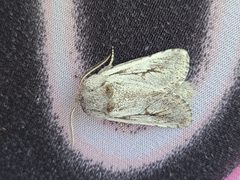
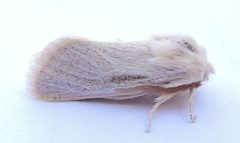
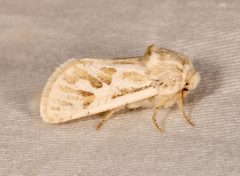
11Comadia is a of carpenter moths (Cossidae) established in 1911, comprising 11 described distributed in North America, particularly Mexico. The genus is best known for Comadia redtenbacheri, whose larvae are economically significant as edible insects (chinicuil or gusano rojo del maguey) and agricultural pests of Agave species. Larvae are internal borers of agave tissues, with a long, non-uniform exceeding one year. are with documented calling and mating . The genus has been subject to taxonomic revision and molecular studies to clarify species boundaries.
Pronunciation
How to pronounce Comadia: /koʊˈmædiə/
These audio files are automatically generated. While they are not always 100% accurate, they are a good starting point.
Images
Habitat
Associated with Agave plants; larvae inhabit internal tissues, particularly rhizomes and bases of external leaves. occurs in silken cocoons under soil. Specific documentation exists for C. redtenbacheri in A. salmiana and A. applanata in Mexico.
Distribution
Mexico: documented in Hidalgo, State of Mexico, Querétaro, Zacatecas, and Tlaxcala. The occurs from Guanajuato to Oaxaca based on plant distribution.
Diet
Larvae feed on internal tissues of Agave . larvae of C. redtenbacheri feed on for several days before migrating to plant tissues.
Host Associations
- Agave salmiana - larval documented for C. redtenbacheri
- Agave applanata - larval documented for C. redtenbacheri; ixtle maguey
- Agave mapisaga - larval documented for C. redtenbacheri
- Agave atrovirens - larval documented for C. redtenbacheri
Life Cycle
Long with non-uniform development lasting more than one year. are laid at base of external leaves. Larvae are gregarious, migrating toward rhizome as they mature. Last instar larvae are aposematic. in silken cocoon under soil. emerge, mate, and oviposit within hours.
Behavior
are . Female calling in C. redtenbacheri begins one hour after scotophase start and may continue until 5:30 am. Larvae are gregarious. Last instar larvae release volatile odoriferous secretion and display aposematic coloration.
Ecological Role
Larvae serve as prey for including Lisonnota fascipennis (Ichneumonidae) and Acantholespesia texana (Tachinidae), and are for fungal and bacterial . include ants, rodents, and birds. Larval boring activity damages host Agave plants, affecting plant .
Human Relevance
Larvae of C. redtenbacheri (chinicuil) are harvested for traditional Mexican cuisine, creating economic pressure on wild . Extraction requires sacrificing plants, reducing Agave applanata populations by up to 57% and preventing sexual maturation. under controlled conditions has been developed to reduce environmental impact. Larvae have nutraceutical value: protein hydrolysates show antioxidant activity and ACE inhibitory effects exceeding commercial drugs.
Sources and further reading
- BugGuide
- Wikipedia
- GBIF taxonomy match
- iNaturalist taxon
- NCBI Taxonomy
- Catalogue of Life
- Bionomics of Comadia redtenbacheri (Hammerschmidt, 1847) (Lepidoptera: Cossidae)
- Morfología del sistema reproductor de la hembra de Comadia redtenbacheri (Hammerschmidt) (Lepidoptera: Cossidae). Morphology of the female reproductive system of Comadia redtenbacheri (Hammerschmidt)
- Adult Emergence and Reproductive Behavior ofComadia redtenbacheriin Confinement
- Molecular delineation of the Agave Red Worm Comadia redtenbacheri (Lepidoptera: Cossidae)
- Differences between wild and cultivated Comadia redtenbacheri: an in vitro study
- The impact of chinicuil extraction (Comadia redtenbacheri) on the demographic traits of ixtle maguey populations (Agave applanata) Impacto de la extracción de chinicuil (Comadia redtenbacheri) sobre los aspectos demográficos de las poblaciones de maguey del ixtle (Agave applanata)
- Signs and Symptoms inComadia redtenbacheriHamm. (Lepidoptera: Cossidae) Larvae Affected by Parasitoids
- Production of Protein Hydrolysates with Antioxidant and Antihypertensive Activity from Edible Larvae of Aegiale hesperiaris and Comadia redtenbacheri
- Acantholespesia texana1: A New Report for Mexico, as a Parasitoid ofComadia RedtenbacheriHamm.2