
Cossidae
Leach, 1815
carpenter millers, cossid millers, goat moths, carpenter moths
Subfamily Guides
3- Cossinae(carpenter moths)
- Hypoptinae(carpenter moths)
- Zeuzerinae(Leopard Moths)
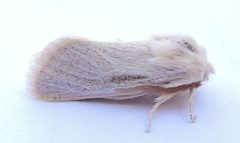
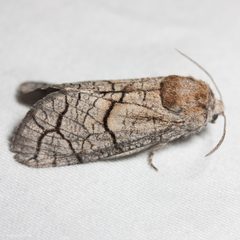
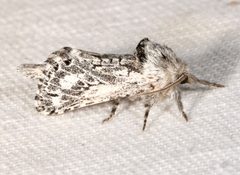
, commonly known as carpenter millers or goat moths, is a of large in the order Lepidoptera. The family contains over 110 with nearly 700 described , with many more awaiting description. Members are found worldwide and are predominantly , with the exception of the Southeast Asian Ratardinae. The family includes some of the largest moths by mass, such as Endoxyla cinereus, which can weigh up to 30 grams with a wingspan reaching 23 centimeters. Many species are economically significant as wood-boring pests, while others have cultural importance as food sources.
Pronunciation
How to pronounce Cossidae: //ˈkɒsɪˌdiː//
These audio files are automatically generated. While they are not always 100% accurate, they are a good starting point.
Identification
can be distinguished from the superficially similar Sphingidae (hawkmoths) by less advanced wing venation and overall . The lacks the abdominal tympanal organs present in the related family Dudgeoneidae. At rest, the large forewing tip markings serve as an important identification cue. Caterpillars are recognized by their smooth bodies with sparse hairs and wood-boring habits. The characteristic unpleasant odor of some (hence '') can be a field clue. Molecular and genitalia examination may be necessary for precise species identification within the family.
Images
Habitat
Associated with woody vegetation; larvae are predominantly tree borers. are found in diverse terrestrial from forests to grasslands with scattered trees. Some are associated with specific plants such as eucalyptus, Artemisia ordosica, and various hardwoods.
Distribution
Worldwide distribution across all major biogeographic regions. Particularly diverse in Australia (over 80 ), with significant representation in the Afrotropical region (234 species in 34 ), the Oriental region, and the Palearctic. The Ratardinae is restricted to Southeast Asia. Species have been documented from Mongolia, Pakistan, India (including Nicobar Islands), Laos, Chile, and North America.
Seasonality
activity pattern for most ; active during night hours. The Ratardinae is exceptional in being mostly . Some species have extended larval development periods lasting up to three years. Adult timing varies by species and region.
Diet
Larvae are predominantly wood-borers, feeding internally on solid wood of living or dead trees. Most cossid caterpillars feed on woody plants; some are documented feeding on roots of herbaceous plants (e.g., Cannabis sativa, though this requires confirmation). do not feed or have reduced feeding; they rely on larval energy reserves.
Host Associations
- Eucalyptus - larval Endoxyla cinereus and related Australian
- Artemisia ordosica - larval Holcocerus artemisiae
- Robinia - larval Prionoxystus robiniae (carpenterworm)
- Various hardwoods - larval Cossus cossus and other widespread
- Cannabis sativa - larval Zeuzera multistrigata (reported, requires confirmation)
Life Cycle
are laid on or near plants. Larvae bore into wood and develop internally, with some requiring up to three years to mature. Caterpillars pupate within their tunnels in the wood. The extended larval period is an to the nutrient-poor wood-boring lifestyle. occurs inside the larval gallery; emerge by chewing exit holes.
Behavior
are predominantly , with the exception of Ratardinae. Larvae exhibit boring in plant stems and trunks. Some caterpillars produce an unpleasant odor, a defensive trait. Adults of some are attracted to light; others are attracted to fermented ('sugaring').
Ecological Role
Larvae act as primary decomposers and wood-borers, contributing to nutrient cycling in forest . Some are significant pests of timber, fruit trees, and ornamental plantings. The serves as a food source for various and . In Australia, larvae (witchetty ) are an important food source for peoples and wildlife.
Human Relevance
Negative: Several are economically important pests, including the carpenterworm (Prionoxystus robiniae) and (Cossus cossus), which damage timber and fruit trees. Positive: Some large caterpillars are edible and culturally significant—witchetty (Endoxyla leucomochla) are iconic Australian bush tucker, and Chilecomadia moorei caterpillars (butterworms) are internationally traded as pet food and fishing . The attracts public and scientific attention due to the impressive size of some species.
Similar Taxa
- SphingidaeSimilar large size and long narrow wings; distinguished by more advanced wing venation and different body proportions
- DudgeoneidaeFormerly included in ; distinguished by presence of abdominal tympanal organs which Cossidae lack
- PsychidaeSome historically misplaced in ; distinguished by larval case-building
Misconceptions
The viral video of Endoxyla cinereus (Giant Wood ) was frequently misidentified as a sphinx moth or Privet Hawk Moth (Psilogramma menephron) due to superficial similarity and lack of familiarity with . The '' is sometimes applied broadly to the , though it specifically refers to Cossus cossus and similar with malodorous larvae.
More Details
Taxonomic Complexity
The has undergone significant taxonomic revision. Formerly divided into six , current recognizes at least eleven subfamilies including Catoptinae, Chilecomadiinae, Cossinae, Cossulinae, Hypoptinae, Mehariinae, Metarbelinae (disputed), Politzariellinae, Pseudocossinae, Ratardinae (disputed), Stygiinae, and Zeuzerinae. The subfamilies Metarbelinae and Ratardinae have disputed status.
Conservation and Research Needs
Many regions remain poorly studied for , including Pakistan and parts of the Afrotropical region. and biological studies are identified as priority research areas for African Cossidae.
Sources and further reading
- BugGuide
- Wikipedia
- GBIF taxonomy match
- iNaturalist taxon
- NCBI Taxonomy
- Catalogue of Life
- Highest bidder names a species after mother | Blog
- Bug Eric: October 2015
- RESULTS AND PROSPECTS OF THE STUDY OF CARPENTER-MOTHS (LEPIDOPTREA, COSSIDAE) OF THE APHROTROPIC REGION
- Aholcocerus arorai Yakovlev & Singh, sp. n. - new species of Cossidae from Nicobar Islands (India) with world catalogue of the genus (Lepidoptera: Cossidae)
- Geostatistical analysis of the Spatial Distribution of Three Boring Pests of Artemisia ordosica (Lepidoptera: Cossidae / Coleoptera: Buprestidae, Curculionidae)
- Figure 2 from: Yakovlev R, Beket U, Witt T (2016) New data on the distribution of Cossidae (Lepidoptera) in Mongolia. Nota Lepidopterologica 39(1): 21-25. https://doi.org/10.3897/nl.39.8043
- Two new species of Cossinae (Lepidoptera: Cossidae) from Sindh Province of Pakistan
- New species of Patoptoformis Yakovlev, 2006 (Lepidoptera, Cossidae: Cossinae) from Northern Laos