
Cossinae
carpenter moths, goat moths
Genus Guides
5- Acossus(carpenterworm moths)
- Comadia(agave red worm (larvae of C. redtenbacheri))
- Fania
- Prionoxystus(carpenterworm moth)
- Toronia(Torus)
Cossinae is the nominate of Cossidae, comprising carpenter or goat moths. Larvae of several are significant wood-boring pests, including the carpenterworm (Prionoxystus robiniae) and (Cossus cossus). In Chile, caterpillars of Chilecomadia moorei are commercially harvested as fishing and terrarium pet food under the trade name 'butterworms'. The subfamily has undergone recent taxonomic revision, with Cossulinae separated from Cossinae, though this was not universally accepted initially.
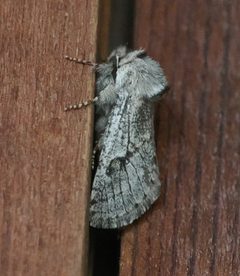
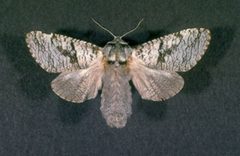
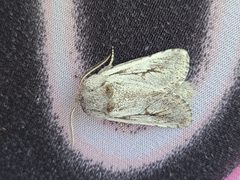
Pronunciation
How to pronounce Cossinae: //ˈkɔs.ɪ.niː//
These audio files are automatically generated. While they are not always 100% accurate, they are a good starting point.
Identification
Identification to and level relies heavily on male and female genitalia , as external characters are often convergent. Distribution maps and detailed locality data are increasingly used in conjunction with morphological characters. Some genera have been moved between Cossinae and Cossulinae, requiring careful attention to current taxonomic placement.
Images
Habitat
Associated with woody vegetation; larvae tunnel in living or dead wood of trees and shrubs. Specific requirements vary by and . The genus Mahomedella occurs in montane regions (Hoggar Mountains, Algeria). Patoptoformis species are found in forested areas of Southeast Asia.
Distribution
Worldwide distribution with concentration in Palearctic, Afrotropical, Oriental, and Neotropical regions. Documented from Pakistan, India, Central Asia (Tajikistan, Kazakhstan), Southeast Asia (Laos, Malaysia/Indonesia via Groenendaelia kinabaluensis), North Africa (Algeria), Southern Africa (South Africa Free State Province), South America (Chile), and Armenia.
Diet
Larvae feed internally on woody plant tissues. Zeuzera have been observed feeding on woody plants; Z. coffeae is a documented pest of walnut (Juglans regia). A report of Z. multistrigata feeding on roots of Cannabis sativa requires confirmation.
Host Associations
Life Cycle
Complete with , larval, pupal, and stages. Larvae are internal feeders in wood, creating tunnels that may weaken trees. occurs within the larval tunnel.
Behavior
are typically . Larvae are concealed feeders, spending their entire development inside woody substrates. Some are significant pests due to wood-boring damage.
Ecological Role
Larvae act as primary consumers of woody plant material. Some are economically important pests of timber and fruit/nut trees. In Chile, Chilecomadia moorei caterpillars represent a harvested resource for recreational fishing and pet food industries.
Human Relevance
Negative: Several are significant forestry and orchard pests, particularly Prionoxystus robiniae (carpenterworm) and Cossus cossus (). Positive: Chilecomadia moorei caterpillars are commercially harvested in Chile for international trade as 'butterworms' for fishing and terrarium pet food.
Similar Taxa
- CossulinaeFormerly included within Cossinae; separated in recent decades based on morphological and molecular characters. Some have been moved between these , and accurate identification requires attention to current tribal and generic placements.
- ZeuzeraZeuzera (zeuzerine carpenter moths) have been treated in pest management literature but their precise placement requires verification; they share wood-boring larval habits with Cossinae.
More Details
Taxonomic instability
The separation of Cossulinae from Cossinae has been contentious, with moved between as relationships become clearer. Cossulinae now appears to represent a .
Commercial exploitation
The Chilean (Chilecomadia moorei) represents a rare example of Lepidopteran larvae harvested at commercial for non-food purposes, with international trade in 'butterworms'.
Research gaps
and of most Cossinae remain poorly known; recent taxonomic work has focused on alpha and distribution rather than .
Sources and further reading
- BugGuide
- Wikipedia
- iNaturalist taxon
- NCBI Taxonomy
- Catalogue of Life
- Mahomedella hoggarensis sp. n. (Lepidoptera, Cossidae, Cossinae) from Southern Algeria
- Two new species of Cossinae (Lepidoptera: Cossidae) from Sindh Province of Pakistan
- New species of Patoptoformis Yakovlev, 2006 (Lepidoptera, Cossidae: Cossinae) from Northern Laos
- Dyspessa sudoli sp. nov.—another new Armenian species (Lepidoptera, Cossidae, Cossinae, Endagriini)
- New species of Arctiocossus Felder, 1874 (Lepidoptera, Cossidae: Cossinae) from Republic of South Africa
- New data on morphology and distribution of little known genus Groenendaelia Yakovlev, 2004 (Lepidoptera, Cossidae: Cossinae) with description of new tribe Groenendaelini Yakovlev, tribus n.
- Review of Semagystia tsimgana species group (Lepidoptera, Cossidae: Cossinae) with description of two new species from Central Asia