
Choreutinae
metalmark moths
Infraorder Guides
11Choreutinae is a of metalmark moths within the Choreutidae, characterized by small size and often metallic coloration. The group was historically classified within various superfamilies but is now placed in its own superfamily Choreutoidea. Members exhibit distinctive wing patterns and are found across diverse geographic regions. The subfamily contains numerous with complex taxonomic relationships that remain under study.
Pronunciation
How to pronounce Choreutinae: //ˌkɔːreɪˈjuːtɪniː//
These audio files are automatically generated. While they are not always 100% accurate, they are a good starting point.
Identification
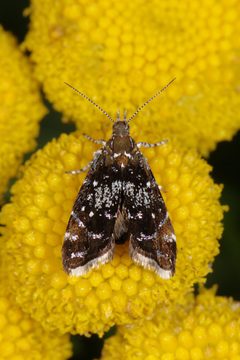
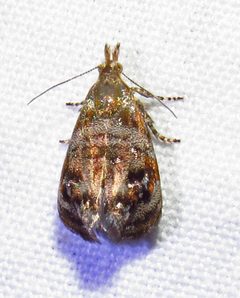
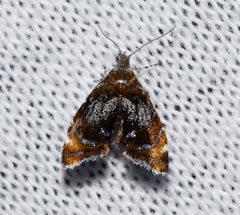
are small , usually with wingspans under 20 mm. Many display metallic or iridescent markings on the wings, often in gold, silver, or tones. Wing patterns frequently include bands, spots, or reticulated designs. At rest, wings are often held in a characteristic tent-like or flattened position. Larvae are typically leaf miners or skeletonizers with distinctive feeding damage visible on plants.
Images
Distribution
distribution with documented across North America, South America, Europe, Asia, Africa, and Australia. Individual species ranges vary considerably, with some restricted to specific regions and others more widespread.
Behavior
are or in many , frequently observed visiting flowers. Some species exhibit rapid, jerky patterns. Larval stages are predominantly leaf miners, creating serpentine or blotch mines within leaf tissue, or skeletonize leaves by feeding on the surface layers.
Ecological Role
Larvae function as herbivores, potentially influencing plant through leaf damage. Limited information available on specific functions.
Human Relevance
Some are minor agricultural or horticultural pests when larval feeding damages ornamental or crop plants. are occasionally encountered by collectors due to their metallic appearance.
Similar Taxa
- GlyphipterigidaeHistorically confused with Choreutidae due to similar small size and previous classification in the same superfamily Yponomeutoidea; distinguished by different wing venation and larval habits.
- TortricidaeSimilar small size and resting posture; Tortricidae typically have more triangular forewings and different wing pattern elements, and larvae usually roll or tie leaves rather than mine them.
More Details
Taxonomic History
Choreutinae and its Choreutidae have undergone repeated reclassification. Previously placed in Yponomeutoidea alongside Glyphipterigidae, and later in , the group was elevated to superfamily Choreutoidea by Minet in 1986. Molecular phylogenetic studies continue to refine its position within Apoditrysia.