
Prochoreutis
Diakonoff & Heppner, 1980
Species Guides
2- Prochoreutis extrincicella
- Prochoreutis inflatella(skullcap skeletonizer moth)
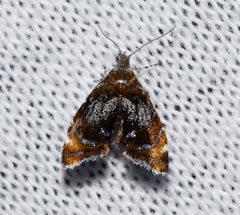
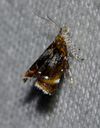
Prochoreutis is a of in the Choreutidae, established by Diakonoff & Heppner in 1980. in this genus are small, often metallic-colored moths commonly known as metalmark moths. The genus has been documented across northern Europe and North America. Members exhibit characteristic Choreutidae with broad, often patterned wings.

Pronunciation
How to pronounce Prochoreutis: //ˌproʊkoʊˈrjuːtɪs//
These audio files are automatically generated. While they are not always 100% accurate, they are a good starting point.
Identification
Prochoreutis can be distinguished from other Choreutidae by genitalic characters and wing pattern details, though specific diagnostic features require expert examination. The genus is small-bodied with relatively broad wings compared to body size. Accurate identification to species level typically requires dissection and reference to original descriptions.
Images
Distribution
Recorded from Denmark, Norway, Sweden, and the northeastern United States (including Vermont).
Similar Taxa
- ChoreutisBoth are within Choreutidae with similar overall ; Prochoreutis is distinguished by genitalic and wing pattern characters established in the 1980 .
- TebennaAnother Choreutidae with similar small size and metallic coloration; separation requires detailed morphological examination.
More Details
Taxonomic history
The was erected by Diakonoff and Heppner in 1980 to accommodate previously placed elsewhere in Choreutidae or newly described at that time.
Observation data
The has accumulated over 1,500 research-grade observations on iNaturalist, indicating moderate documentation effort but limited detailed biological study.