
Glyphipterigidae
Stainton, 1854
Sedge Moths, Sedge and False Diamondback Moths and Allies
Subfamily Guides
2- Acrolepiinae(False Diamondback Moths)
- Glyphipteriginae(Sedge Moths)
is a of small comprising over 500 described . Members are characterized by their diminutive size (wingspan 7–16 mm), slender bodies, and frequently metallic wing markings. Larvae of many species feed on sedges and rushes, though some specialize on other monocot families including Liliaceae and Dioscoreaceae. The family is distributed primarily across the Palaearctic and Oriental Regions, with additional records from North America and Europe.
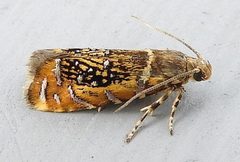
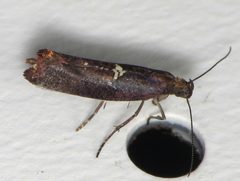
Pronunciation
How to pronounce Glyphipterigidae: //ɡlɪˌfaɪptəˈrɪʤɪdiː//
These audio files are automatically generated. While they are not always 100% accurate, they are a good starting point.
Identification
are distinguished from similar small by wing venation: forewings possess 13 with 2 anal veins (1b and 1c), while hindwings have 7–10 veins with either no anal veins or 3 anal veins (1a, 1b, 1c). The hindwings are notably frayed and similar in width to the forewings. range from half to equal the length of the forewings. The presence of ocelli in addition to , and a fully developed scaleless , are additional diagnostic features. Some exhibit metallic crescent markings along the and inner margin of the forewings.
Images
Habitat
Associated with wetlands and moist environments where larval plants (sedges, rushes) occur. Some inhabit mountainous areas; collection records include localities in Gangwon-do, Korea.
Distribution
Primarily distributed in the Palaearctic and Oriental Regions. Documented from Korea (including ), Denmark, Norway, Sweden, and the United States (Vermont).
Diet
Larvae feed on stems or leaves of monocot plants. Many consume sedges (Cyperaceae) and rushes (Juncaceae). The Acrolepiopsis feeds on Liliaceae (onions, garlic, Chinese yam) and Dioscoreaceae (yams).
Life Cycle
Larvae collected during daytime; active nocturnally and attracted to light. Specific details on , , and voltinism are not documented.
Behavior
are and have been collected using light traps.
Ecological Role
Larvae function as herbivores on monocot plants; specific services or trophic interactions beyond herbivory are not documented.
Human Relevance
Some in the Acrolepiopsis are known as 'leek ' due to larval feeding on Allium crops (onions, garlic), potentially causing agricultural damage.