
Acrolepiopsis
Gaedike, 1970
Species Guides
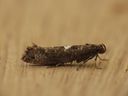
6Acrolepiopsis is a of small in the Glyphipterigidae, established by Gaedike in 1970. The genus includes approximately six described in North America and additional species in Europe and Asia. Several species are economically significant agricultural pests, notably Acrolepiopsis assectella (leek moth) and A. sapporensis (Asiatic onion leafminer), which specialize on Allium species including onion, garlic, and leek. The genus has been subject to taxonomic revision, with data supporting species-level distinctions.


Pronunciation
How to pronounce Acrolepiopsis: /ˌæk.rəˌlɛp.iˈɒp.sɪs/
These audio files are automatically generated. While they are not always 100% accurate, they are a good starting point.
Identification
of Acrolepiopsis are small requiring examination of genitalia for definitive identification. Male and female genitalia provides primary diagnostic characters, with interspecific differences in these structures clearly illustrated in taxonomic revisions. using mitochondrial c oxidase I sequences shows average interspecific divergence of 8.1% versus intraspecific variation of ≤0.16%, providing molecular confirmation of species boundaries.
Images
Distribution
The occurs across the western Palaearctic region, Asia (including Korea, Japan, and Mongolia), and North America. Acrolepiopsis assectella has been introduced to eastern North America, with established in eastern Ontario, southwestern Quebec, Prince Edward Island, New York, and Vermont. A. sapporensis occurs in Hawaii as an introduced but has not been recorded from continental North America. Bioclimate modeling predicts potential establishment in southeastern Canada, eastern United States, Pacific Northwest coastal regions, and interior southern British Columbia.
Seasonality
In temperate regions, exhibit multiple annually depending on temperature. Acrolepiopsis assectella in eastern Ontario shows three distinct periods: spring (overwintered ), early summer (first generation), and late summer (second generation). Development from to adult requires approximately 444.6 above a threshold of 7°C, with a field cycle of 3–6 weeks. In warm summers, two generations may complete development; three generations are possible under favorable conditions.
Diet
Larvae are feeders on Allium (Liliaceae/Amaryllidaceae). Documented include leek (Allium ampeloprasum var. porrum), onion (A. cepa), garlic (A. sativum), and chives (A. schoenoprasum). Oviposition preference and larval survival decline with increasing phylogenetic distance from preferred hosts. Females preferentially oviposit on larger plants when host species options are equivalent.
Host Associations
- Allium ampeloprasum var. porrum - larval preferred , leek
- Allium cepa - larval onion
- Allium sativum - larval garlic
- Allium schoenoprasum - larval chives
Life Cycle
Development includes , larval, and pupal stages. At constant temperatures of 12–20°C, developmental times vary predictably with temperature. A linear model indicates a threshold temperature of 6°C with 630 degree-days required for complete development. Field in eastern Ontario complete egg-to- development in 3–6 weeks. Larvae feed internally or externally on Allium foliage. occurs in soil or plant debris. Adults overwinter, emerging in spring to initiate the seasonal cycle.
Behavior
Females exhibit oviposition influenced by plant , preferring larger plants when host are equivalent. Trap cropping studies demonstrate that females distribute differentially between and primary crops, with more eggs deposited on trap crops when these are available. This oviposition pattern has been validated in small- cage studies and medium-scale field trials.
Human Relevance
Several are significant agricultural pests causing up to 40% crop damage in Allium crops. Acrolepiopsis assectella is a recently established in eastern North America, particularly affecting organic producers in eastern Ontario and southern Quebec. Management strategies include reduced-risk foliar , , trap cropping, and using introduced such as Diadromus pulchellus. programs combine application, mechanical barriers, and .
Similar Taxa
- AcrolepiaFormerly treated as congeneric; Acrolepiopsis was separated based on genitalic and other morphological differences
- PlutellaBoth are small with some feeding on Brassicaceae and Allium respectively, but Plutella belongs to Plutellidae and differs in wing venation and genitalia structure
More Details
Taxonomic history
The was established by Gaedike in 1970, with subsequent nomenclatural revisions for Palearctic, Oriental, Australian, and Ethiopian . Acrolepiopsis liliivora has been synonymized with A. californica. placement has varied in literature, with treatments in , Glyphipterigidae, and Plutellidae reflecting ongoing systematic revisions of Yponomeutoidea.
Molecular research
Acrolepiopsis sapporensis has been used as a model organism for studying insect immune function, with identification of four secretory phospholipase A2 genes involved in eicosanoid-mediated cellular . These show Ca2+ dependency and disulfide linkage requirements for catalytic activity, and interference studies confirm their role in nodulation and spreading .
Sources and further reading
- BugGuide
- Wikipedia
- GBIF taxonomy match
- iNaturalist taxon
- NCBI Taxonomy
- Catalogue of Life
- Acrolepiopsis assectella . [Distribution map].
- Acrolepiopsis assectella . [Distribution map].
- Acrolepiopsis assectella . [Distribution map].
- Oviposition and feeding preference of Acrolepiopsis assectella Zell. (Lep., Acrolepiidae)
- Release and post-release monitoring ofDiadromus pulchellus, a pupal parasitoid of leek moth (Acrolepiopsis assectella)
- The parasitoid community associated with the invasive leek moth, Acrolepiopsis assectella (Zeller) (Lepidoptera: Acrolepiidae): can conservation biological control benefit an introduced classical biological control agent in North America?
- Modified Reproduction Strategy of Leek Allium porrum in Response to a Phytophagous Insect, Acrolepiopsis assectella
- Behavioural events and host constituents involved in oviposition in the leek moth Acrolepiopsis assectella
- Taxonomic review of the leek moth genusAcrolepiopsis(Lepidoptera: Acrolepiidae) in North America
- Actual and potential distribution ofAcrolepiopsis assectella(Lepidoptera: Acrolepiidae), an invasive alien pest ofAlliumspp. in Canada
- Behavioural events and host constituents involved in oviposition in the leek moth Acrolepiopsis assectella
- Trap cropping effect on oviposition behaviour of the leek moth Acrolepiopsis assectella and the diamondback moth Plutella xylostella
- Effect of temperature on development and activity periods of the leek moth Acrolepiopsis assectella Zell. (Lep., Acrolepiidae)
- Biology and development ofAcrolepiopsis assectella(Lepidoptera: Acrolepiidae) in eastern Ontario
- Identification of four secretory phospholipase A2s in a lepidopteran insect, Acrolepiopsis sapporensis, and their functional association with cellular immune responses
- Two new species of the genus Acrolepiopsis Gaedike, 1970 (Lepidoptera, Glyphipterigidae) from Korea.