
Euproserpinus euterpe
Edwards, 1888
Kern primrose sphinx moth, euterpe sphinx moth
Euproserpinus euterpe is a small, day-flying sphinx moth to California and federally listed as threatened. are active from mid-January to early April, with peak activity in February and March. The has a highly restricted, disjunct distribution limited to two known locations in Kern and San Luis Obispo counties. Larvae are specialized feeders on evening primrose (Camissonia species), while adults nectar on diverse regional wildflowers. abundance fluctuates dramatically with climatic conditions, particularly rainfall.
Pronunciation
How to pronounce Euproserpinus euterpe: /juːproʊˈsɜːrpɪnəs juːˈtɜːrpi/
These audio files are automatically generated. While they are not always 100% accurate, they are a good starting point.
Identification
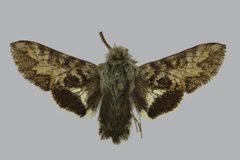
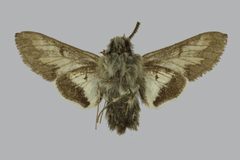
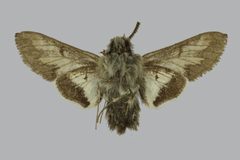
Distinguished from other Euproserpinus and small sphinx moths by combination of: small size (wingspan ~25 mm), gray forewings with black and brown patterning, off-white hindwings with black marginal banding, and activity. Day-flying in late winter to early spring is unusual among sphinx moths. Larval coloration changes dramatically through instars, with mature larvae showing distinctive red and green/rust-red bodies with black markings. Restricted to specific California localities with sandy wash and evening primrose plants.
Images
Habitat
Sandy washes with proper compaction and moisture content for burrowing larvae; banks of washes in open, disturbed areas. Also recorded from road shoulders and abandoned agricultural fields where evening primrose plants occur. Requires sandy soils suitable for .
Distribution
to California with highly restricted, disjunct distribution: Walker Basin, Kern County (privately owned ranch) and Carrizo Plain National Monument, San Luis Obispo County. Distribution pattern influenced by glacial history.
Seasonality
season mid-January to first week of April, peaking mid-February through mid-March. Timing varies with regional climatic conditions. Adult from pupae occurs in morning hours.
Diet
Larvae feed on flowers and young leaves of evening primrose (Camissonia contorta epilobiodes or Camissonia campestris). nectar on filaree (Erodium ), goldfields (Lasthenia gracilis), and baby blue (Nemophila menziesii).
Host Associations
- Camissonia contorta epilobiodes - larval food plantevening primrose
- Camissonia campestris - larval food plantevening primrose
- Erodium species - nectar sourcefilaree; not consumed by larvae despite deposition
- Lasthenia gracilis - nectar sourcegoldfields
- Nemophila menziesii - nectar sourcebaby blue
Life Cycle
laid on various plants near ; larvae hatch after approximately one week. First instar larvae feed on evening primrose flowers and young leaves; larvae from eggs laid on non-host plants wander to locate suitable food. occurs in sandy soils. Pupae can remain for extended periods. emerge late winter to early spring (February-March peak), with typically in morning hours.
Behavior
(day-flying) activity pattern unusual for sphinx moths. Females deposit haphazardly on plants near rather than directly on food plants; larvae actively wander to locate evening primrose hosts. Pupae burrow in sandy soils with specific compaction and moisture requirements. size shows dramatic natural fluctuations in response to climatic conditions, particularly rainfall patterns.
Ecological Role
herbivore on evening primrose; pollination services through nectar feeding on diverse wildflowers. may serve as indicator of quality and climatic conditions in California's Central Valley and Carrizo Plain .
Human Relevance
Federally threatened (U.S. Act). Subject to conservation concern due to extreme rarity and restriction. Threats include habitat loss and alteration, and herbicide application, and collection pressure from insect collectors. monitored by Bureau of Land Management at Carrizo Plain National Monument. Recovery plan developed by U.S. Fish and Wildlife Service (1984). Once considered extinct until rediscovered in 1974.
Similar Taxa
- Other Euproserpinus speciesLack specific gray and black-brown forewing pattern with off-white hindwings; different geographic ranges and associations
- Other small SphingidaeMost are rather than ; lack the specific wing pattern and late winter-early spring period
Misconceptions
Previously believed that Erodium (filaree) posed a serious threat due to larval mortality from mistaken deposition. Research has shown females deposit eggs indiscriminately near , and larvae actively wander to find evening primrose; Erodium is never fed upon and does not cause mortality. was considered extinct until 1974 rediscovery.
Sources and further reading
- BugGuide
- Wikipedia
- GBIF taxonomy match
- iNaturalist taxon
- NCBI Taxonomy
- Catalogue of Life
- Ghosts of glaciers and the disjunct distribution of a threatened California moth ( Euproserpinus euterpe )
- Observations of Pupal Biology and Adult Eclosion in the Federally Threatened Kern Primrose Sphinx Moth, Euproserpinus euterpe (Sphingidae: Macroglossini)