
Eumorpha achemon
Drury, 1773
Achemon Sphinx, Grape Sphinx
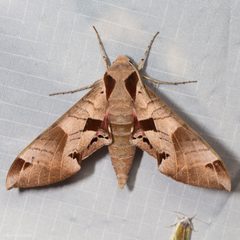
Eumorpha achemon, commonly known as the Achemon Sphinx or Grape Sphinx, is a large sphinx moth native to North America. are notable for their attractive pink hindwings, which contrast with their cryptic forewings. The is considered uncommon throughout its range and is the only member of its found in California. Larvae are large hornworms that feed exclusively on grape leaves.

Pronunciation
How to pronounce Eumorpha achemon: /juːˈmɔːrfə əˈkiːmɒn/
These audio files are automatically generated. While they are not always 100% accurate, they are a good starting point.
Identification
Distinguished from similar Eumorpha by its pink hindwings and overall coloration. The Pandorus Sphinx (Eumorpha pandorus) has more greenish and olive tones with different wing patterning. The Virginia Creeper Sphinx (Darapsa myron) is smaller with different forewing markings. The Achemon Sphinx is the only Eumorpha species occurring in California, making identification straightforward in that region.
Images
Habitat
Associated with grape-growing regions, including both wild and cultivated . Found in areas supporting native grape (Vitis californica) and cultivated grapevines. Occurs in a range of environments from natural riparian areas to agricultural settings and suburban gardens with grape plantings.
Distribution
Native to North America. Found across most of the United States, southern Canada, and northern Mexico. Absent or rare in the Pacific Northwest, Great Basin, and most of the Southeastern United States except Florida. Present in the Caribbean. Records from Manitoba, Canada and Vermont, United States.
Seasonality
Multiple per year in southern portions of range; fewer broods (one to two) in northern areas. active during warmer months.
Diet
Larvae feed exclusively on leaves of grape (Vitaceae), including wild grape (Vitis californica), cultivated grapes, and related . sip nectar from tubular flowers using a long .
Host Associations
- Vitis californica - larval native California grape
- Vitis vinifera - larval cultivated wine and table grapes
Life Cycle
Complete with , larva, pupa, and stages. Females lay eggs on grape leaves. Larvae feed and grow through several instars, reaching approximately 3.5 inches before . Multiple per year in south; single to two generations in north. Overwinters as pupa.
Behavior
are and attracted to lights. Strong, fast fliers typical of sphinx moths. Larvae feed openly on grape leaves during daylight hours.
Ecological Role
function as when feeding on nectar. Larvae serve as prey for birds and other . Chickens have been observed consuming larvae. Considered a native resident in California where it uses native grape as .
Human Relevance
Not considered an agricultural pest despite feeding on cultivated grapes; remain too low to cause significant damage. Subject of interest for lepidopterists and naturalists. Featured in public -watching events. Occasionally encountered in vineyards and suburban gardens.
Similar Taxa
- Eumorpha pandorusSimilar size and shape, but has greenish-olive wing coloration with more complex patterning; lacks the distinctive pink hindwings of E. achemon
- Darapsa myronVirginia Creeper Sphinx is smaller with different forewing markings and more restricted plant preferences
- Eumorpha labruscaeGaudy Sphinx shares but has different wing patterning with more green and purple tones; not found in California
Misconceptions
Despite feeding on grape leaves, the is not a significant vineyard pest. are naturally low and do not require control measures.
More Details
Conservation Status
Considered uncommon throughout its range. Not listed as threatened or endangered, but naturally low densities make it an infrequent find.
Research Significance
One of 11 in the Eumorpha; the only species in this genus occurring in California, making it of biogeographic interest.