
Nematinae
nematine sawflies
Tribe Guides
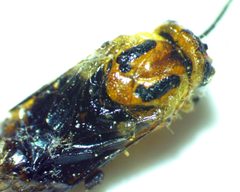
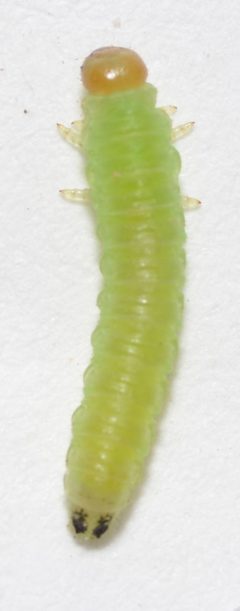
5Nematinae is a large of (Hymenoptera: Tenthredinidae) comprising over 1,250 described across approximately 40 . The subfamily exhibits a reversed latitudinal diversity gradient, with peaking in forest zones rather than tropical regions, likely associated with the abundance of willow (Salix) . Nematinae display diverse feeding strategies including external leaf feeding, leaf mining, and gall induction, with larvae utilizing over 20 plant .
Pronunciation
How to pronounce Nematinae: /nɛˈmeɪtɪˌniː/
These audio files are automatically generated. While they are not always 100% accurate, they are a good starting point.
Identification
of Nematinae can be distinguished from other Tenthredinidae by combinations of wing venation, antennal structure, and saw (ovipositor) ; larval identification relies on capsule structure, body setation, and feeding damage type. The subfamily includes both free-living larvae and gall-inducing lineages; gall-forming (particularly in Euura and related ) produce characteristic plant galls on willows and other that can serve as diagnostic indicators.
Images
Habitat
forests, temperate woodlands, and alpine regions; strongly associated with riparian zones and wetlands where willow (Salix) dominate. Some lineages inhabit coniferous forests, broadleaf woodlands, and montane shrublands. Gall-inducing species specifically require living plant tissue for larval development.
Distribution
Holarctic distribution with highest diversity in northern Europe, Fennoscandia, and North America; reversed latitudinal gradient with peak in high-latitude regions rather than tropics. Present across Eurasia from Western Europe to East Asia (Japan, Korea, China) and throughout northern North America.
Seasonality
activity typically concentrated in spring and early summer, with synchronized to plant leaf flush; subarctic show timing responsive to temperature cues. Larval development occurs during growing season, with some exhibiting extended development or adaptations to short high-latitude growing seasons.
Diet
Phytophagous; larvae feed on vascular plants across more than 20 . Free-living larvae consume leaf tissue externally or mine within leaves. Gall-inducing lineages (notably within Euura) feed endophytically within plant galls on Salix . Some species associated with Fagus (beech) and Quercus (oak) in East Asian lineages.
Host Associations
- Salix - primary for gall-inducing Nematinae; numerous -specific associations documented
- Fagus - for Fagineura in East Asia
- Quercus - for some Fagineura including Q. dentata, Q. serrata, Q. mongolica crispula
- Populus - for gall-forming Phyllocolpa
Life Cycle
Holometabolous with complete . deposited into plant tissue using saw-like ovipositor; larval development either free-living on foliage or endophytic within galls. Free-living larvae typically possess more than five instars; gall-dwelling larvae complete entire development within single gall structure. occurs in soil or within gall; voltinism varies from to partially with development synchronized to or autonomous in some -associated .
Behavior
Gall-inducing manipulate plant tissue to form protective structures; some free-living larvae feed gregariously on foliage. Oviposition includes insertion of into leaf petioles, leaf blades, or stems depending on species. Some lineages exhibit host plant specificity at the level of host species or section within host , with cryptic differentiated primarily by host association.
Ecological Role
Primary consumers in forest and riparian ; significant herbivores of willow and other woody plants in regions. Gall-forming act as ecosystem engineers, creating microhabitats utilized by and . Serve as for specialized parasitoid including Ichneumonidae (particularly Tryphoninae) and Braconidae, with documented phylogenetic host specificity in parasitoid associations.
Human Relevance
Some gall-inducing (particularly Euura) cause damage to willow plantations and ornamental Salix; Fagineura crenativora is considered a serious pest of beech trees in Japan. potential exists through associated such as Tanzawana flavomaculata. Taxonomic complexity and species identification challenges impede accurate pest species recognition.
Similar Taxa
- HeterarthrinaeAlso within Tenthredinidae; distinguished by larval habits (many are leaf miners) and morphological characters including differences in wing venation and genitalia structure
- TenthredininaeLargest Tenthredinidae ; Nematinae distinguished by reversed latitudinal gradient, greater association with Salix, and different larval capsule
- DiprionidaeSeparate of conifer-feeding ; Nematinae distinguished by broader range including angiosperms and different antennal structure
More Details
Taxonomic instability
Generic classification has undergone substantial revision; Eupontania, Phyllocolpa, Pontania, and Tubpontania were synonymized under Euura in 2014 based on phylogenetic evidence. -level remains problematic with many morphologically cryptic species distinguished primarily by plant association.
Parasitoid associations
Nematinae support diverse dominated by Ichneumonidae (Tryphoninae, Ctenopelmatinae) and Braconidae. Documented -parasitoid specificity suggests phylogenetic conservatism in these associations; 80 parasitoid recorded from 23 nematine host species in Central European studies.
Sources and further reading
- BugGuide
- Wikipedia
- iNaturalist taxon
- NCBI Taxonomy
- The West Palaearctic genera of Nematinae (Hymenoptera, Tenthredinidae)
- A study of the genus Fagineura (Hymenoptera, Tenthredinidae, Nematinae)
- North European gall-inducing Euura sawflies (Hymenoptera, Tenthredinidae, Nematinae)
- New records and some new distribution data to the Turkish Nematinae (Tenthredinidae, Symphyta, Hymenoptera) fauna
- Taxonomy of the species of <i>Eupontania crassipes</i>- and <i>aquilonis</i>-groups (Hymenoptera: Tenthredinidae: Nematinae)
- On the taxonomy and host plants of North European species of Eupontania (Hymenoptera: Tenthredinidae: Nematinae).
- A new Palaearctic species of the genus Ctenochira Furster (Hymenoptera: Ichneumonidae: Tryphoninae), parasitoid of gall-forming sawflies (Hymenoptera: Tenthredinidae: Nematinae) on poplar and willows
- Tanzawana flavomaculata (Hymenoptera, Ichneumonidae, Ctenopelmatinae), a new genus and species of parasitoid of Fagineura crenativora (Tenthredinidae, Nematinae), a serious pest of beech tree
- Vergleichende Untersuchungen zur Morphologie und Biologie der Larvenparasiten(Hymenoptera: IchneumonidaeundBraconidae)mitteleuropäischer Blattwespen aus der SubfamilieNematinae (Hymenoptera: Tenthredinidae)