
Ctenopelmatinae
Förster, 1869
Tribe Guides
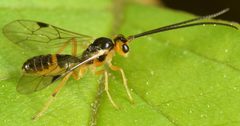
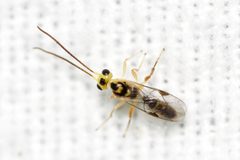
6Ctenopelmatinae is a of ichneumonid wasps comprising approximately 95 of koinobiont endoparasitoids. Members are small to medium-sized that primarily attack (), with some parasitizing Lepidoptera. The subfamily was historically classified within Tryphoninae but was separated based on larval and ecological traits. Ctenopelmatines are particularly abundant in temperate Holarctic regions, where they can constitute over 10% of local ichneumonid faunas in cooler areas.
Pronunciation
How to pronounce Ctenopelmatinae: /ˌtɛnoʊpɛlˈmeɪtənaɪ/
These audio files are automatically generated. While they are not always 100% accurate, they are a good starting point.
Identification
Presence of a small tooth on the front tibia distinguishes ctenopelmatines from most other ichneumonid . Absence of clypeal setal fringe provides additional differentiation from related groups. Separation from Tryphoninae, with which they share superficial similarities, requires examination of larval or ecological traits. Tribal-level identification relies on ovipositor structure and other detailed morphological characters.
Images
Appearance
Small to medium-sized ichneumonid wasps. Diagnostic features include a small tooth at the apex of the front tibia and usually lacking a fringe of setae along the . specimens can be difficult to distinguish from Tryphoninae. Specific morphological traits vary considerably across the approximately 95 .
Habitat
Primarily associated with supporting their . Found in temperate forests, woodlands, and areas with abundant woody vegetation, particularly willow (Salix), beech (Fagus), ash (Fraxinus), rose (Rosa), and fern habitats. Cooler temperate regions support highest diversity and abundance.
Distribution
distribution with highest in temperate Holarctic regions. Well-represented in North America, Europe, and Asia (including Japan and Taiwan). Present in the Neotropical region ( Rica, Ecuador, Guatemala). New records continue to document range extensions (e.g., Seleucus cuneiformis first recorded from Austria; Hodostates rotundatus first Canadian record).
Seasonality
Activity patterns tied to . In temperate regions, typically occurs during spring and summer months when hosts are active. Seleucus cuneiformis adults emerged four weeks after host sawfly emergence and continued appearing over a two-week period.
Host Associations
- Symphyta (sawflies) - primary koinobiont endoparasitoid; not killed until after cocoon formation
- Lepidoptera - occasional rare association compared to
- Blasticotoma filiceti (Blasticotomidae) - fern ; of Seleucus cuneiformis
- Macrophya satoi (Tenthredinidae) - pest of Japanese ash; of Priopoda macrophyae
- Fagineura crenativora (Tenthredinidae: Nematinae) - beech pest; of Tanzawana flavomaculata
- Pontania, Phyllocolpa, Euura (Tenthredinidae) - gall-forming on willows; of Saotis
- Cladius pectinicornis, Nematus lucidus, N. papillosus (Tenthredinidae) - of Rhinotorus
- Cladardis elongatula (Tenthredinidae) - probable stem-mining rose-wilt ; probable of Iskarus mirabilis
- Heterarthrus species (Tenthredinidae: Heterarthrinae) - inferred leaf-mining sawflies; suggested for Syndipnus depressus based on morphological similarity to known hosts of related
Life Cycle
Koinobiont endoparasitoid development: are deposited into larvae, and development proceeds without immediate host mortality. The host continues feeding and development until it spins a cocoon to pupate, at which point the parasitoid kills the host and emerges. In Seleucus cuneiformis, occurs approximately four weeks after host emergence and extends over multiple weeks.
Behavior
Females of some exhibit remarkable morphological plasticity: newly emerged Seleucus cuneiformis females initially possess male-like compact metasomas that expand dramatically during the first day, presumably facilitating subsequent oviposition into enclosed galls. Oviposition involves targeting concealed hosts within plant tissues (stems, galls, leaf mines).
Ecological Role
Important regulators of in forest and woodland . Can achieve significant local abundance (over 10% of ichneumonid fauna in cool temperate regions). Potential agents for sawfly pests of economic importance, including affecting ornamental and timber trees.
Human Relevance
Some provide services against pests of forestry and horticultural importance. Documented cases include Priopoda macrophyae ( of ash pest Macrophya satoi) and Tanzawana flavomaculata (parasitoid of beech pest Fagineura crenativora), both with potential for managed biological control programs.
Similar Taxa
- TryphoninaeHistorically included Ctenopelmatinae; specimens difficult to distinguish. Separated based on larval and ecological traits. Ctenopelmatines possess tooth on front tibia and lack clypeal setal fringe, features not universal in Tryphoninae.
More Details
Tribal classification
Ctenopelmatinae includes multiple tribes: Perilissini, Mesoleiini, Euryproctini, and Pionini (the latter placement debated for some such as Hodostates based on ovipitor ). Tribal assignment relies heavily on ovipositor structure and other detailed morphological characters.
Taxonomic history
status formally established by Förster in 1869. Long treated as component of Tryphoninae until larval morphological and ecological evidence supported separation. Contains approximately 95 with ongoing taxonomic revision revealing new and clarifying generic boundaries (e.g., reinstatement of Iskarus as distinct from Saotis; transfer of Hodostates schaffneri to Lethades).
Sources and further reading
- BugGuide
- Wikipedia
- iNaturalist taxon
- NCBI Taxonomy
- Peculiar parasitoid wasp found on rare sawfly developing in ferns | Blog
- The Nearctic species of Saotis Förster, 1869 (Hymenoptera: Ichneumonidae: Ctenopelmatinae)
- Notes on the biology of Seleucus cuneiformis Holmgren (Hymenoptera, Ichneumonidae, Ctenopelmatinae)
- Review of the New World genus Nanium Townes, 1967 (Hymenoptera: Ichneumonidae: Ctenopelmatinae), with two new species from the Neotropical region
- A new species of the genus Syndipnus (Hymenoptera: Ichneumonidae: Ctenopelmatinae: Euryproctini) with unusually depressed metasoma
- Campodorus paradiesensis sp. nov. (Hymenoptera: Ichneumonidae: Ctenopelmatinae), a new species with a remarkable colour pattern from Northern Germany
- On the biology of Iskarus mirabilis Schmiedeknecht, 1914 (Hymenoptera: Ichneumonidae: Ctenopelmatinae), with removal from Saotis Förster, 1869 and reinstatement of Iskarus Kolarov, 1987
- A revision of the genus Rhinotorus Förster, 1869 (Hymenoptera, Ichneumonidae, Ctenopelmatinae), with descriptions of three new species and an illustrated identification key
- Tanzawana flavomaculata (Hymenoptera, Ichneumonidae, Ctenopelmatinae), a new genus and species of parasitoid of Fagineura crenativora (Tenthredinidae, Nematinae), a serious pest of beech tree
- Revision of Hodostates (Hymenoptera: Ichneumonidae: Ctenopelmatinae), with a discussion of tribal placement
- Priopoda macrophyae (Hymenoptera, Ichneumonidae, Ctenopelmatinae), a new species of parasitoid of Macrophya satoi (Tenthredinidae), a serious pest of Japanese ash tree (Oleaceae)
- A taxonomic revision of the genus Alexeter Förster (Hymenoptera, Ichneumonidae, Ctenopelmatinae, Mesoleiini) from Taiwan, with descriptions of six new species.