
Hoplocampini
Genus Guides
1- Hoplocampa(fruit sawflies)
Hoplocampini is a tribe of in the Tenthredinidae, suborder . Members are small to medium-sized sawflies, many of which are associated with rosaceous plants. The tribe includes economically significant that feed on fruits such as apples, pears, and cherries. are generally inconspicuous, while larvae often cause damage to developing fruits or foliage.
Pronunciation
How to pronounce Hoplocampini: /hɒploʊˈkæmpɪnaɪ/
These audio files are automatically generated. While they are not always 100% accurate, they are a good starting point.
Identification
Hoplocampini can be distinguished from related tribes by combinations of antennal structure, wing venation patterns, and genital . in this tribe typically have relatively short, stout bodies compared to some other Tenthredinidae. Accurate identification to or species usually requires examination of microscopic characters.
Images
Habitat
Members of this tribe are primarily found in temperate regions, associated with deciduous forests, orchards, and areas where their plants grow. Many are arboreal, with larvae developing on trees and shrubs.
Distribution
Temperate regions of the Northern Hemisphere, particularly Europe, Asia, and North America.
Seasonality
are active primarily in spring and early summer, coinciding with flowering and early fruit development of plants. Larval stages occur during late spring through summer.
Diet
Larvae feed on plant tissues, particularly developing fruits, leaves, or stems of rosaceous plants (Rosaceae). Some are specialized fruit feeders, while others consume foliage.
Host Associations
- Rosaceae - larval food plantPrimary for most
Life Cycle
Complete with , larval, pupal, and stages. Eggs are inserted into plant tissue. Larvae develop within fruits, under of leaves, or in stems. occurs in soil or in plant tissue. Many have one per year ().
Behavior
Larvae often feed concealed within plant tissues, making them difficult to detect. Some exhibit leaf-rolling or fruit-mining . are generally short-lived and focused on .
Ecological Role
Larvae function as herbivores, sometimes reaching pest status in orchards. They serve as prey for and other natural enemies.
Human Relevance
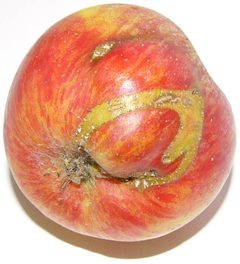
Several are significant agricultural pests, particularly in apple, pear, and cherry orchards. Larval feeding causes fruit distortion, premature drop, or cosmetic damage. Some species are targets of programs.
Similar Taxa
- NematinSimilar tribe in Tenthredinidae; distinguished by associations and morphological details of and genitalia
- CaliroiniRelated tribe with larvae that also feed on rosaceous plants; differs in larval and specific range