
Hoplocampa
Hartig, 1837
fruit sawflies, apple sawflies, plum sawflies
Species Guides
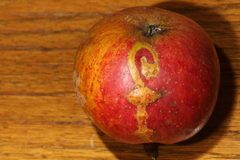
3Hoplocampa is a of in the Tenthredinidae, comprising approximately 20 described distributed primarily across the West Palaearctic. The genus includes several economically significant pests of fruit trees, notably Hoplocampa testudinea (European apple sawfly) and H. flava (plum sawfly). Females oviposit into flowers, and larvae develop within developing fruitlets, causing characteristic damage. Many species reproduce parthenogenetically.
Pronunciation
How to pronounce Hoplocampa: //ˌhɒploʊˈkæmpə//
These audio files are automatically generated. While they are not always 100% accurate, they are a good starting point.
Identification
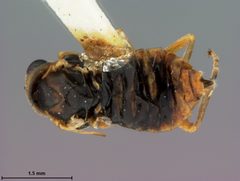
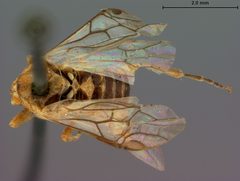
Hoplocampa are small to medium-sized , typically 5–8 mm in length. can be distinguished from related by a combination of morphological features including shape, antennal structure, and wing venation patterns. Specific species identification requires examination of genitalia and other detailed morphological characters; an illustrated key to West Palaearctic species is available. COI barcoding reliably distinguishes most European species, though H. fulvicornis and H. minuta require nuclear markers for separation.
Images
Habitat
are associated with fruit tree orchards and wild stands of Rosaceae, particularly apple (Malus), plum and damson (Prunus), and pear (Pyrus). Larvae develop within the developing fruitlets of plants.
Distribution
Primarily West Palaearctic, with records from Europe (including Scandinavia, Britain, and Mediterranean regions), parts of Asia (Turkey, Israel, Lebanon, Central Asia), and North Africa (Tunisia). Hoplocampa testudinea has been introduced to North America, with established in Canada and the northeastern United States.
Seasonality
activity coincides with the bloom period of plants. For H. testudinea, this corresponds to apple flowering in spring (typically April–May in temperate regions).
Diet
Larvae feed on the developing flesh of young fruitlets. Specific associations include: H. testudinea on apple (Malus pumila); H. flava on plum and damson (Prunus domestica, P. insititia); H. brevis on pear (Pyrus); H. minuta on plum (Prunus).
Host Associations
- Malus pumila - larval primary of H. testudinea
- Prunus domestica - larval of H. flava and H. minuta
- Prunus insititia - larval damson, of H. flava
- Pyrus - larval pear, of H. brevis
Life Cycle
Females lay in or near flowers during bloom. Larvae tunnel into developing fruitlets, feeding on the flesh and creating characteristic entry holes often surrounded by . Mature larvae exit the fruit and pupate in the soil. is predominantly parthenogenetic in many .
Behavior
Females exhibit discrimination , with olfactory cues playing a documented role in cultivar selection in H. testudinea. females preferentially oviposit on certain apple cultivars over others. Larvae may continue feeding in fruitlets after initial entry, causing fruit drop or secondary damage.
Ecological Role
As primary consumers of developing fruit, larvae can significantly reduce crop yields. In North America, H. testudinea has no recorded native ; the ichneumonid Lathrolestes ensator has been introduced as a agent.
Human Relevance
Several are major agricultural pests. Hoplocampa testudinea causes up to 80% crop loss in affected apple orchards in Canada. Management is complicated by the pest's presence during bloom, limiting chemical control options. and are being explored as alternatives.
Similar Taxa
- other Tenthredinidae generaHoplocampa can be distinguished by its association with Rosaceae fruit trees and the characteristic larval habit of feeding within developing fruitlets rather than leaves
- Caliroaslug sawflies have very different larval and feeding habits (external leaf feeding)
- Athaliatypically feed on Brassicaceae leaves rather than Rosaceae fruit
More Details
Taxonomic note
The includes approximately 20 described ; a comprehensive review and illustrated key to West Palaearctic species was published in 2019.
Genetic identification
COI barcoding is effective for -level identification of most European Hoplocampa, with the exception of H. fulvicornis and H. minuta, which require nuclear gene sequencing for reliable separation.
Sources and further reading
- BugGuide
- Wikipedia
- GBIF taxonomy match
- iNaturalist taxon
- NCBI Taxonomy
- Catalogue of Life
- Hoplocampa brevis . [Distribution map].
- Hoplocampa flava . [Distribution map].
- Hoplocampa testudinea . [Distribution map].
- Hoplocampa minuta . [Distribution map].
- Bioecology, Harm And Efficiency Of Certain Preparations Against The Apple Fruit Sawer (Hoplocampa Testudinea Klug.)
- A review of West Palaearctic Hoplocampa species, focussing on Sweden (Hymenoptera, Tenthredinidae)
- Host Discrimination by Adult and Larval European Apple Sawflies Hoplocampa testudinea (Klug) (Hymenoptera: Tenthredinidae)
- STUDIES ON TWO ICHNEUMONID PARASITOIDS AS POTENTIAL BIOLOGICAL CONTROL AGENTS OF THE EUROPEAN APPLE SAWFLY HOPLOCAMPA TESTUDINEA KLUG (HYMENOPTERA: TENTHREDINIDAE)
- Effect of Apple Rootstock on Hoplocampa testudinea (Klug) Host Choice and Larval Performance
- Apple cultivar preferences byHoplocampa testudinea(Hymenoptera: Tenthredinidae) in the Annapolis Valley of Nova Scotia, Canada
- Releases and first recovery ofLathrolestes ensator(Hymenoptera: Ichneumonidae) in North America, a parasitoid ofHoplocampa testudinea(Hymenoptera: Tenthredinidae)
- Some Notes on the Biology of the Apple Sawfly,Hoplocampa Testudinea(Klug)