
Pseudodineurini
Genus Guides
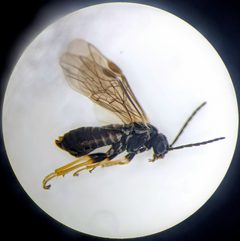
1Pseudodineurini is a tribe of within the Tenthredinidae. Members are small, leaf-mining sawflies whose larvae create distinctive mines in leaves of various plants. The tribe includes the Pseudodineura, which contains multiple distributed across the Northern Hemisphere. are generally inconspicuous and seldom encountered compared to their more frequently observed larval mines.
Pronunciation
How to pronounce Pseudodineurini: //ˌsjuːdoʊdaɪˈnjʊərɪnaɪ//
These audio files are automatically generated. While they are not always 100% accurate, they are a good starting point.
Identification
Larvae are identified by their serpentine or blotch mines in leaves, often with arranged in characteristic patterns. are small (approximately 3-5 mm) with reduced wing venation and a compact body form. Separation from related tribes requires examination of antennal structure and genitalia; Pseudodineurini possess distinctive features in the male genitalia and have relatively short, thick compared to other Tenthredinidae.
Images
Habitat
Associated with deciduous forests, woodlands, and areas where plants of the Pseudodineura grow. Larval is within leaf tissue of specific host plants.
Distribution
Holarctic distribution, with records from Europe, Asia, and North America. Most documented occurrences are from temperate regions of the Northern Hemisphere.
Seasonality
are active in spring and early summer, with timing varying by latitude and . Larval mines are most visible from late spring through summer.
Diet
Larvae are endophagous leaf miners, feeding internally on mesophyll tissue of leaves. plants include in Betulaceae (birch ) and other woody plants. do not feed.
Host Associations
- Betulaceae - larval primary for Pseudodineura
Life Cycle
Holometabolous development with , larval, pupal, and stages. Eggs are inserted into leaf tissue. Larvae feed as miners within leaves, then pupate either within the mine or in soil. Typically , with one per year.
Behavior
Larvae are sedentary leaf miners, remaining within their mines until mature. are weak fliers and are rarely observed away from plants. No social ; solitary throughout .
Ecological Role
Leaf miners contribute to nutrient cycling by accelerating leaf decomposition. They serve as prey for and other natural enemies. levels are generally low and not considered economically significant.
Human Relevance
No direct economic importance. Occasionally of interest to naturalists and entomologists documenting leaf-mining fauna. Not a pest of cultivated plants.
Similar Taxa
- FenusiniAnother tribe of leaf-mining Tenthredinidae with similar larval habits; distinguished by particularly and genitalia structure
- HeterarthriniLeaf-mining sawflies with comparable ; differ in wing venation and body proportions
More Details
Taxonomic history
Pseudodineurini has undergone revision; some former members have been moved to other tribes based on phylogenetic studies. The tribe is considered well-supported in recent classifications of Tenthredinidae.