
Pseudodineura
Konow, 1885
Species Guides
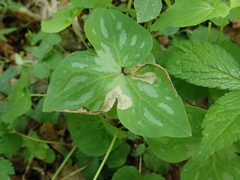
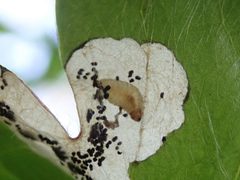
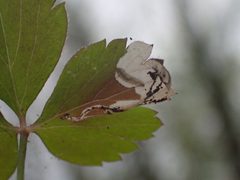
1Pseudodineura is a of in the Tenthredinidae. The genus contains approximately eight described distributed across Europe and North America. Larvae of all species are leaf-miners in plants of the family Ranunculaceae. Some species are difficult to distinguish based on morphological characters alone, though each species appears to have a distinct COI barcode sequence.
Pronunciation
How to pronounce Pseudodineura: //ˌpseudoʊdaɪˈnɪʊrə//
These audio files are automatically generated. While they are not always 100% accurate, they are a good starting point.
Identification
identification may require molecular methods for some , as morphological characters alone are insufficient in certain cases. An identification key to West Palaearctic adults has been published. Larvae can be recognized as leaf-miners in Ranunculaceae plants.
Images
Habitat
Associated with Ranunculaceae plants in temperate regions.
Distribution
Europe and North America; six valid occur in the West Palaearctic, with particular documentation from Sweden. Distribution records confirm presence in Denmark, Norway, and Sweden.
Host Associations
- Ranunculaceae - larval Larvae are leaf-miners in all of this
Life Cycle
Larvae develop as leaf-miners within plant leaves.
Behavior
Larval leaf-mining in Ranunculaceae plants.
Similar Taxa
- EndophytusRelated within Tenthredinidae; both genera contain leaf-mining in Ranunculaceae and occur in the West Palaearctic.
More Details
Taxonomic revisions
Recent taxonomic work has synonymized several : Pseudodineura heringi is now a junior synonym of P. parvula; P. mocsaryi and P. scaligera are junior synonyms of P. clematidisrectae.
Molecular identification
COI barcode sequences appear to be -specific and may be necessary for reliable identification of some specimens where morphological characters are ambiguous.