Chalybion zimmermanni aztecum
(de Saussure, 1867)
Aztec Mud-dauber Wasp
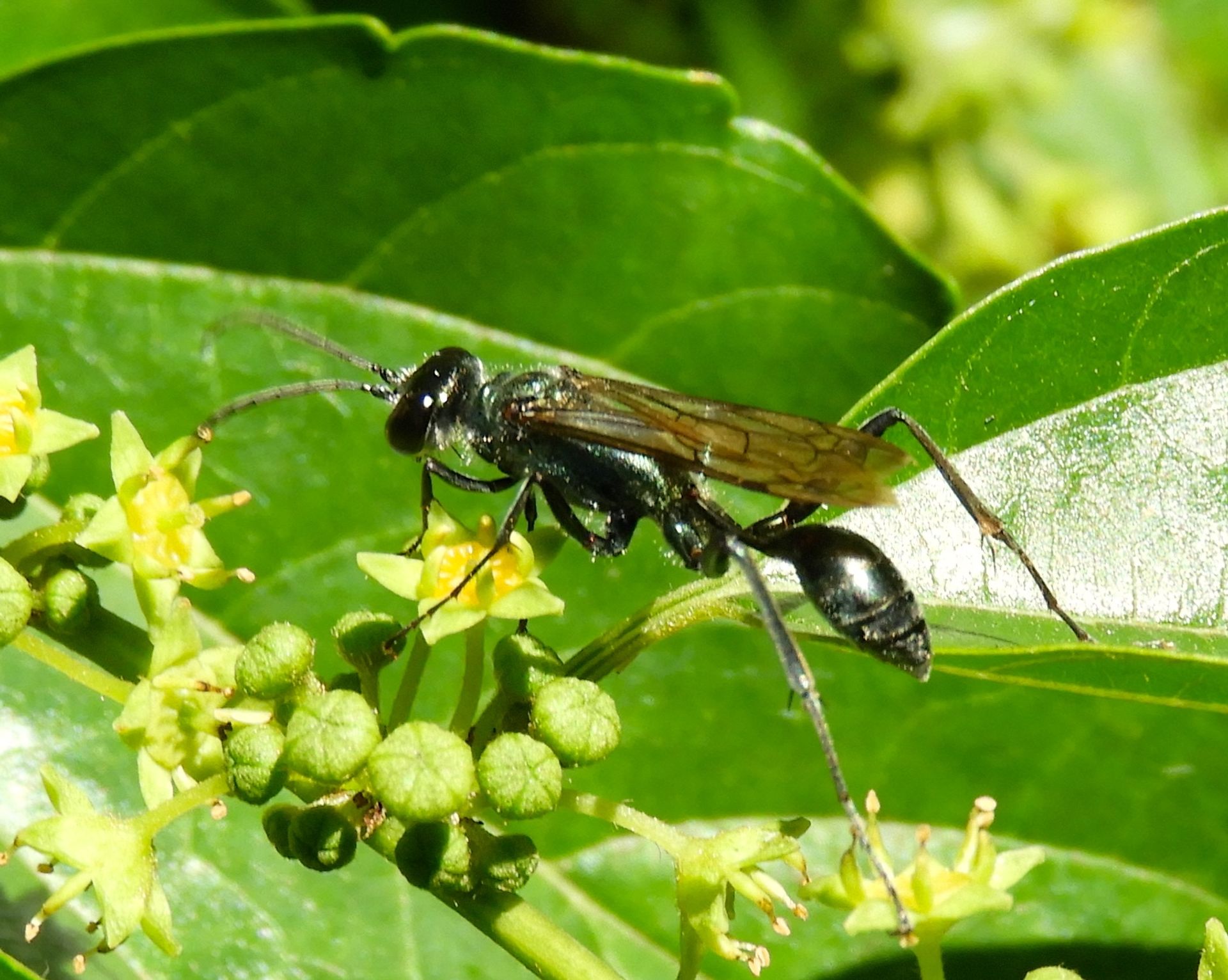
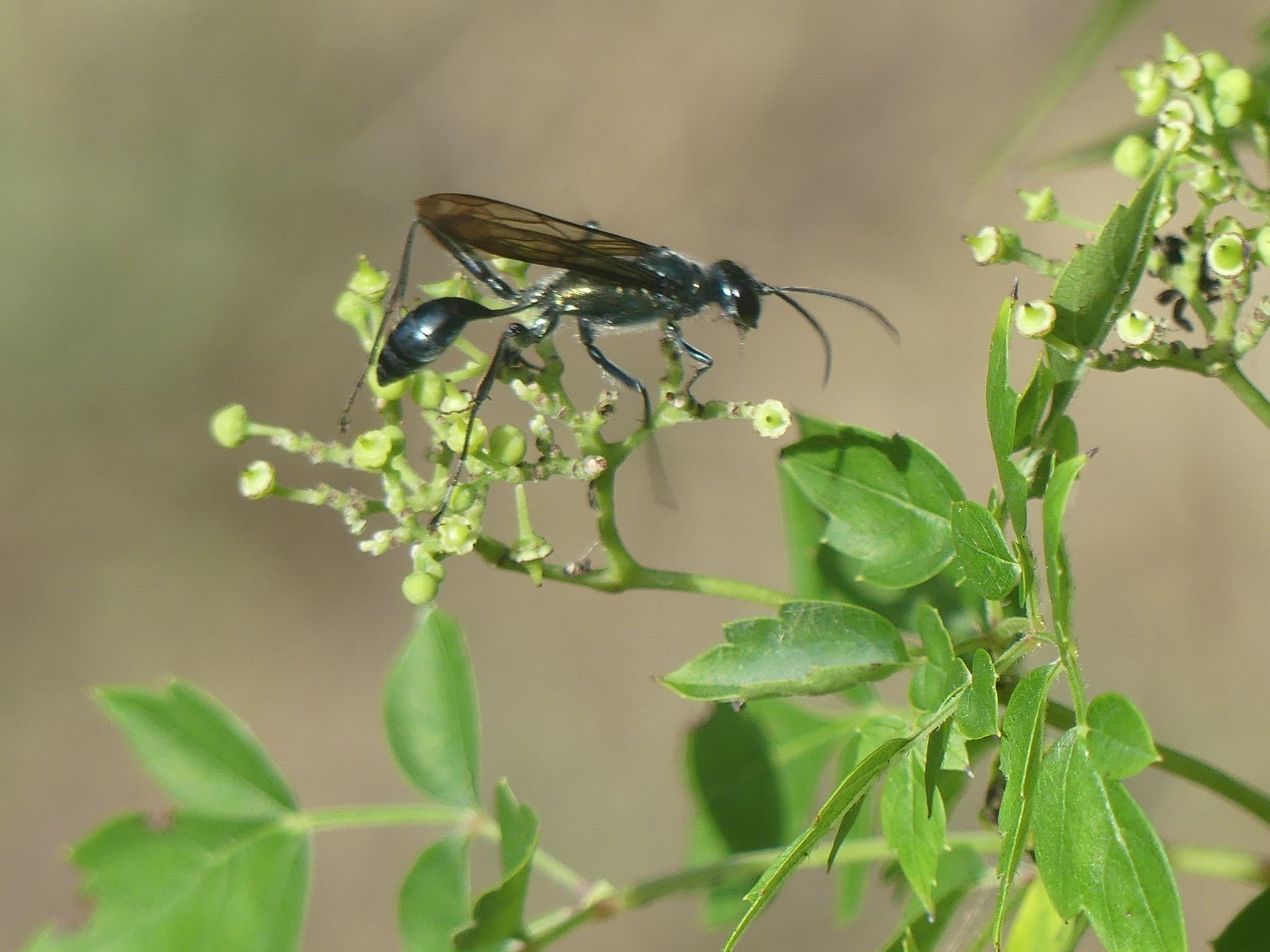
Chalybion zimmermanni aztecum is a of mud dauber in the Sphecidae, commonly known as the Aztec Mud-dauber Wasp. It is one of two Chalybion found north of Mexico, distinguished from the widespread C. californicum by white thoracic hairs and smoky rather than violaceous wing coloration. Like other blue mud daubers, females are solitary nesters that remodel abandoned mud nests rather than constructing new ones from scratch, and hunt spiders including black widows to provision their offspring.
Pronunciation
How to pronounce Chalybion zimmermanni aztecum: /kəˈlɪbiˌɒn ˌtsɪmɛrˈmæn.aɪ ˈæztɛkəm/
These audio files are automatically generated. While they are not always 100% accurate, they are a good starting point.
Identification
Distinguished from the widespread Blue Mud Dauber (Chalybion californicum) by white thoracic hairs versus dark hairs, and smoky wing coloration versus violaceous wings. Geographic range also differs: C. zimmermanni aztecum occurs in the southwestern and southern United States (Tennessee and North Carolina south to Florida, west to Texas, Arizona, and Utah) and Middle America, while C. californicum is transcontinental across the U.S. and southern Canada. Both may be confused with Chlorion aerarium (Steel Blue Cricket Hunter), which is generally larger, brighter in color, less hairy, and has originating lower on the .
Images
Appearance
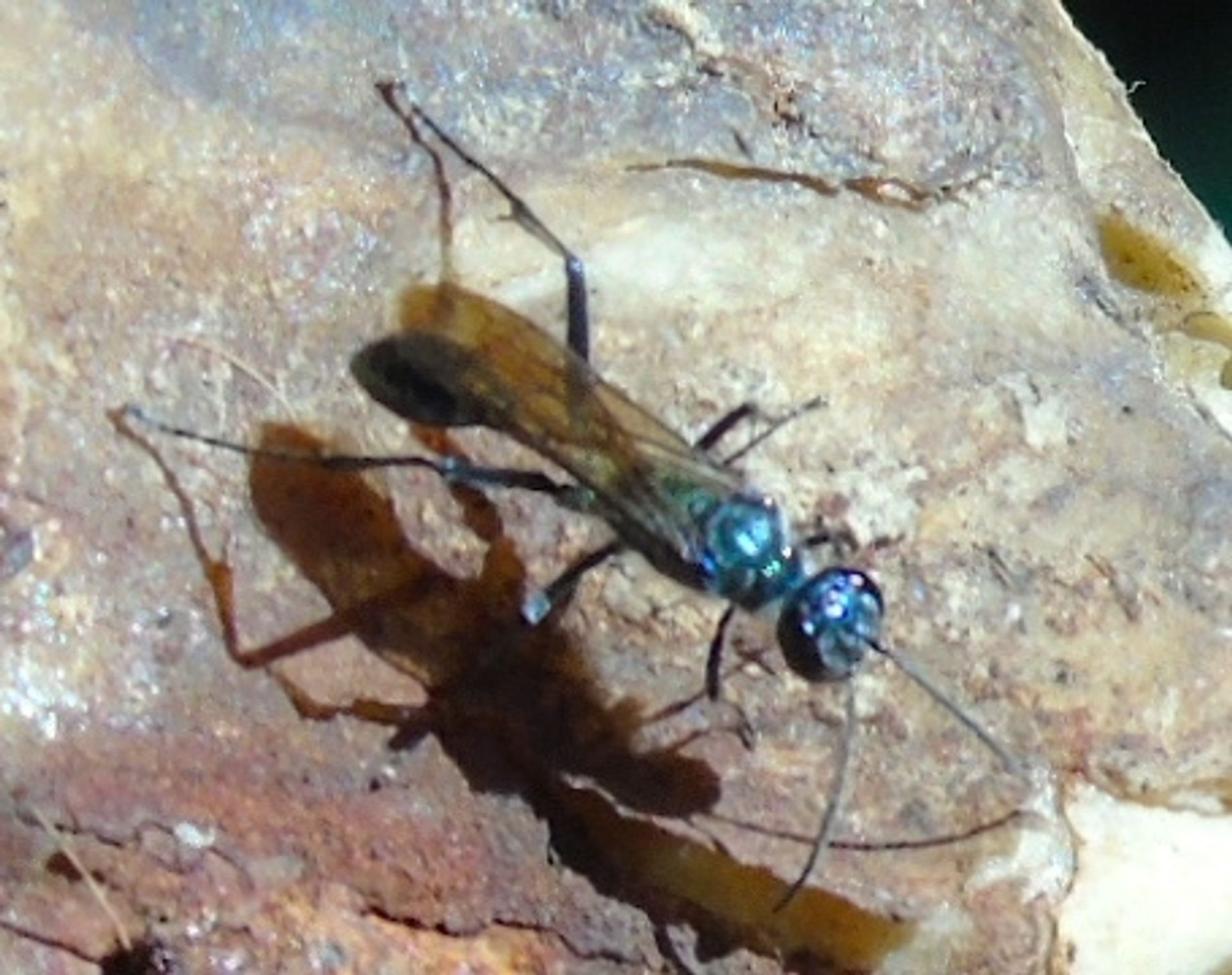
Metallic blue to blue-green body with white hairs on the (distinguishing it from C. californicum which has dark hairs). Wings are smoky rather than the violaceous (violet-purple) wing coloration seen in C. californicum. Typical mud dauber body plan with elongated, thread-waisted petiole connecting thorax and . Size and general build similar to other Chalybion .
Habitat
Found in areas where abandoned mud nests of the Black and Yellow Mud Dauber (Sceliphron caementarium) are available for remodeling. Nests are often attached to human structures including building exteriors, eaves, and sheltered locations. Males congregate in sheltered spots for overnight roosting.
Distribution
Ranges from Tennessee and North Carolina south to Florida, west through Texas and Arizona into Utah. Also present in Middle America (Mexico and Central America).
Diet
of both sexes feed on nectar from flowers and extrafloral , oozing sap from wounded trees, and honeydew secreted by aphids and scale insects. Females hunt spiders to provision nests, with documented including black widows (Latrodectus mactans), other cobweb weavers (Theridiidae), small orb weavers (Araneidae), lynx spiders (Oxyopidae), crab spiders (Thomisidae), and jumping spiders (Salticidae).
Host Associations
- Latrodectus mactans - preySouthern Black Widow, a known spider
- Theridiidae - preycobweb weavers, general spider
- Araneidae - preysmall orb weavers
- Oxyopidae - preylynx spiders
- Thomisidae - preycrab spiders
- Salticidae - preyjumping spiders
- Sceliphron caementarium - nest usurpertakes over abandoned nests of this
Life Cycle
Females remodel existing mud nests (typically abandoned nests of Sceliphron caementarium) by carrying water to soften and remold the mud to their needs. They provision each with multiple paralyzed spiders, laying a single on the first spider placed at the bottom. The larva hatches and consumes all spiders in the cell, then spins a papery silken cocoon inside which it pupates. Development completes in a few weeks, or the pupa overwinters to emerge the following spring. chew a round exit hole at the end of the cell to emerge.
Behavior
Solitary nesting ; females do not build nests from scratch but remodel abandoned mud nests. Females hunt spiders using a distinctive technique: landing on spider webs without becoming entangled, then vibrating the web to simulate a struggling insect to lure the spider out. Once the spider approaches, the stings it into paralysis and transports it to the nest. Males do not participate in nest building or hunting; their sole activity is seeking mates. Males gather in congregations ('bachelor parties') to roost, often in door frames, porch crevices, or other sheltered spots. Both sexes are non-aggressive toward humans.
Ecological Role
of spiders, including venomous such as black widows. Functions as a agent for spider . Serves as for parasitic that may emerge from mud nest instead of the mud dauber itself.
Human Relevance
Generally beneficial due to on spiders including black widows. Non-aggressive and poses minimal sting risk; females sting only if physically grabbed or molested, while males lack stingers entirely. Often nests on building exteriors where it can be easily observed. Congregations of roosting males may cause concern but are harmless.
Similar Taxa
- Chalybion californicumNearly identical in general appearance but has dark thoracic hairs and violaceous (violet-purple) wings; ranges across entire U.S. and southern Canada rather than southwestern/southern distribution
- Chlorion aerariumSteel Blue Cricket Hunter is generally larger, brighter metallic color (often teal to deep violet-blue), less hairy, has originating lower on the , and hunts crickets rather than spiders; males lack the roosting congregations seen in Chalybion
Misconceptions
Often mistaken for aggressive social due to general 'wasp' appearance and male roosting congregations. Presence does not indicate large numbers of black widow spiders nearby, as this is an opportunistic hunter of various spider types. Frequently confused with C. californicum, leading to misidentification of geographic range and specific traits.
More Details
Taxonomic note
One of two Chalybion found north of Mexico; the other is the transcontinental C. californicum. The subspecific status of aztecum within C. zimmermanni is recognized in some taxonomic treatments.
Nesting behavior observation
Unlike Sceliphron caementarium which gathers mud to construct new nests, Chalybion including C. zimmermanni aztecum are incapable of starting nests from scratch and rely entirely on pre-existing mud structures or cavities.
Sources and further reading
- BugGuide
- GBIF taxonomy match
- iNaturalist taxon
- NCBI Taxonomy
- Catalogue of Life
- Bug Eric: Wasp Wednesday: Blue Mud Dauber
- Bug Eric: Wasp Wednesday: Blue Mud Dauber, Chalybion californicum
- Bug Eric: Wasp Wednesday: Chlorion aerarium
- Bug Eric: Mud Masterpieces
- Bug Eric: Tiny Wasp Hero Slays Redback Spiders in Australia
- Bug Eric: Spider Sunday: Spider Enemies