
Gnamptopelta
Hopper, 1939
Species Guides
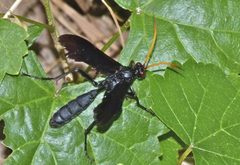
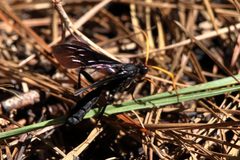
1- Gnamptopelta obsidianator(bent-shielded besieger wasp)
Gnamptopelta is a of ichneumonid wasps containing the single G. obsidianator. The genus is distinguished by a uniquely concave , reflected in its etymology from Greek roots meaning 'bent shield.' These are large, predominantly black found across eastern North America, where they function as of sphinx moth caterpillars feeding on grapevines.
Pronunciation
How to pronounce Gnamptopelta: //ˈɡnæmptəˌpɛltə//
These audio files are automatically generated. While they are not always 100% accurate, they are a good starting point.
Identification
Distinguished from allied by the concave, shield-like (the source of the genus name). The single G. obsidianator is a large (20–23 mm) with high, conical scutellum. Body almost entirely black including wings, with yellowish-brown tibiae and on fore and mid legs; orange-yellow, sometimes dark-tipped. Southern specimens may show ferruginous coloration on and . Distinguished from similar Conocalma brullei by lack of elevated petiole structure and by clypeal shape.
Images
Habitat
Associated with grapevine ; females specifically linked to Vitis aestivalis.
Distribution
Eastern North America: Quebec south to Florida, west to Manitoba and New Mexico.
Host Associations
- Vitis aestivalis - associationgrapevine plant of parasitized caterpillars
- Darapsa myron - caterpillar , third through fifth instars
- Amphion floridensis - caterpillar
- Eumorpha achemon - caterpillar
- Aleiodes texanus - parasitized bybraconid of G. obsidianator
Behavior
fly in spring (March–May). Females parasitize caterpillars of Macroglossinae (Sphingidae) by laying inside third through fifth instar larvae.
Ecological Role
of sphinx moth caterpillars; contributes to regulation of Macroglossinae in grapevine . Subject to hyperparasitism by braconid Aleiodes texanus.
Similar Taxa
- Conocalma brulleiVery similar in appearance; distinguished by lack of elevated petiole structure and by concave shape in Gnamptopelta.