
Ceratogastra
Ashmead, 1900
Species Guides
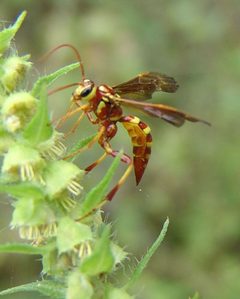
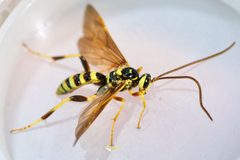
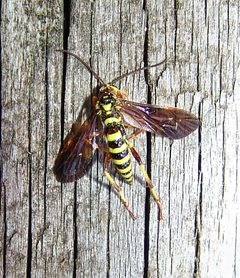
1Ceratogastra is a of ichneumon wasps in the Ichneumonidae. The best-known , Ceratogastra ornata, is a small measuring 10–12 millimeters in body length, recognized by its yellow and reddish-brown or black color pattern. Four of C. ornata are recognized, showing geographic variation in coloration from darker northern forms to paler western and southern . Members of this genus are flower visitors and of larvae.
Pronunciation
How to pronounce Ceratogastra: //ˌsɛr.ə.toʊˈɡæs.trə//
These audio files are automatically generated. While they are not always 100% accurate, they are a good starting point.
Identification
Ceratogastra can be distinguished from superficially similar spider wasps (Pompilidae) by their : ichneumon wasps possess many short antennal segments, whereas spider wasps have fewer, longer segments. Wing venation provides additional diagnostic characters, including a distinctive "horse " near the middle of the forewing with the "nose" pointed toward the wingtip. C. ornata specifically is identified by its color pattern of yellow and reddish-brown or black, with geographic variation in darkness and wing coloration.
Images
Distribution
The Ceratogastra occurs in North America. Ceratogastra ornata specifically ranges from southern Ontario, Massachusetts, and southern Wisconsin west to eastern California, and south to northern Florida, Louisiana, and Mexico.
Host Associations
- Feltia - of or larvaeowlet moths (Noctuidae); larvae are subterranean cutworms
Behavior
Ceratogastra ornata visits flowers, especially composites (Asteraceae), to obtain nectar and search for . Females have been observed ovipositing into flower buds of Common Ragweed (Ambrosia artemisiifolia) and Eupatorium thoroughworts, targeting or newly-hatched caterpillars of host . The larva develops as an internal , likely allowing the host caterpillar to mature before consuming it. also visit goldenrod flowers for nectar and extrafloral of Common Sunflower (Helianthus annuus).
Ecological Role
As a , Ceratogastra ornata contributes to of , specifically targeting pests in the Feltia. The may also serve as a mimic of stinging spider wasps (Poecilopompilus, Ceropales), potentially gaining protection from through this resemblance.
Human Relevance
Ceratogastra ornata provides services through natural of agricultural pest . The is identifiable enough to serve as an entry point for citizen science and amateur entomology, with observations contributing to knowledge gaps in ichneumon and distribution.
Similar Taxa
- Poecilopompilusspider wasp suggested as mimicry model; similar color and pattern but larger size and different antennal structure (fewer, longer segments)
- Ceropalesspider wasp observed as potential mimicry model in Colorado Springs; similar appearance but distinguishable by antennal segmentation and wing venation
More Details
Mimicry hypothesis
C. ornata has been suggested to mimic stinging spider wasps based on striking similarities in color and pattern, though this remains a hypothesis requiring further study.
Taxonomic challenges
Ichneumonidae is one of the most diverse hymenopteran , and most are poorly known biologically. Ceratogastra ornata is exceptional in being field-identifiable and having documented associations.