
Protapanteles
Ashmead, 1900
Protapanteles is a of braconid wasps in the Microgastrinae, containing more than 20 described distributed mainly in the Holarctic region. Species are koinobiont endoparasitoids of lepidopteran larvae, with documented including geometrid moths and nymphalid butterflies. Some species, particularly P. immunis, have been investigated for of agricultural pests. The genus has been subject to taxonomic revision, with phylogenetic studies indicating paraphyly and close relationships with Cotesia.
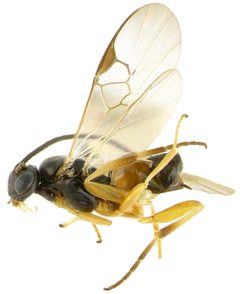
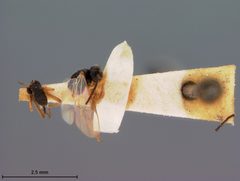
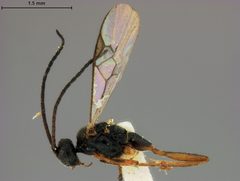
Pronunciation
How to pronounce Protapanteles: /ˌproʊtæˈpæntɪˌliːz/
These audio files are automatically generated. While they are not always 100% accurate, they are a good starting point.
Images
Distribution
Primarily Holarctic region. Documented occurrences include: China (Zhejiang Province, tea-growing areas); Brazil (São Paulo state: São Carlos and Matão municipalities); Denmark; Norway; Sweden. P. enephes previously known from Palearctic and Nearctic regions with one record from Ecuador.
Host Associations
- Ectropis grisescens - primary tea grey geometrid; larval (P. immunis)
- Ectropis obliqua - primary larval (P. immunis)
- Fountainea ryphea phidile - primary nymphalid ; solitary koinobiont endoparasitoid (P. enephes)
- Conura sp. - hyperparasitoidChalcididae; attacks P. enephes
- Pteromalidae species - hyperparasitoidattacks P. enephes
Life Cycle
Koinobiont endoparasitoid development. P. enephes: solitary, with pupal period of approximately seven days; emerge from yellowish cocoons (3.4–3.8 mm) attached to leaf remains. P. immunis: cocoon covered with fluffy cotton-like filaments, white in color.
Ecological Role
Primary of lepidopteran larvae. Subject to hyperparasitism by chalcidid and pteromalid . Some investigated as biocontrol agents for agricultural pests, with P. immunis showing potential for management of tea grey geometrid in Chinese tea plantations.
Human Relevance
Investigated for applications. P. immunis evaluated as biocontrol agent for Ectropis grisescens, a significant pest of tea plants in China; laboratory studies indicate Type II with maximum of 14.75 /day at 22°C. Outperforms at higher temperatures but shows mutual interference at high densities.
Similar Taxa
- ParapantelesBoth are larval of Lepidoptera in Microgastrinae; historically confused or closely related taxonomically. P. immunis specifically compared to Pa. hyposidrae in biocontrol studies, with P. immunis showing higher searching and better performance at elevated temperatures.
- CotesiaPhylogenetic analyses based on mitochondrial indicate Protapanteles is , with P. immunis grouping with Cotesia rather than other Protapanteles; both share koinobiont endoparasitoid and similar cocoon characteristics.
Sources and further reading
- BugGuide
- Wikipedia
- GBIF taxonomy match
- iNaturalist taxon
- NCBI Taxonomy
- Catalogue of Life
- First occurrence of Protapanteles (Protapanteles) enephes (Nixon, 1965) (Hymenoptera, Braconidae, Microgastrinae) in Brazil and new biological data
- The Mitochondrial Genomes of Two Parasitoid Wasps Protapanteles immunis and Parapanteles hyposidrae (Hymenoptera: Braconidae) with Phylogenetic Implications and Novel Gene Rearrangements
- The Potential of Parapanteles hyposidrae and Protapanteles immunis (Hymenoptera: Braconidae) as Biocontrol Agents for the Tea Grey Geometrid Ectropis grisescens (Lepidoptera)