
Lysiphlebus
Förster, 1862
Lysiphlebus is a of small in the Braconidae, Aphidiinae. in this genus are endoparasitoids of aphids, with females laying inside where larvae develop and eventually emerge from mummified aphid remains. The genus exhibits remarkable reproductive diversity, including both sexual and lineages, with some species capable of facultative sex. Several species, particularly L. testaceipes, are important agents used in programs worldwide.
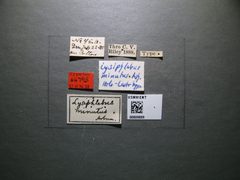
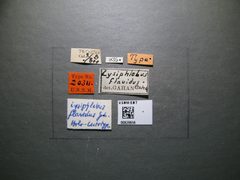
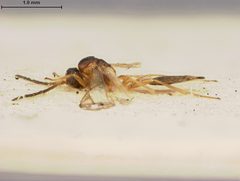
Pronunciation
How to pronounce Lysiphlebus: //laɪˈsɪflɪbəs//
These audio files are automatically generated. While they are not always 100% accurate, they are a good starting point.
Identification
Lysiphlebus are small braconid wasps, typically 1-3 mm in length. They can be distinguished from other Aphidiinae by their association with -tended colonies and their use of chemical mimicry to avoid ant aggression. Identification to species level requires examination of morphological characters including wing venation, segmentation, and genitalia structure. L. testaceipes, the most commonly encountered species in agricultural settings, has a characteristic yellowish-brown to testaceous coloration.
Images
Habitat
Agricultural landscapes, including wheat and sorghum fields, citrus groves, cotton plantations, and vegetable crops. are specifically associated with colonies, particularly those tended by ants. suitability depends on aphid presence rather than specific vegetation types.
Distribution
Near distribution. Native occur in North America (Nearctic), Europe, and Asia. L. testaceipes has been introduced to Southern Europe (France, Portugal) from Cuba in the early 1970s for , and to other regions for pest management. Records exist from Denmark, Norway, Sweden, Turkey, Serbia, China, France, and Iran.
Host Associations
- Aphis craccivora - cowpea aphid; of L. fabarum
- Rhopalosiphum maidis - corn aphid; of L. delhiensis
- Schizaphis graminum - ; primary of L. testaceipes in cereal crops
- Myzus persicae - green peach aphid; of L. testaceipes
- Toxoptera citricida - citrus ; of L. testaceipes
- Nasonovia ribisnigri - lettuce ; L. testaceipes ineffective as control agent
- Aphis spp. - general for multiple Lysiphlebus
- Formicidae - ecological associationants that tend colonies; Lysiphlebus use chemical mimicry to avoid aggression
Life Cycle
Females oviposit into . Larvae develop internally as endoparasitoids, eventually killing the host and spinning a cocoon inside the aphid's mummified . occurs from the mummy. In L. delhiensis, adult females survive 7.9 ± 1.85 days with intensive oviposition for 4.4 ± 0.8 days; mean time is 17.63 days with doubling time of 2.58 days.
Behavior
Most specialize in attacking -defended colonies. Females avoid ant attack through chemical mimicry of aphid cuticular hydrocarbons, allowing them to forage in protected aphid colonies inaccessible to many other species. In L. testaceipes, both sexes show strong olfactory attraction to aphid-infested plant leaves, with 70% of individuals responding to -associated volatiles. Spatial distribution varies with crop spacing: aggregated at 0.40 m and 1.60 m cotton row spacings, uniform at 0.80 m spacing.
Ecological Role
Important agents of pests in agricultural . presence is used as an indicator for decision-making, as mummified aphids signal natural enemy activity. The contributes to aphid in cereal crops, citrus, cotton, and legume systems.
Human Relevance
Several are commercially available and widely used in programs. L. testaceipes is particularly significant in the Great Plains region of North America for managing in wheat and sorghum, and forms the basis of the 'Glance n' Go' scouting system where mummy counts inform application decisions. The species was introduced to Europe for citrus control, though introduced showed reduced specificity compared to native populations. L. fabarum and L. cardui are studied for their unusual .
Similar Taxa
- Aphidius colemaniAlso an aphidiine braconid of aphids; distinguished by lack of specialization on -tended colonies and different preferences (e.g., A. colemani is effective against lettuce aphids while L. testaceipes is not)
- Aphelinus abdominalis in Aphelinidae; distinguished by different family-level and effectiveness against lettuce aphids, where L. testaceipes is ineffective
- Other Aphidiinae generaLysiphlebus distinguished by specific chemical mimicry of cuticular hydrocarbons enabling exploitation of -tended aphid colonies, a trait not universal in the
Sources and further reading
- BugGuide
- Wikipedia
- GBIF taxonomy match
- iNaturalist taxon
- NCBI Taxonomy
- Catalogue of Life
- Lysiphlebus testaceipes Archives - Entomology Today
- Open-Access Article Takes a Closer Look at Crop-Damaging Greenbugs
- Parasitoid Wasps May Be an Effective Tool against Lettuce Aphids
- Life-time Performance Characteristics of an Aphid Parasitoid, Lysiphlebus delhiensis (Hymenopetra: Aphidiidae)
- Genetic diversity in some Lysiphlebus confusus (Hymenoptera: Braconidae: Aphidinae) populations Bazı Lysiphlebus confusus Tremblay & Eady (Hymenoptera: Braconidae: Aphidiinae) popülasyonlarında genetik çeşitlilik
- Post-introduction changes of host specificity traits in the aphid parasitoid Lysiphlebus testaceipes
- Distribuição espacial de lysiphlebus testaceipes (cresson) (hymenoptera: aphidiidae) em algodoeiro cultivado em sistema adensado.
- Review for "Is facultative sex the best of both worlds in the parasitoid wasp <i>Lysiphlebus fabarum?</i>"
- Review for "Is facultative sex the best of both worlds in the parasitoid wasp <i>Lysiphlebus fabarum?</i>"
- Sublethal effects of imidacloprid and pymetrozine on the functional response of the aphid parasitoid, Lysiphlebus fabarum
- Is facultative sex is the best of both worlds in the parasitoid wasp Lysiphlebus fabarum?
- Review for "Is facultative sex the best of both worlds in the parasitoid wasp <i>Lysiphlebus fabarum?</i>"
- Development and Reproductive Characteristics of Lysiphlebus fabarum (Marshall) (Hymenoptera: Aphidiidae), a Parasitoid of Cowpea Aphid, Aphis craccivora Koch (Homoptera: Aphididae)
- The Effect of Ant-Attendance on the Foraging Behaviour of the Aphid Parasitoid Lysiphlebus cardui
- Olfactory mediated interactions between Citrus aurantium Toxoptera citricida and Lysiphlebus testaceipes
- Lysiphlebus testaceipes, an introduced aphid parasitoid in portugal [Hym.: Aphidiidae]
- Author response for "Is facultative sex the best of both worlds in the parasitoid wasp <i>Lysiphlebus fabarum?</i>"
- Decision letter for "Is facultative sex the best of both worlds in the parasitoid wasp <i>Lysiphlebus fabarum?</i>"