
Neoponera
Emery, 1901
Neoponera Panther Ants
Species Guides
1- Neoponera villosa(hairy panther ant)
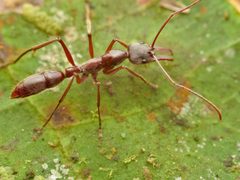
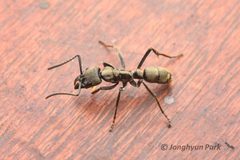
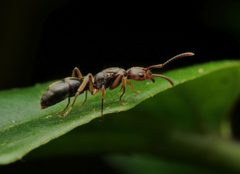
Neoponera is a of ponerine ants restricted to the Neotropics, ranging from southern Texas to southern Brazil. are slender and medium to large in size (6.5–19 mm), while queens are larger and winged. The genus exhibits diverse nesting , including ground nests in soil and decaying wood, as well as arboreal gardens. Some , such as those in the N. laevigata species-group, are specialized .
Pronunciation
How to pronounce Neoponera: //ˌniːoʊpəˈnɛrə//
These audio files are automatically generated. While they are not always 100% accurate, they are a good starting point.
Identification
Neoponera can be distinguished from other ponerine by its slender and Neotropical distribution. -level identification requires examination of specific morphological characters; the N. laevigata species-group is characterized by small size and -feeding . A key to Neoponera species-groups has been published to facilitate identification.
Images
Habitat
Nests occur in multiple substrate types including soil, decaying wood trunks, and dry cocoa pods. Some are arboreal and initiate gardens in trees. Nests may be constructed de novo or occupy abandoned nests of other ants, including and Ectatomma species. Nest architecture includes chambers up to 42 cm deep with elliptical, hanger, or boot-shaped forms.
Distribution
Neotropical region, from southern Texas (United States) through Central America and South America to southern Brazil. Specific locality records include Chocó department (Colombia) and Parque Nacional Natural Serranía de Chiribiquete (Colombia).
Diet
The N. laevigata -group is specialized for feeding. Other species likely have predatory habits typical of ponerine ants, though specific dietary data for most species are lacking.
Behavior
Colonies exhibit complex social regulation including reproductive hierarchies and -based status signaling. adjust reproductive based on social context, with self-restriction in presence of a fertile and open conflict upon queen loss, regulated by linear reproductive hierarchies. Colonial recognition systems modulate territorial responses based on familiarity with foreign colonies. Some facultatively commensal organisms including terrestrial gastropods, which utilize nest shelter and stable microclimatic conditions without eliciting aggression from host ants.
Ecological Role
As medium to large predatory ants, Neoponera likely function as . Nest construction creates stable microhabitats (temperature- and humidity-stable environments) that support diverse myrmecophilous including gastropods, millipedes, mites, and other arthropods. Some species contribute to arboreal gardens, potentially influencing plant community composition.
Similar Taxa
- EctatommaSimilar nest architecture; Neoponera verenae nests have been found attached to Ectatomma edentatum nests and may occupy abandoned Ectatomma nests or displace resident colonies.
- Atta (leaf-cutting ants)Some Neoponera occupy abandoned nests, though they do not cultivate fungi.
More Details
Species diversity
The contains multiple -groups; the N. laevigata species-group has been revised and contains five including two recently described species (N. gojira and N. mashpi). A comprehensive revision of the entire genus is ongoing.
Myrmecophilous associations
Nests of N. verenae have been documented to contain diverse associated organisms: visiting include Linepithema ants, cryptodesmid millipedes, and Neotropacarus mites; prey include membracids, apid bees, and springtails.
Sources and further reading
- BugGuide
- Wikipedia
- GBIF taxonomy match
- iNaturalist taxon
- NCBI Taxonomy
- Catalogue of Life
- Conflicts, cooperation and recognition systems in ants of the neoponera apicalis species complex
- Facultative commensalism of gastropods (Mollusca: Gastropoda) in Neoponera verenae Forel, 1922 (Formicidae: Ponerinae) nests
- Nest Architecture and Animals Associated with Neoponera verenae (Forel) (Formicidae, Ponerinae)
- Host‐tree selection by the ant garden‐initiating arboreal ponerine Neoponera goeldii
- Neoponera Emery, 1901 (Hymenoptera: Formicidae) revisited: 1. The N. laevigata species-group