
Hypoponera
Santschi, 1938
Crypt Ants
Species Guides
4- Hypoponera opaciceps(Granulate Crypt Ant)
- Hypoponera opacior(Common Crypt Ant)
- Hypoponera parva
- Hypoponera punctatissima(Roger's ant)
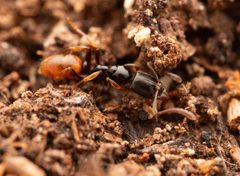
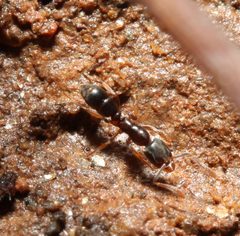
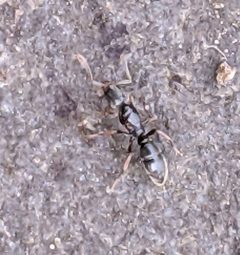
Hypoponera is a of ponerine ants characterized by simplified lacking clear autapomorphies. The genus exhibits distribution across all continents except Antarctica, with notable absence from taiga, tundra, New Zealand, and central Asia. Multiple display remarkable reproductive , including winged and wingless (ergatoid) morphs in both sexes. typically lack or possess only very small eyes, while queens and males usually have well-developed eyes with interommatidial setae.
Pronunciation
How to pronounce Hypoponera: /hɪpoʊˈpɒnɛrə/
These audio files are automatically generated. While they are not always 100% accurate, they are a good starting point.
Identification
Distinguished from other Ponerinae by combination of: eyeless or nearly so with 12-segmented ; queens and males with large bearing setae between ; slender, tapered petiole. Separation from similar such as Ponera requires examination of petiole shape and eye characteristics. Mediterranean can be distinguished by male and , particularly useful given worker simplicity. Ergatoid males of some species (e.g., H. opacior) may be initially mistaken for braconid wasps due to translucent and worker-like appearance.
Images
Habitat
Found across diverse terrestrial excluding taiga and tundra biomes. occupy coastal localities in Mediterranean region. Nesting occurs in soil and subterranean environments. Some species have been recorded indoors, including basement swarms in urban buildings.
Distribution
: present on all continents except Antarctica. Absent from taiga and tundra biomes, New Zealand, and central Asia. Documented from Caribbean Miocene (Dominican amber). Modern records include: Greater Antilles (five and two putative ), Mediterranean region (Italy, Spain, Malta, Corsica, Sardinia, Mallorca, Tunisia), Japan, Argentina (H. punctatissima as ), Colombia, and multiple European countries including Italy (H. ergatandria).
Seasonality
occur during summer months, primarily August in Mediterranean . In Japan, wingless reproductives appear late July to mid-August; winged reproductives appear late August to mid-October.
Life Cycle
Development includes winged and wingless (ergatoid) reproductive morphs in both sexes. Wingless reproductives develop in summer (July-August in Japan). Winged reproductives develop later (August-October in Japan). Ergatoid males may emerge from cocoons where rival males are embraced, causing higher mortality.
Behavior
Winged reproductives conduct . Wingless (ergatoid) reproductives mate inside nests. Ergatoid male mating involves prolonged precopulation and copulation (frequently exceeding 2 hours), suggesting function as mating plugs. No fighting occurs among ergatoid males, but they increase rival mortality by embracing them in cocoons. Cross-mating between winged and wingless morphs is possible in laboratory conditions.
Human Relevance
Some are widespread tramp ants associated with human commerce, including H. punctatissima and H. ergatandria. H. ergatandria produces large indoor swarms that can become nuisance pests; alate queens possess stinging ability against humans, though stings are not considered a public health threat. No significant ecological impact documented for these species in Europe, where they remain sparsely distributed.
Similar Taxa
- PoneraSimilar simplified ; distinguished by petiole shape and characteristics
- Braconidae (wasps)Ergatoid males of H. opacior and related frequently misidentified due to -like appearance with translucent
More Details
Reproductive polymorphism genetics
In H. opacior, wing and alternative reproductive strategies are not controlled by architecture, unlike many other with similar polymorphisms. This suggests phenotypic plasticity, environmentally sensitive developmental switches, or polygenic factors may underlie morph determination.
Fossil record
H. electrocacica from Dominican amber represents the first confirmed Hypoponera in the Caribbean Miocene, confirming long-expected presence of the in this region.
Sources and further reading
- BugGuide
- Wikipedia
- GBIF taxonomy match
- iNaturalist taxon
- NCBI Taxonomy
- Catalogue of Life
- Fire ant winged reproductives: male and female | Beetles In The Bush
- Mating behavior of dimorphic reproductives of the ponerine ant, Hypoponera nubatama
- The ant genus Hypoponera (Hymenoptera: Formicidae) in Dominican amber
- Absence of supergene-linked determination of wing polymorphism and alternative reproductive strategies in the ant Hypoponera opacior
- First Record of the Exotic Ant Hypoponera ergatandria in Italy: Indoor Alate Swarms and Stinging Queens
- Morphology and phenology of sexuals and new distribution data on the blind Mediterranean ant Hypoponera abeillei (Hymenoptera, Formicidae)
- The ant fauna of El Impenetrable National Park: A preliminary survey with the first record of Hypoponera punctatissima in Argentina