
Hypoponera opacior
(Forel, 1893)
Common Crypt Ant, ponerine ant
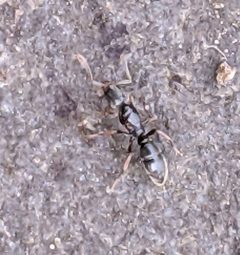
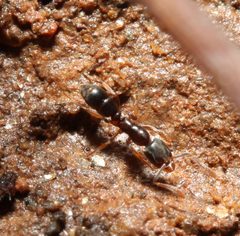
Hypoponera opacior is a small ponerine known for its unusual wing in both sexes. Unlike most ant , it produces both winged and wingless morphs in males and queens, with each morph associated with distinct reproductive and seasonal timing. The species has been extensively studied for its genetic architecture, which notably lacks the -linked determination found in many other ants with similar reproductive polymorphisms. Males are particularly distinctive, appearing -like and wingless in some morphs, with translucent that cause frequent misidentification as or braconid .
Pronunciation
How to pronounce Hypoponera opacior: /hɪpoʊˈpoʊnərə oʊˈpæsiɔr/
These audio files are automatically generated. While they are not always 100% accurate, they are a good starting point.
Identification
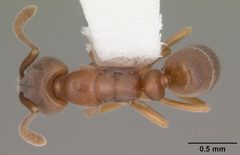
Most easily confused with small braconid wasps or other '-like' Hymenoptera when wingless males are encountered; these are frequently misidentified on citizen science platforms. The combination of wing in both sexes, -like wingless males with translucent , and small colony size distinguishes this from other Hypoponera. Workers can be separated from other small ants by the reduced size (typically fewer than 10 ), compact mesosoma, and characteristic petiolar node shape. Genetic confirmation may be necessary for definitive identification of some morphs.
Images
Habitat
Subterranean and cryptic; nests in soil, leaf litter, and decaying wood. Favors moist, shaded environments with stable temperature and humidity. Often found in forested areas, riparian zones, and disturbed with adequate ground cover. The cryptic lifestyle reflects reduced development and reliance on tactile and chemical cues rather than vision.
Distribution
Neotropical and widespread in the Americas. Documented from Brazil (Amazonas, Bahia, Maranhão, Mato Grosso, Pará, Santa Catarina, São Paulo), Colombia (Leticia area, Villavicencio), Dominican Republic (Santo Domingo Norte, Jardín Botánico Nacional), and Galápagos Islands. Likely more broadly distributed than records indicate due to cryptic habits and undercollection.
Seasonality
Activity patterns vary by morph: winged reproductives appear seasonally, while wingless morphs may be active year-round in stable microhabitats. The two morphs are associated with distinct reproductive and seasonal timing, though specific varies by region.
Life Cycle
Colonies are small, typically containing fewer than 100 . involves both winged and wingless morphs, each utilizing different and mating strategies. Winged queens disperse by to found colonies independently; wingless queens remain in or near natal nests and may be adopted or engage in dependent colony foundation. Development includes complete through , larva, pupa, and stages. Colony foundation may occur through independent foundation by winged queens or /fission involving wingless queens.
Behavior
Cryptic and subterranean; forage primarily in soil and leaf litter rather than on the surface. Wingless males and queens walk to mating sites rather than engaging in . Mating varies by morph: winged forms participate in typical aerial mating , while wingless forms mate on the ground or within nests. Workers are timid and slow-moving, with reduced defensive behaviors compared to more aggressive ponerines.
Ecological Role
and scavenger in soil and litter . Contributes to nutrient cycling through processing of small prey and organic matter. Prey items include small soil-dwelling arthropods, particularly springtails (Collembola) and other microarthropods. Serves as for specialized and , though specific associations are poorly documented.
Human Relevance
Occasional nuisance in greenhouses and cultivated areas where moist soil conditions favor establishment. Not a significant pest; stings are mild and colonies are too small to cause structural damage. Frequently misidentified by amateur entomologists and on citizen science platforms due to unusual male . Subject of scientific interest regarding evolution of alternative reproductive strategies and genetic architecture of social .
Similar Taxa
- Braconidae (braconid wasps)Wingless males of H. opacior are commonly misidentified as braconid wasps due to small size, translucent , and overall '-waisted' appearance; true braconids have different wing venation when present and lack the distinctive petiolar node structure of ants
- Other Hypoponera speciesMany in this large are morphologically similar and require examination of male genitalia or genetic analysis for definitive separation; H. opacior distinguished by the combination of wing in both sexes and specific
- Solenopsis fire antsBoth small, cryptic ants but fire ants have larger colonies, more aggressive , and lack the extreme male dimorphism and wing in queens found in H. opacior
Misconceptions
Wingless males are frequently misidentified as or braconid due to their unusual ; this has led to repeated misclassification on identification platforms. The was long assumed to have -linked determination of its wing based on patterns in related ants, but genomic studies have disproven this hypothesis.
More Details
Genetic architecture
Unlike many ants with wing and alternative reproductive strategies, H. opacior lacks -linked determination of these traits. Whole- resequencing of all morphs found no evidence of large genomic rearrangement controlling morph development, suggesting phenotypic plasticity, environmentally sensitive developmental switches, or polygenic factors instead.
Scientific significance
This demonstrates that complex social traits can evolve and persist without architectures, challenging assumptions about the genetic basis of reproductive in ants and highlighting the importance of considering alternative genetic and epigenetic mechanisms.