
Hypoponera opaciceps
(Mayr, 1887)
Granulate Crypt Ant
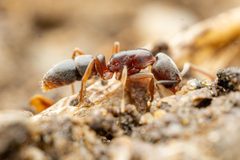
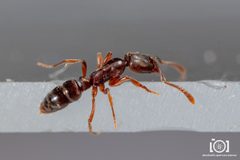
Hypoponera opaciceps is a small, cryptobiotic in the Ponerinae. It is widely distributed across the Neotropics, including the Caribbean, Central America, and South America, with records extending to the Galápagos Islands. The species is primarily subterranean or leaf-litter dwelling, making it infrequently observed despite its broad range. Seven have been described, reflecting considerable geographic variation across its distribution.
Pronunciation
How to pronounce Hypoponera opaciceps: /haɪpoʊˈpoʊnɛrə oʊˈpæsɪsɛps/
These audio files are automatically generated. While they are not always 100% accurate, they are a good starting point.
Identification
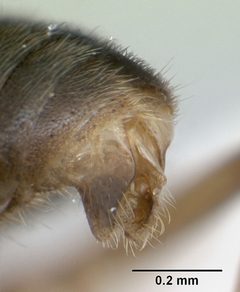
Distinguished from other small Hypoponera by the combination of: densely sculptured, opaque and mesosoma with a or matte surface texture; reduced to small, often indistinct ; short, stout propodeal spines or angles; and a petiolar node that is relatively broad in profile. are small (approximately 2–3 mm), yellowish-brown to brown, with reduced pigmentation typical of subterranean-adapted ants. The species is most readily separated from the similar H. opacior by geographic range and subtle differences in mesosomal .
Images
Habitat
Found in moist, shaded microhabitats including leaf litter, soil, and rotting wood. Strongly associated with tropical and subtropical forested environments, particularly in lowland and mid-elevation sites. The shows a preference for humid, stable conditions typical of the forest floor stratum.
Distribution
Neotropical region: recorded from the Caribbean (Cuba, Jamaica), Central America, and South America including Colombia, Venezuela, Brazil (widespread across multiple states), and the Galápagos Islands.
Behavior
Exhibits cryptobiotic , remaining primarily in soil and leaf litter. are slow-moving and rarely seen on the surface. Colony foundation and reproductive are poorly documented, though the typically produces winged queens and males.
Ecological Role
Functions as a and scavenger in soil and litter . Contributes to nutrient cycling through on small soil arthropods and processing of organic debris.
Human Relevance
Of minimal direct economic importance. Occasionally encountered in ecological surveys and soil biodiversity assessments. Not known to be a household pest or agricultural pest.
Similar Taxa
- Hypoponera opaciorOverlaps in general and preference; distinguished by male reproductive morphology (wingless, -like males in H. opacior versus winged males in H. opaciceps) and subtle differences in geographic distribution and mesosomal .
- Hypoponera punctatissimaSimilar small size and cryptic habit; separated by differences in and petiolar node shape.