
Aenasius
Walker, 1846
Aenasius is a of solitary endoparasitoid in the Encyrtidae. within this genus are specialized of mealybugs (Pseudococcidae), with documented including the cotton mealybug Phenacoccus solenopsis. The genus has been extensively studied for its potential in of agricultural pests, particularly in cotton-growing regions. Some species show remarkable developmental plasticity in response to temperature, enabling them to track their hosts across invaded ranges.
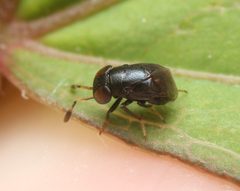
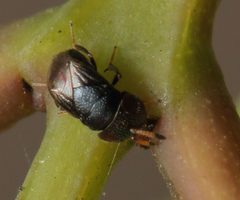
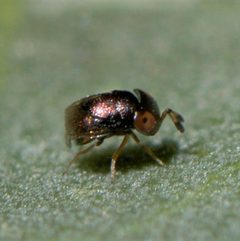
Pronunciation
How to pronounce Aenasius: /aɪˈneɪ.si.əs/
These audio files are automatically generated. While they are not always 100% accurate, they are a good starting point.
Images
Habitat
Associated with agricultural and natural where mealybug occur. Documented from cotton crops, Hibiscus mutabilis, and other host plants of Phenacoccus solenopsis. Laboratory studies indicate successful development across a range of temperatures from 21°C to 39°C, with optimal performance at moderate temperatures.
Distribution
Widespread distribution including: China (Zhejiang Province), Pakistan, India, Turkey, Brazil, Argentina, Hawaii, and other regions where mealybug have invaded. GBIF records indicate presence in Hawaii, Brazil (BR), and Rica (CR). Distribution closely tracks that of mealybug hosts, particularly Phenacoccus solenopsis.
Seasonality
from mummies begins in early February (11th standard week), peaks in early March (14th standard week), and continues through late March (16th standard week). No true observed; development slows during cold periods and resumes with warming temperatures. Adult longevity extends 16-103 days depending on temperature and overwintering conditions.
Host Associations
- Phenacoccus solenopsis - primary Third-instar nymphs and female preferred; first and second instar nymphs rarely parasitized due to small size and high mobility
- mealybug species - Multiple mealybug evaluated as in suitability studies
Life Cycle
Solitary endoparasitoid development. Pupal developmental duration temperature-dependent: 7.05 days at 27°C, shortened to 5.63 days at 36°C. occurs as pupa within mummy or as ; no observed. Maximum pupal period under winter conditions: 86.47 days (males), 92.67 days (females). development accelerated at high temperatures, with mature peaking earlier in heat-treated females.
Behavior
Shows type III to . Handling time and maximum attack rates affected by sublethal exposure. Demonstrates developmental and morphological plasticity in response to temperature changes, including altered hind tibia length and accelerated development. Migrates with host , acting as an accompanying natural enemy.
Ecological Role
Significant agent of mealybugs, particularly Phenacoccus solenopsis on cotton crops. Suppresses mealybug in invaded agricultural areas. Part of natural enemy complex that regulates mealybug . Venom composition studied for understanding regulation mechanisms.
Human Relevance
Important agent for in cotton production. Used in classical and programs against mealybugs. Susceptibility to (dimethoate, imidacloprid, thiodicarb) must be considered when designing programs. sequenced for understanding and improving biocontrol applications.
Similar Taxa
- AnagyrusBoth are Encyrtidae parasitizing mealybugs; Anagyrus are often used in similar contexts and may be confused in field collections
- LeptomastideaAnother encyrtid with mealybug ; shares similar and preferences
More Details
Taxonomic Note
Aenasius bambawalei Hayat, 2009 is synonymized with Aenasius arizonensis Girault, 1915. The former name has been widely used in recent literature, particularly from Asian studies, while the latter represents the senior synonym. -level assembly available for A. arizonensis.
Temperature Adaptation
High temperature (36°C) induces significant phenotypic changes: pupal duration reduced to 80% of control, female hind tibia length increased to 116% of control, and development accelerated. These adaptations facilitate tracking of into warmer climates.
Sources and further reading
- BugGuide
- Wikipedia
- GBIF taxonomy match
- iNaturalist taxon
- NCBI Taxonomy
- Catalogue of Life
- Aenasius chilecito Trjapitzin & Trjapitzin lateral | Entomology Research Museum
- Encyrtid Holdings | Entomology Research Museum
- Primary Type List | Entomology Research Museum
- Publications | Entomology Research Museum
- The Effects of Temperature on the Development, Morphology, and Fecundity of Aenasius bambawalei (=Aenasius arizonensis)
- De novo sequencing and transcriptome analysis of venom glands of endoparasitoid Aenasius arizonensis (Girault) (=Aenasius bambawalei Hayat) (Hymenoptera, Encyrtidae)
- Suitability of different mealybug species as hosts to solitary endoparasitoid, Aenasius arizonensis (Girault) ( = Aenasius bambawalei Hayat)
- Overwintering of <I>Aenasius arizonensis</I> (Girault) (=<I>Aenasius bambawalei</I> Hayat) (Hymenoptera:Encyrtidae) under Screen House/Semi-Natural Conditions
- Figure 2: Effects of temperature and host stage on parasitisation and offspring sex ratio of Aenasius bambawalei Hayat in Phenacoccus solenopsis Tinsley Offspring sex ratio of Aenasius bambawalei exposed to temperatures of 21–39 °C for 12 h (A), 16 h (B), and 24 h (C).
- Identification of the main venom proteins of cotton mealybug parasitoidAenasius bambawaleiHayat by RNA-Seq analysis
- Toxicity of insecticides to Aenasius arizonensis (Girault) (=Aenasius bambawalei Hayat), a solitary endoparasitoid of Phenacoccus solenopsis Tinsley on Bt cotton under semi-field conditions
- Table 1: Two-way analysis of variance testing the effect of temperature and host stage on the successful parasitization rate of Aenasius bambawalei .
- Sublethal effects of some insecticides on the functional response of Aenasius bambawalei Hayat, 2009 (Hymenoptera: Encyrtidae)
- Molecular and physiological studies of the host regulation factor of endoparasitoidAenasius bambawaleiHayat (Hymenoptera: Encyrtidae)
- Table 2: Two-way analysis of variance testing the effect of temperature and host stage on the offspring sex ratio of Aenasius bambawalei .
- Bioecology and Efficacy of Aenasius bambawalei in Population Management of Invasive Mealybug, Phenacoccus solenopsis on Cotton Crop in Pakistan
- Functional analysis of the venom of mealybug parasitoid Aenasius bambawalei (Hymenoptera: Encyrtidae)
- The determination of host biological stages preferred by Aenasius arizonensis Girault (Hymenoptera: Encyrtidae) ‘in parasitization of Phenacoccus solenopsis Tinsley (Hemiptera: Pseudococcidae) Aenasius arizonensis Girault (Hymenoptera: Encyrtidae)’in Phenacoccus solenopsis Tinsley (Hemiptera: Pseudococcidae)’i parazitlemede tercih ettiği biyolojik dönemlerin belirlenmesi
- In vitro analysis of toxic potential of systemic and contact insecticides on Phenacoccus solenopsis and its parasitoid Aenasius species
- Chromosome-level genome assembly of the parasitoid wasp Aenasius arizonensis.