
Bactericera dorsalis
(Crawford, 1914)
Bactericera dorsalis is a of , commonly known as a jumping plant louse, in the Triozidae. First described by Crawford in 1914 as Kuwayama dorsalis, this small phloem-feeding insect belongs to a containing approximately 24 species in North America north of Mexico. Like other psyllids, it feeds by penetrating plant phloem and sucking sap. The species is poorly known compared to economically important relatives such as the potato psyllid (Bactericera cockerelli).
Pronunciation
How to pronounce Bactericera dorsalis: //bækˌtɛrɪˈsɪərə dɔrˈsælɪs//
These audio files are automatically generated. While they are not always 100% accurate, they are a good starting point.
Identification
Distinguished from other Bactericera by wing venation patterns, particularly the size and shape of the medial in the forewing. Molecular identification using Oxidase Subunit I (mtCOI) sequencing is increasingly used for species confirmation in this due to morphological similarities among species. Separation from Bactericera arbolensis and other requires careful examination of wing cell dimensions.
Images
Appearance
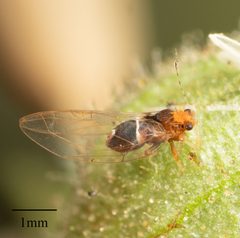
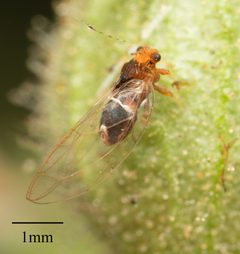
Small, delicate insect with body length approximately 2-3 mm. possess two pairs of membranous wings held roof-like over the body when at rest. Wing venation includes characteristic features of Triozidae, with forewings showing reduced medial compared to some . Coloration typically greenish or grayish, providing camouflage on vegetation. long and thread-like. Nymphs are flattened and often produce waxy secretions.
Habitat
Associated with woody vegetation, likely on specific plants within its range. details are poorly documented for this specifically, though occupy diverse plant associations from agricultural crops to native shrubs.
Distribution
Documented from western North America. collected from Arboles, Colorado (Archuleta County). Additional records from Montrose County, Colorado (Cimarron) and La Plata County, Colorado (Durango). Records from Sweetwater County, Wyoming (Green River) and Roosevelt County, Montana. All confirmed North American records are from west of the Continental Divide except the Montana record.
Diet
Phloem-feeding on plant sap. Specific plant associations are not well documented for this , though in Bactericera are associated with diverse host plants including Solanaceae, Shepherdia, and other woody plants.
Life Cycle
Hemimetabolous development with , nymph, and stages. Nymphs typically feed on the same plants as adults. Detailed information specific to this is not available; likely follows general pattern with multiple per year in suitable climates.
Behavior
are active fliers capable of dispersing between plants. Like other psyllids, exhibits jumping when disturbed. Movement patterns and are not specifically documented for this .
Ecological Role
Phloem-feeding herbivore. Role in dynamics is not well studied. May serve as prey for including larvae, lady beetles, and other predators. Potential for specialized , as documented for related .
Human Relevance
No documented economic importance. Not known to plant or damage agricultural crops. Research interest primarily taxonomic and biodiversity-related, representing part of the poorly known fauna of western North America.
Similar Taxa
- Bactericera arbolensisSimilar wing venation and ; distinguished by medial dimensions in forewing. Associated with Shepherdia (buffaloberry) .
- Bactericera cockerelli with similar body plan; distinguished by associations (potato, tomato, other Solanaceae) and economic importance as of zebra chip .
More Details
Taxonomic History
Originally described as Kuwayama dorsalis by Crawford in 1914, later transferred to Bactericera. The genus Bactericera currently contains approximately 24 described in North America north of Mexico, with potential for additional undescribed species based on morphological variation observed in specimens.
Research Significance
This exemplifies the poorly known biodiversity of North American psyllids. A 2017 observation from Colorado Springs, Colorado, highlighted diagnostic challenges in this when a specimen initially identified as potentially B. arbolensis showed wing venation inconsistent with published descriptions, suggesting either greater morphological variability or possible undescribed species diversity.
Sources and further reading
- BugGuide
- GBIF taxonomy match
- iNaturalist taxon
- NCBI Taxonomy
- Catalogue of Life
- UC Davis Researcher Targeting Zebra Chip: It's Not a Chip You Want | Bug Squad
- Scorched locust, courtesy of the Locust leafminer, Odontota dorsalis — Bug of the Week
- Scorched locust - Locust leafminer, Odontota dorsalis — Bug of the Week
- Bug Eric: It's Always Something....
- Discovery of wasp species previously unknown in the U.S.
- Psyllid Movements Revealed Via Gut Content Analysis