
Uroleucon obscuricaudatum
(Olive, 1965)
Dusky-tailed Sunflower Aphid
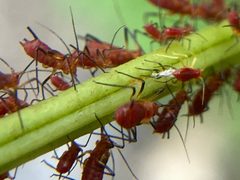
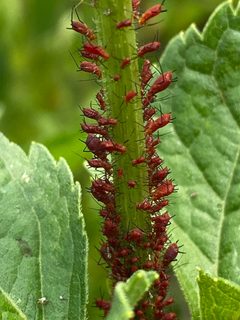
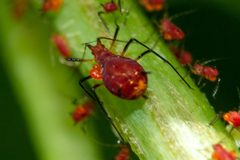
Uroleucon obscuricaudatum is a North American in the Aphididae, commonly known as the Dusky-tailed Sunflower Aphid. It is a feeder on Heliopsis helianthoides (oxeye sunflower) and related Asteraceae plants. The species exhibits typical aphid traits including parthenogenetic during the growing season. Like other Uroleucon species, it produces honeydew and serves as prey for diverse natural enemies including lady beetles, flower flies, lacewings, and spiders.
Pronunciation
How to pronounce Uroleucon obscuricaudatum: /ˌjʊroʊˈljuːkɒn ˌɒbskjʊrɪˌkɔːˈdeɪtəm/
These audio files are automatically generated. While they are not always 100% accurate, they are a good starting point.
Identification
A member of the Uroleucon, characterized by the presence of siphunculi (cornicles) on the and typically pigmented tibiae. Distinguished from by association with Heliopsis helianthoides and subtle morphological features of the cauda and siphunculi; precise identification requires examination of cleared slide-mounted specimens.
Images
Habitat
Associated with plants in the Asteraceae , particularly Heliopsis helianthoides (oxeye sunflower). Found in open, sunny including meadows, prairies, and garden settings where host plants occur.
Distribution
North America. Specific range details beyond continental distribution are not well documented in available sources.
Seasonality
Active during spring and summer; build during growing season. Parthenogenetic occurs in spring and summer, typical of temperate .
Diet
Phloem feeder specializing on Heliopsis helianthoides (oxeye sunflower); may also utilize other Asteraceae .
Host Associations
- Heliopsis helianthoides - primary oxeye sunflower, primary documented plant
Life Cycle
Reproduces parthenogenetically during spring and summer, producing all-female clonal offspring. and as likely occur in autumn, following the typical holocyclic pattern of temperate aphids, though this has not been explicitly documented for this .
Behavior
Ecological Role
Herbivore that converts plant phloem into available to higher . Serves as prey for including lady beetles (Coccinellidae), flower fly larvae (Syrphidae), green lacewings (Chrysopidae), lynx spiders (Oxyopidae), and parasitic . Acts as a node connecting to predators.
Human Relevance
Minor garden pest on ornamental Heliopsis; typically controlled by natural enemies. No significant economic impact documented. May serve as an indicator of ecological function in native plant gardens.
Similar Taxa
- Uroleucon ambrosiaeBrown ambrosia aphid, congeneric with similar and ; distinguished by plant preferences (Ambrosia and related Asteraceae vs. Heliopsis)
- Uroleucon helianthiSunflower , potentially overlapping range; requires morphological examination of siphunculi and cauda for definitive separation
Sources and further reading
- BugGuide
- Wikipedia
- GBIF taxonomy match
- iNaturalist taxon
- NCBI Taxonomy
- Catalogue of Life
- Death to aphids: Brown ambrosia aphid, Uroleucon ambrosiae and other assorted aphids meet flower fly larvae, Syrphidae — Bug of the Week
- Cup plant feeds brown ambrosia aphid, Uroleucon ambrosiae, which in turn provides dinner for lynx spiders, lady beetles, long-legged flies, flower flies, and green lacewings — Bug of the Week
- Archive — Bug of the Week