Uroleucon erigeronense
(Thomas, 1878)
Large fleabane daisy aphid
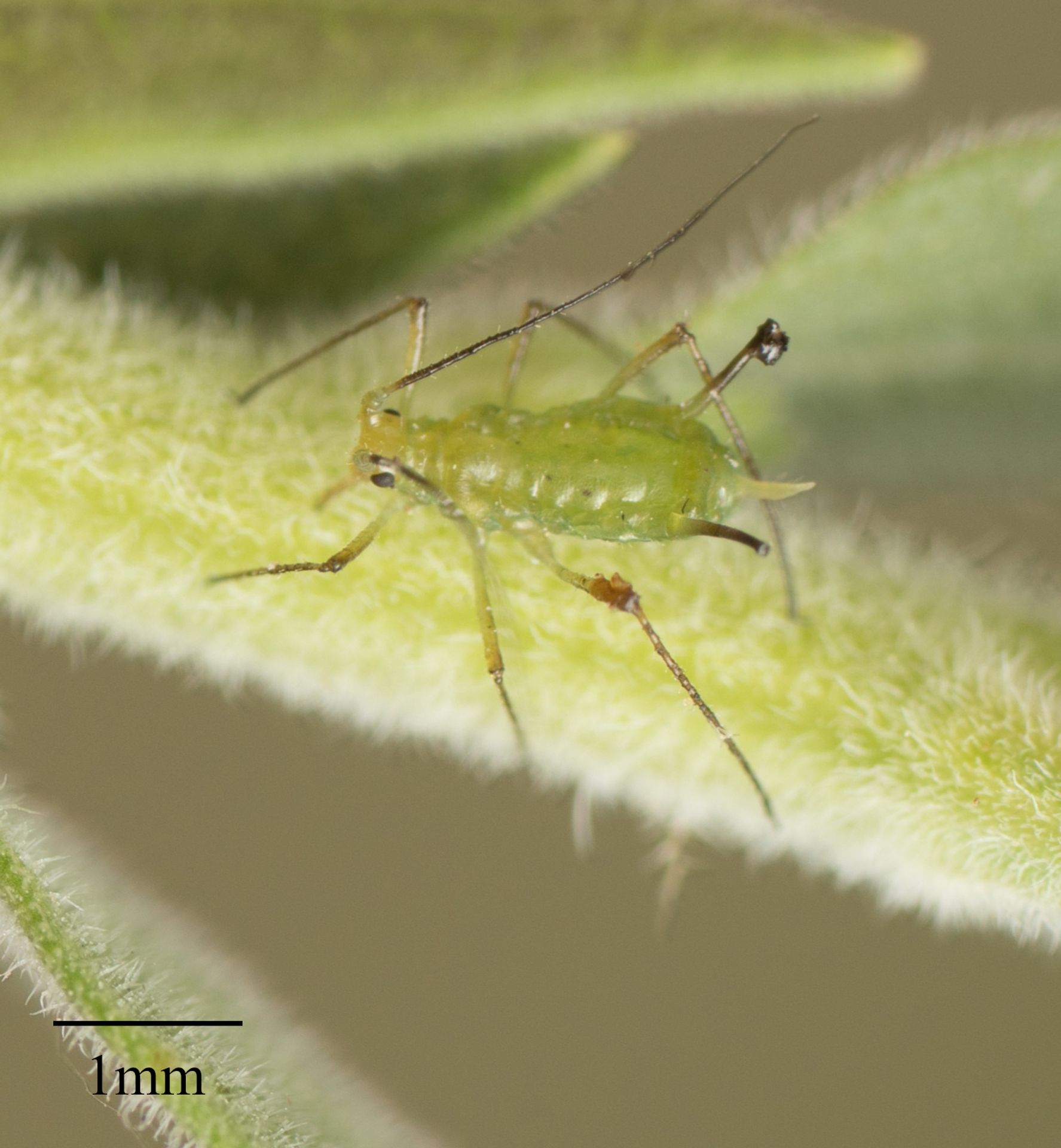
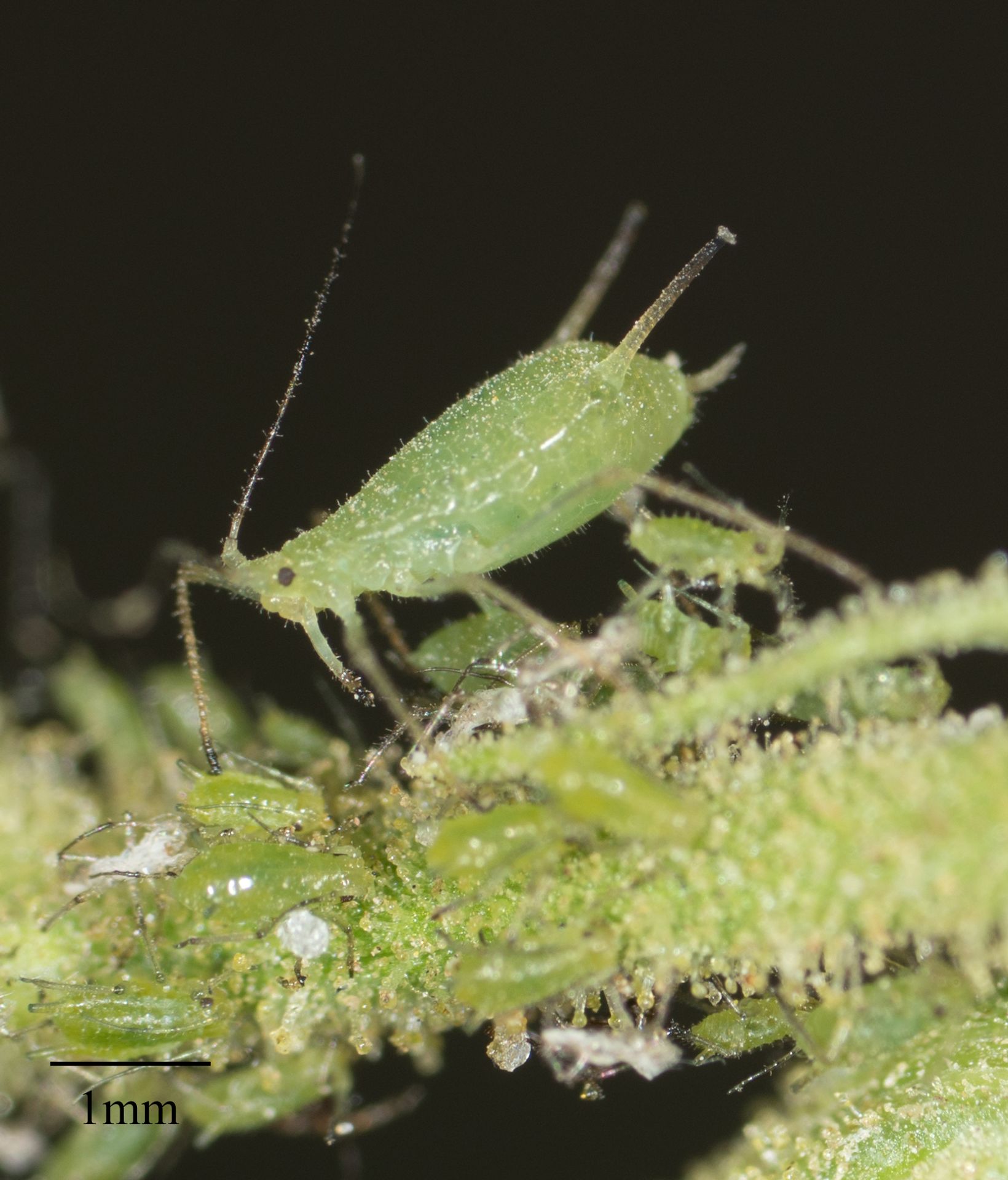
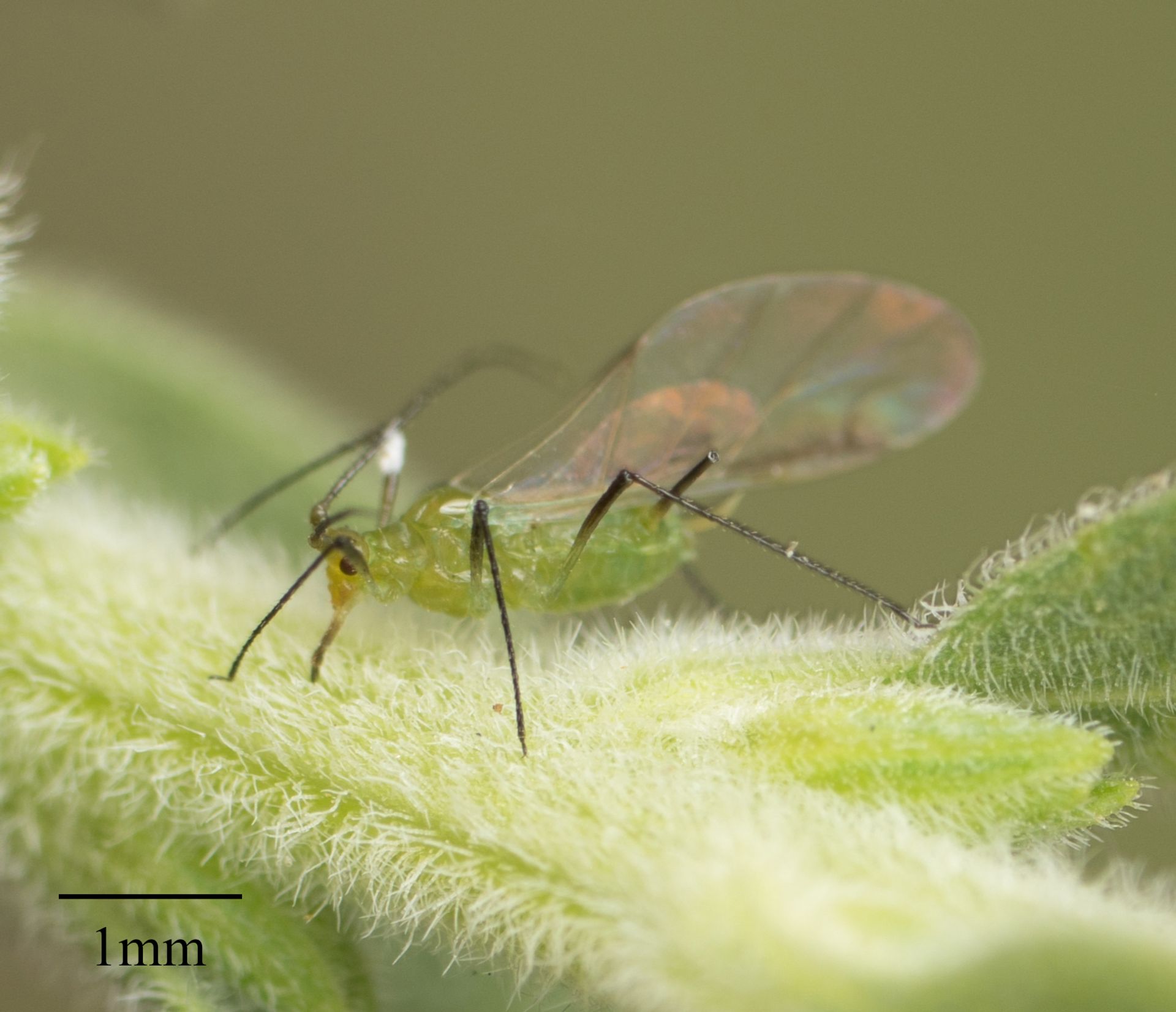
Uroleucon erigeronense is a of in the Aphididae, first described by Thomas in 1878. It feeds primarily on plants in the Asteraceae family, with a particular association with Erigeron (fleabane) species. The species exhibits flexible reproductive strategies: holocyclic in northern climates, producing sexual forms in autumn, and anholocyclic in warmer regions. It shows seasonal -shifting , moving between hosts and blooming annuals. Native to North America, it has been introduced to Europe, Australia, and Korea.
Pronunciation
How to pronounce Uroleucon erigeronense: /ˌjʊə.roʊˈljuːkɒn ɛˌrɪdʒ.əˈroʊ.nɛns/
These audio files are automatically generated. While they are not always 100% accurate, they are a good starting point.
Identification
Distinguished from similar Uroleucon by association with Erigeron and other Asteraceae . As a member of Uroleucon, likely exhibits the genus-characteristic elongated body form and relatively long siphunculi compared to other genera. Positive identification requires examination of morphological features such as antennal , siphunculus length and shape, and cauda structure, ideally combined with host plant confirmation.
Images
Habitat
Associated with herbaceous and shrubby plants in the Asteraceae . Seasonally occupies including Ericameria and Chrysothamnus, then shifts to blooming annuals and herbs in spring and summer. This host-shifting pattern resembles heteroecy but without strict obligate host alternation.
Distribution
Native to North America; introduced to Europe, Australia, and Korea. Documented in Korea from Erigeron canadensis. GBIF records indicate presence in the Azores (São Jorge, São Miguel, Santa Maria, Terceira) and former Yugoslavia.
Seasonality
Active during growing season of plants. In northern climates, produces males and sexual females in autumn as part of . In warmer southern regions of the United States, can reproduce continuously via anholocyclic .
Diet
Phloem feeder specializing on Asteraceae plants. Documented include: Achillea, Artemisia, Aster, Baccharis, Balsamorhiza, Brickellia, Centaurea, Chrysothamnus, Conyza, Crepis, Ericameria, Erigeron, Eriophyllum, Gutierrezia, Machaeranthera, Tetradymia, and Tragopogon.
Host Associations
- Erigeron canadensis - confirmed Specimen source for Korean mitogenome study
- Erigeron - primary Type ; reflects this association
- Eriophyllum - confirmed Documented feeding
- Ericameria nauseosa - used seasonally
- Chrysothamnus - used seasonally
- Conyza - confirmed Documented
- Dieteria canescens - confirmed Cited in mitogenome study
- Achillea - confirmed Documented
- Artemisia - confirmed Documented
- Aster - confirmed Documented
- Baccharis - confirmed Documented
- Balsamorhiza - confirmed Documented
- Brickellia - confirmed Documented
- Centaurea - confirmed Documented
- Crepis - confirmed Documented
- Gutierrezia - confirmed Documented
- Machaeranthera - confirmed Documented
- Tetradymia - confirmed Documented
- Tragopogon - confirmed Documented
Life Cycle
Holocyclic in northern climates: produces sexual females and males in autumn, with . Anholocyclic in warmer southern regions: continuous parthenogenetic without sexual phase. Exhibits seasonal -shifting from overwintering perennials to herbs, though not strict obligate host alternation.
Behavior
Exhibits synchronized collective twitching and kicking response (CTKR) when colony is disturbed, a defensive observed in related Uroleucon . This coordinated movement may reduce successful attacks by parasitic and small .
Ecological Role
As a phloem-feeding herbivore, serves as prey for diverse natural enemies including lady beetles, lacewings, flower fly larvae, lynx spiders, and parasitic . Acts as a 'factory' for production in garden and natural systems, supporting of other pest . Honeydew provides food source for ants and other insects.
Human Relevance
Minor plant pest on ornamental and native Asteraceae. can explode on garden plants such as cup plant (Silphium perfoliatum), but typically support beneficial that provide natural control. Not considered a major agricultural pest.
Similar Taxa
- Uroleucon ambrosiaeCongeneric with similar and ; both feed on Asteraceae and exhibit seasonal -shifting. Distinguished by specific host associations and subtle morphological differences in siphunculi and cauda.
- Uroleucon hypochoeridisRelated showing similar collective defensive twitching ; differs in plant preferences and geographic distribution.
- Other Uroleucon speciesMany share elongated body form and long siphunculi; precise identification requires examination of diagnostic morphological characters and plant confirmation.
Sources and further reading
- BugGuide
- Wikipedia
- GBIF taxonomy match
- iNaturalist taxon
- Death to aphids: Brown ambrosia aphid, Uroleucon ambrosiae and other assorted aphids meet flower fly larvae, Syrphidae — Bug of the Week
- Cup plant feeds brown ambrosia aphid, Uroleucon ambrosiae, which in turn provides dinner for lynx spiders, lady beetles, long-legged flies, flower flies, and green lacewings — Bug of the Week
- Archive — Bug of the Week
- The complete mitochondrial genome of Uroleucon erigeronense (Thomas, 1878) (Hemiptera: Aphididae).