
Aleurocanthus
Quaintance & Baker, 1914
Species Guides
1- Aleurocanthus woglumi(Citrus blackfly)
Aleurocanthus is a of whiteflies in the Aleyrodidae, established by Quaintance & Baker in 1914. in this genus are significant agricultural pests, particularly of citrus and other cultivated crops. The genus includes notable species such as the orange spiny whitefly (A. spiniferus) and the (A. woglumi), both of which have been subjects of extensive programs due to their economic impact. The genus is characterized by distinctive spiny or ornamented puparial cases and exhibits in some species.
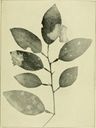
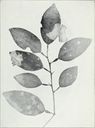
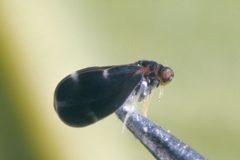
Pronunciation
How to pronounce Aleurocanthus: //ˌæl.jʊə.roʊˈkæn.θəs//
These audio files are automatically generated. While they are not always 100% accurate, they are a good starting point.
Identification
Distinguished from other whitefly by the presence of spines or distinct ornamentation on the puparial case; -level identification requires examination of puparial , spine arrangement, and associations; in present in some species, with males and females differing in spine patterns or wax secretion
Images
Habitat
Tropical and subtropical regions; primarily associated with agricultural and horticultural environments including citrus orchards, tea plantations, and other cultivated crop systems; irrigation increases suitable range
Distribution
Native to tropical Asia; individual have expanded to Africa, Australasia, Pacific Islands, North America, Central America, South America, and the Caribbean through human-mediated ; Australia 22 recognized species including 11 species described in recent taxonomic revisions
Diet
Phloem-feeding sap-suckers; feed on plant vascular tissues
Host Associations
- Citrus - primary Major economic for multiple including A. spiniferus and A. woglumi
- Camellia sinensis - Tea plant; significant for A. spiniferus in tea production regions
- Coffea - Coffee; recorded for A. woglumi
- Mangifera indica - Mango; recorded for A. woglumi
- Carica papaya - Papaya; recorded for A. woglumi
- Punica granatum - Pomegranate; recorded for A. woglumi
- Rosa - Rose; recorded for A. spiniferus
- Vitis - Grape; recorded for A. spiniferus
- Diospyros - Persimmon; recorded for A. spiniferus
- Pyrus - Pear; recorded for A. spiniferus
- Cinnamomum osmophloeum - for A. lauriphaga in Taiwan
Life Cycle
Hemimetabolous development with , nymph, and stages; nymphs are and feed on plant phloem; puparial stage represents the final nymphal instar with distinctive spiny or ornamented case; multiple per year in favorable climates
Behavior
nymphal stages remain fixed on plant foliage; are mobile and disperse to new hosts; feeding activity induces host plants to release volatile compounds (synomones) that attract natural enemies; honeydew promotes growth on leaf surfaces
Ecological Role
Agricultural pest causing direct damage through phloem feeding and indirect damage via honeydew production and proliferation; serves as for specialized including Amitus hesperidum and Encarsia smithi; participates in tritrophic interactions where herbivore feeding induces plant volatile release that attracts parasitoids
Human Relevance
Significant economic pest of citrus, tea, and other crops; A. spiniferus in Japan during the 1920s prompted pioneering programs; A. woglumi is subject to restrictions and biosecurity concern in Europe and the Mediterranean Basin; management relies heavily on using rather than chemical
Similar Taxa
- Other Aleyrodidae generaAleurocanthus distinguished by spiny puparial ornamentation absent in most other whitefly ; generic placement requires examination of puparial
More Details
Taxonomic diversity
The contains substantial , with 22 recognized in Australia alone including 11 species described as new in 2012; Taiwan at least seven species with documented in
Biological control history
A. spiniferus was the target of one of the earliest large- programs, initiated in Japan in the 1920s; this established precedent for using to manage whitefly pests
Semiochemical interactions
Recent research demonstrates that feeding by A. spiniferus on tea plants induces release of (E,E)-α-farnesene, which attracts the Amitus hesperidum; this synomone also triggers adjacent intact plants to release the same compound, creating an inter-plant defensive communication network
Climate change vulnerability
Distribution modeling for A. woglumi indicates potential range expansion into Europe and the Mediterranean Basin under warming climates; irrigation substantially increases suitable , expanding potential range by 53% in some regions
Sources and further reading
- BugGuide
- Wikipedia
- iNaturalist taxon
- NCBI Taxonomy
- Catalogue of Life
- Aleurocanthus woglumi Ashby Archives - AgriLife Extension Entomology
- Aleurocanthus woglumi . [Distribution map].
- Aleurocanthus spiniferus . [Distribution map].
- Orange Spiny Whitefly, Aleurocanthus spiniferus Quaintance (Insecta: Hemiptera: Aleyrodidae)
- Aleurocanthus woglumi . [Distribution map].
- Aleurocanthus spiniferus . [Distribution map].
- Aleurocanthus spiniferus . [Distribution map].
- Citrus Blackfly, Aleurocanthus woglumi Ashby (Insecta: Hemiptera: Aleyrodidae)
- Using tea plant synomone (E, E)-α-farnesene to attract parastoid Amitus hesperidum to control Aleurocanthus spiniferus in tea gardens
- Synchrony and impact ofAmitus hesperidum [Hym.: Platygasteridae] on its host,Aleurocanthus woglumi [Hym.: Aleyrodidae] in southern Florida
- Sexual dimorphism among species of Aleurocanthus Quaintance & Baker (Hemiptera: Aleyrodidae) in Taiwan, with one new species and an identification key
- Potential global distribution of Aleurocanthus woglumi considering climate change and irrigation
- A review of the whitefly genus <i>Aleurocanthus </i>Quaintance & Baker (Hemiptera: Aleyrodidae) in Australia
- Utilizing Tea Plant Synomones to Attract Encarsia smithi for Suppressing Aleurocanthus spiniferus in Tea Plantations.